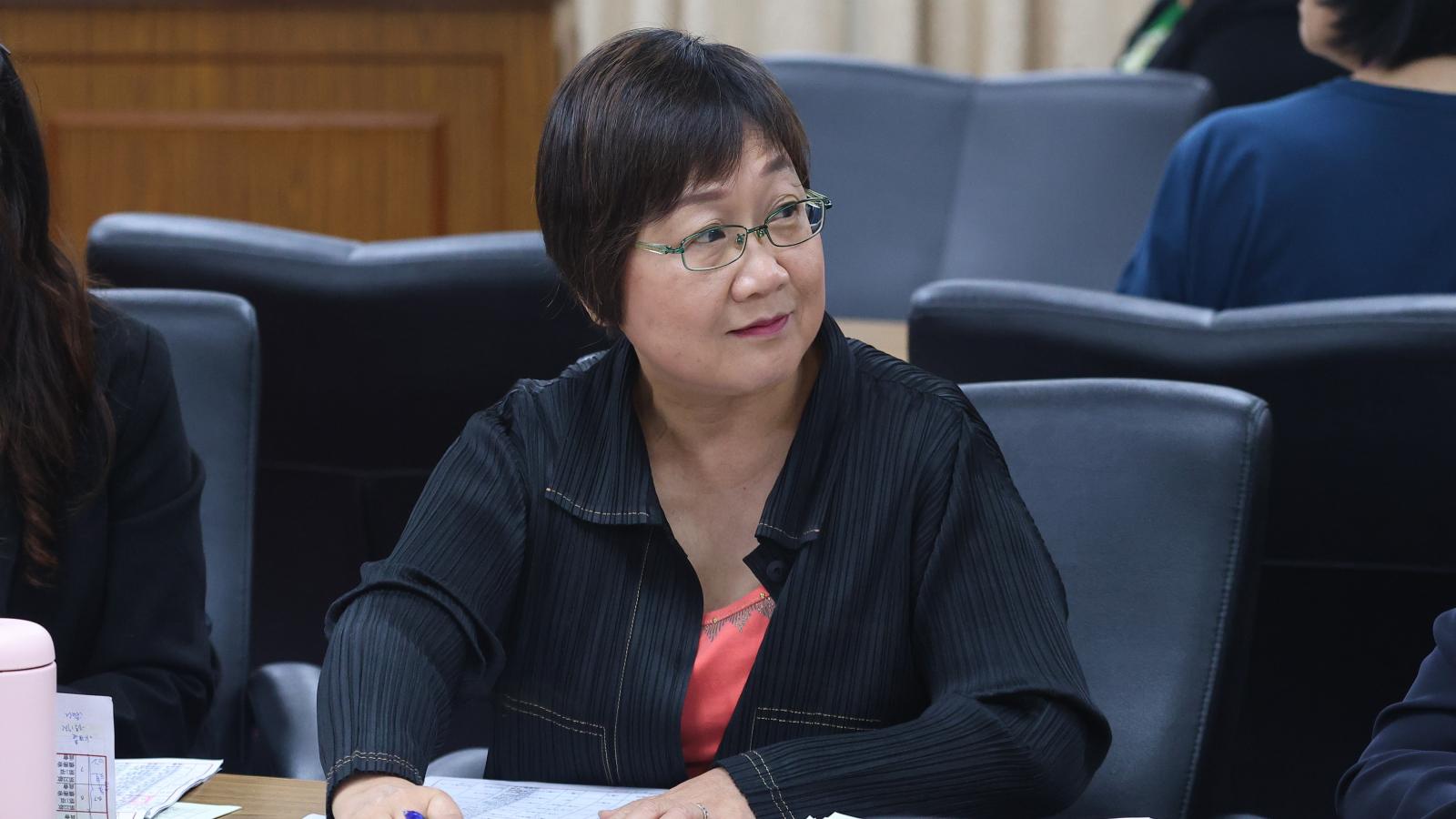
The Taiwan People's Party Legislative Caucus held a press conference on the 5th, with caucus director Chen Chi-han accusing OCAC Chair Hsu Chia-ching of making 47 overseas trips and spending 526 days abroad over nearly five years, using approximately NT$23.83 million in public funds—accounting for nearly 30% of OCAC's total overseas travel budget. She claimed Hsu alone consumed almost one-third of the council's travel budget, spending about one-third of each year overseas.
Chen also criticized Hsu's trip reports, which included watching a movie and visiting the French presidential palace's pastry chef, labeling them as 'hidden agenda' activities.
However, veteran media figure Huang Kuang-chin posted on Facebook, arguing that OCAC's primary mission lies overseas—serving overseas compatriots, strengthening overseas Chinese communities, and connecting with the international community. She questioned whether the People's Party was attacking the wrong target.
Huang emphasized that OCAC differs from ordinary government agencies. In recent years, over 90 Mandarin learning centers have been established across 17 countries. OCAC has set up overseas service hubs such as 'Overseas Chinese Education Centers' in the U.S., Canada, Brazil, the Philippines, Thailand, and Australia. Rent, utilities, and staff salaries for these centers alone consume half of OCAC's total budget. Of the remaining half, another half is allocated to overseas operations.
Huang noted that overseas travel was routine during the KMT era as well. Figures like Chang Hsiao-yen, who served as OCAC chair under the KMT, were regular interviewees for journalists of that generation. Not only chairs but also vice-chairs routinely traveled abroad. The only exception was during the pandemic, when overseas duties were suspended. If current chairs confined themselves to their Taipei offices like during pandemic lockdowns, that would be true dereliction of duty. Past OCAC leaders made multiple short trips of three to five days, while Hsu consolidated several visits into single 12-day trips—an approach Huang described as more cost-efficient.
Huang questioned the People's Party's focus on Hsu's 47 trips from 2022 to present, totaling 562 days abroad, spending NT$23.83 million, and using one-fourth of OCAC's travel budget. She pointed out that during Chang Hsiao-yen's tenure, no formal trip reports existed—overseas dispatches were used instead. Trip reporting only began to take shape under later chair Chu Chi-yang.
Regarding Chang's era, Huang noted that many documents were classified for 30 years and have only recently become eligible for declassification. Although some remain sealed, legislators can request access. Thus, classification practices are not unique to the DPP era. The necessity of classifying OCAC's operations should be reevaluated based on its functional nature.
As for the accusation of 'fake inspections, real tourism,' Huang clarified that OCAC's budget categories do not include 'inspection' but only 'visit,' 'inspection,' and 'meeting'—all subject to final auditing by the Audit Department. If the core function—'overseas service'—ranks behind more than 20 other ministries in budget allocation, isn't that what truly needs review?
Additional exclusive reports from Storm Media: · Hsu, criticized for spending millions on trips with only five-page reports, defended herself by citing past administrations: 'Chang Hsiao-yen stayed in five-star hotels and brought his wife.' · Chen revealed Hsu scheduled vacations during official trips, demanding her immediate resignation · Hsu was exposed for bringing her son to Dongsha Islands; the People's Party accused her of knowingly violating laws, demanding an apology and resignation
FACT BOX
- Source: PR Times
- Category: News