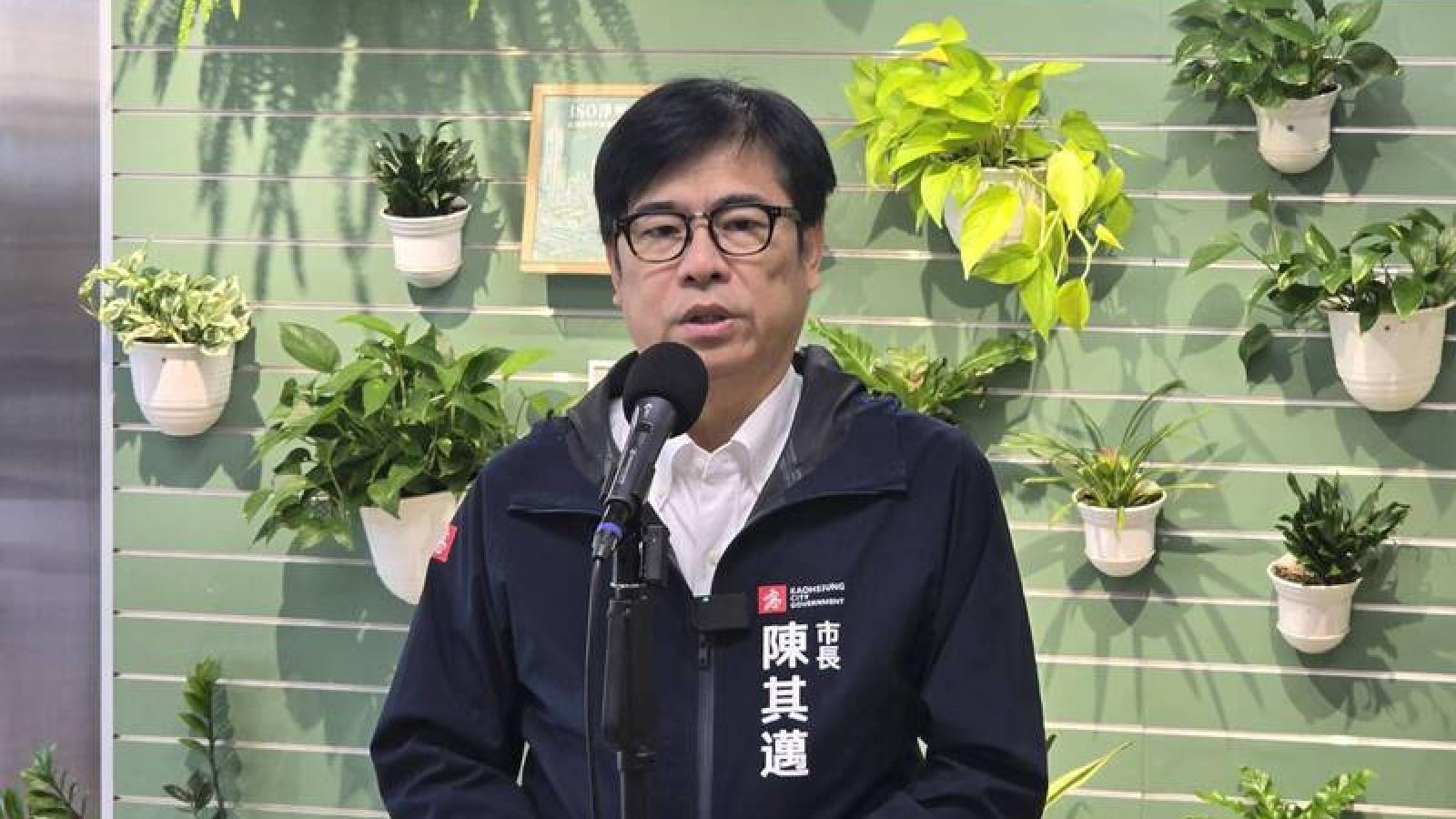
The recent outbreak of the 'Chung Lian Edible Oil' toxic oil scandal in Taiwan has not only sounded another alarm for national food safety but also served as a litmus test for political figures’ crisis management capabilities and accountability. In this food safety crisis, the responses of Kaohsiung Mayor Chen Chi-mai and President Lai Qingde have formed a stark contrast, revealing who better embodies the public's expectations of the 'presidential' role.
Facing the discovery that Chung Lian's carcinogenic oil products had entered the market, Kaohsiung Mayor Chen Chi-mai demonstrated the responsibility expected of a local leader. He clearly stated that food inspection is the government's duty and cannot be evaded. This was not only a firm declaration of responsibility but also a concrete commitment to citizens. Immediately, Kaohsiung City’s Health Bureau launched active investigations, ordering the immediate removal of problematic oils and processed foods from shelves—showcasing swift and decisive execution.
Notably, Chen Chi-mai did not hesitate to offer criticism and recommendations to the central government, even though it is led by his own party. He bluntly accused the Executive Yuan of being 'insensitive and evasive' on food safety issues and remarked, 'Are we supposed to feel satisfied just by constantly taking products on and off shelves every day?'—sharply highlighting the central government’s sluggish response and the difficulties faced by frontline enforcers. This fearless, people-first attitude earned widespread public recognition.
Looking back at the 2014 Ting Hsin tainted oil scandal, Chen Chi-mai, then in the opposition, had already championed the 'zero tolerance for food safety violations' slogan, demanding political accountability from the Premier and the Minister of Health and Welfare. Ten years later, his unwavering commitment to food safety and oversight of the central government remains unchanged, reflecting a consistent governance philosophy and principle.
In contrast, the central government led by President Lai Qingde, as the nation's head of state, has appeared relatively passive and widely criticized in this toxic oil incident. Although President Lai later ordered the suspension of production and sales of the tainted oil and called for accountability, public opinion generally views the central response as slow and ineffective in curbing the spread of contaminated oil. Executive Yuan Premier Cho Jung-tai even publicly admitted that administrative units failed to act promptly and expressed 'deep regret'—effectively confirming a breach in the central government’s food safety defenses.
The toxic oil scandal has not only drawn strong criticism from opposition parties but also prompted citizens to take to Ketagalan Boulevard, launching 'anti-toxic oil' protests demanding President Lai’s apology and Premier Cho’s resignation. This accumulation of public anger reflects widespread dissatisfaction and disappointment with the central government’s handling of the food safety crisis.
As the nation’s highest leader, the president’s leadership and crisis management abilities in major livelihood issues directly affect public trust in the government. While local leaders have actively responded on the front lines and issued warnings to the central government, the Presidential Office and Executive Yuan have failed to demonstrate equal agility and efficiency. To date, no ministerial head has resigned, further tarnishing President Lai’s leadership image.
This food safety crisis has clearly differentiated Chen Chi-mai and Lai Qingde in the public eye. Chen has shown the responsibility expected of a local leader, the courage to speak truth to power, and a consistent commitment to food safety. He not only actively manages local affairs but also dares to criticize central shortcomings—this pragmatic, people-centered approach is exactly the leadership trait the public desires.
In contrast, although President Lai later expressed a stance on accountability, the central government’s sluggish and passive response, culminating in the Premier issuing an apology, reveals deficiencies in the leadership team’s crisis management.
The president’s role is not merely to issue orders but to serve as a stabilizing force during crises and a source of public confidence. When public anxiety over food safety peaks, the president’s voice and actions must carry greater penetration and substance to calm public fears and restore trust.
From this toxic oil incident, Mayor Chen Chi-mai’s performance more closely aligns with the public’s ideal of presidential responsibility, decisiveness, and empathy. He has demonstrated exceptional governance at the local level and, at a critical moment, shown the statesmanship of speaking for the people beyond partisan lines.
This may explain why many citizens now think, 'Chen Chi-mai the “President” is better than President Lai Qingde.' Because true leadership is not slogans—it is measured by real actions in times of crisis and the public’s genuine feelings.
*The author is a professor at the University of Illinois Chicago.
FACT BOX
- Source: PR Times
- Category: News