From fingertip pulse diagnosis to AI-powered decoding, modern physicians must understand the past to predict the future. Chang Gung University College of Medicine is actively training cross-disciplinary talent who can precisely diagnose pulses and skillfully apply AI in smart healthcare.
Professor Yang Hsien-Hung, Chair of the Department of Traditional Chinese Medicine at Chang Gung, highlights that the department has established Taiwan’s only "dual major in Western and Traditional Chinese Medicine." This year, it launched a groundbreaking new course, "Introduction to and Practice of Basic TCM Research," integrating traditional medicine, evidence-based medicine, and smart healthcare through a dual-track education system. Students can earn both an MD and an AI master’s degree and are eligible to take licensing exams for both Western and TCM physicians—cultivating internationally competitive dual-specialty medical graduates.
Moreover, nurturing a new generation of research-oriented "physician-scientists" in Taiwan is a top priority for the department. While traditional medicine has thousands of years of history and widely recognized clinical efficacy, it has often faced skepticism due to insufficient scientific validation. Professor Yang notes that advances in modern medical technology now allow mechanisms of action in the human body to be verified using molecular biology, gradually advancing TCM toward evidence-based medicine and promoting integrative healthcare.
As one of the few departments in Taiwan offering dual training in both systems, this year’s launch of the "Introduction to and Practice of Basic TCM Research" course marks a comprehensive push for up-to-date medical science education. Professor Yang emphasizes that students receive both Eastern and Western scientific training, allowing them to choose either Western or TCM clinical practice upon graduation. Graduates equipped with expertise in both disciplines can excel within the extensive Chang Gung healthcare system or join top-tier medical institutions’ integrative medicine departments, enjoying broad career prospects.
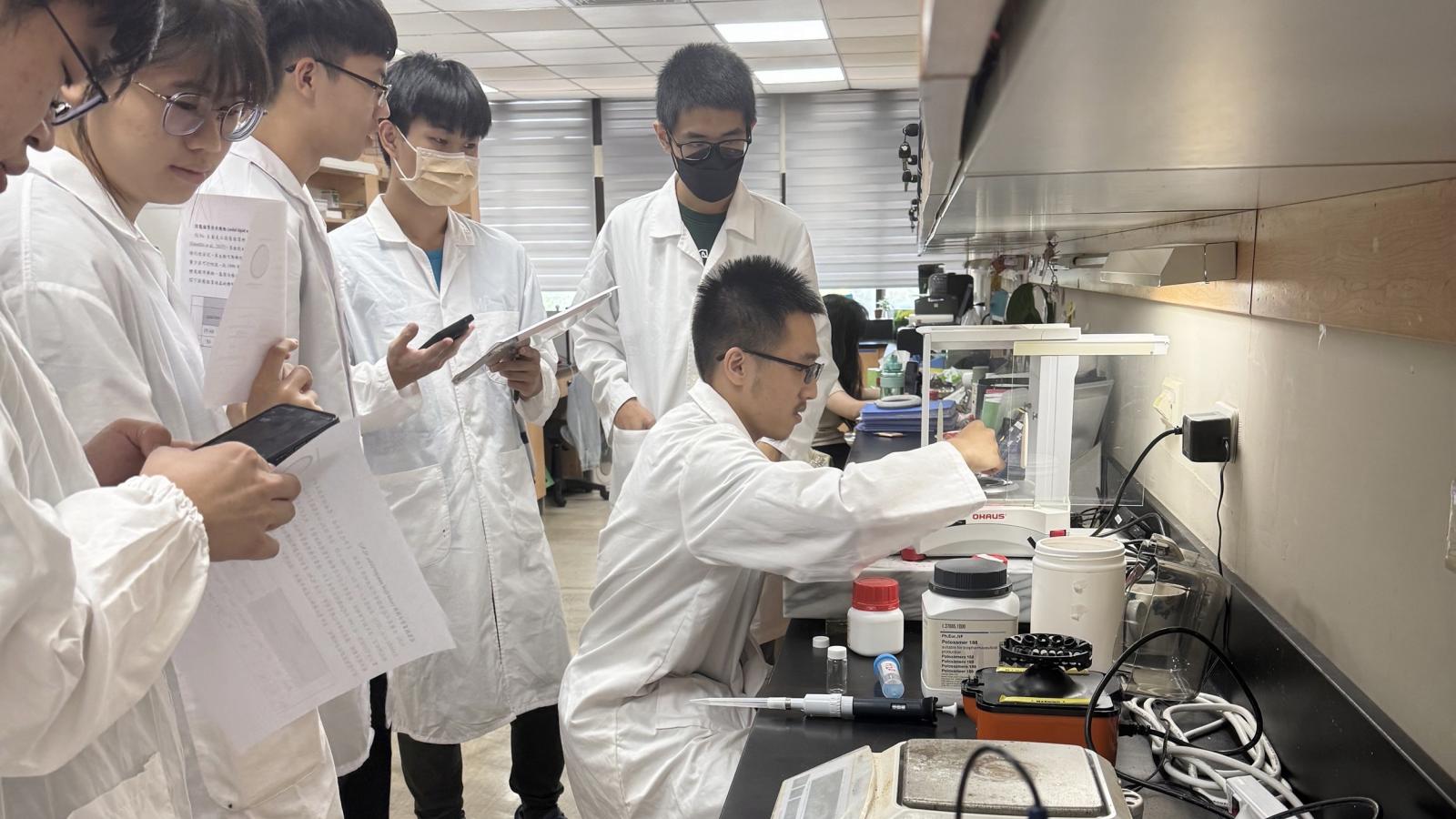
Beyond robust clinical training, the TCM department has actively incorporated foundational research, AI, and digital technologies into its curriculum. Seven students have already joined Chang Gung’s pioneering "AIMD Dual-Degree Bachelor-Master Program," simultaneously pursuing a master’s degree in artificial intelligence, aiming to cultivate a new generation of physicians with AI application skills and interdisciplinary research literacy. To establish strong research foundations early, this summer the department introduced the "Introduction to and Practice of Basic TCM Research" course, guiding lower-year students into laboratories. Breaking from traditional classroom teaching, expert research instructors personally guide students in modern scientific techniques such as metabolomics, molecular genetics, protein analysis, immunofluorescence, animal models, and cellular molecular mechanisms.
Additionally, the department offers a "Master’s Program in Traditional Chinese Medicine" and a "Master’s Program in Natural Medicines," providing abundant academic resources for advanced study. Professor Yang firmly believes that "physicians should be scientists." He stresses that a balanced focus on clinical practice and research is essential—guiding students to explore TCM mechanisms using modern science, starting from traditional theories and clinical observations. The department remains committed to training physicians with dual expertise in Western and TCM and strong research capabilities, injecting modern scientific energy into traditional medicine. Recently, its research team discovered that the natural active compound "psoralidin" found in herbal medicine shows potential in promoting healthy aging and extending lifespan—the findings were published in the prestigious international journal *Nature Communications*, demonstrating the powerful capability of modern science to validate traditional medicine.
FACT BOX
- Source: PR Times
- Category: News