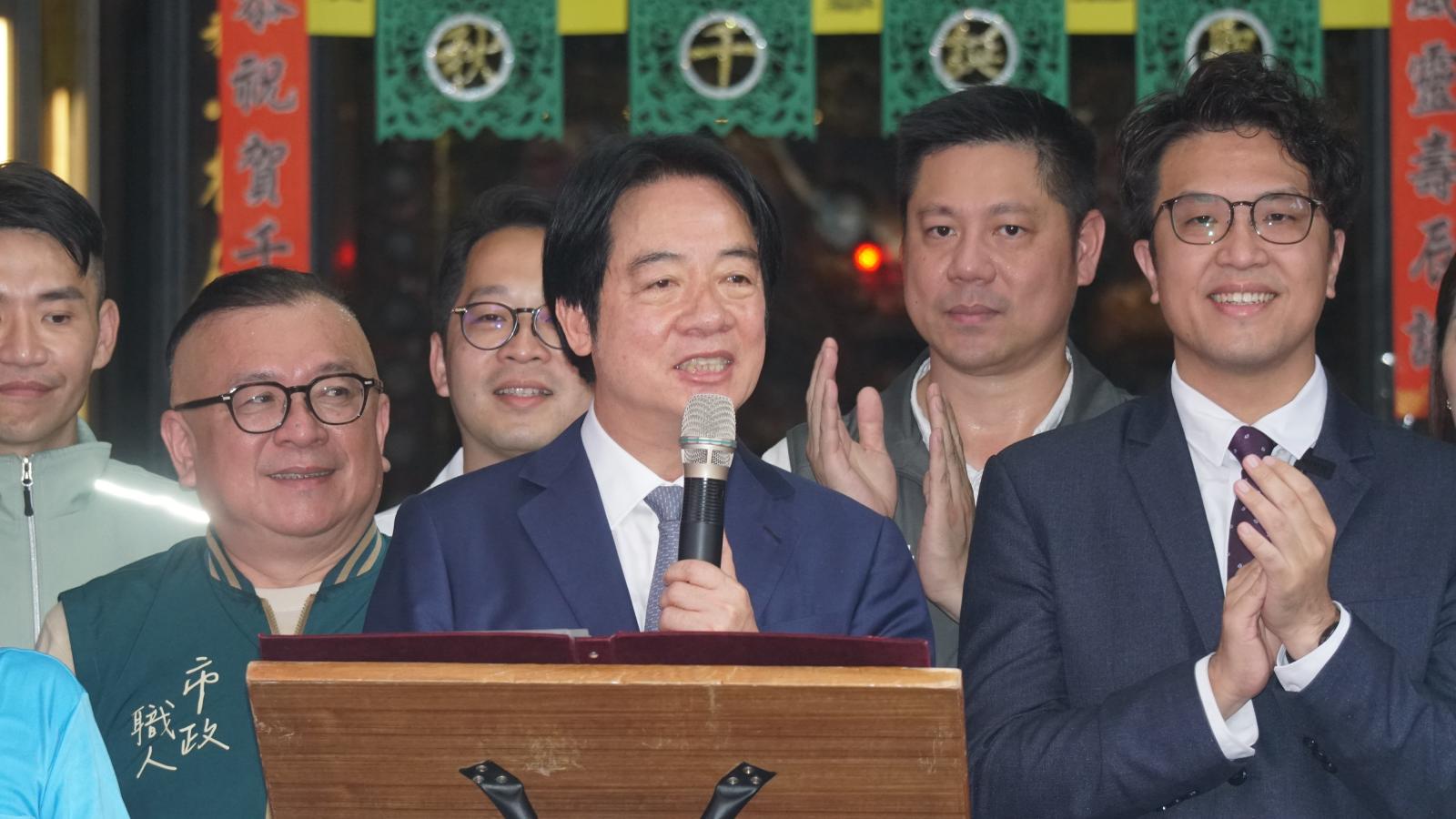
Amid the escalating food safety scandal involving Zhonglian Oils, former legislator Guo Zhengliang criticized President Lai Qingde on his show 'Liang Hua Tian Xia' for being indifferent to public anxiety over domestic food safety. Guo pointed out that although Lai stated on July 6 he would 'pursue the matter to the end,' he remained silent for the following 28 days. 'More than a month after the toxic oil incident, Lai has disappeared. He hasn't spoken for 28 days,' Guo criticized.
In contrast, after the Kumamoto earthquake, Lai quickly issued a condolence message and pledged a donation of 200,000 yuan. Guo highlighted the disparity: '28 days of silence on the toxic oil issue, yet he responded within three hours to Japan's earthquake.' He questioned the stark difference in Lai's response to domestic versus international events.
Guo noted that Prime Minister Koike Masami's initial thank-you post did not mention Lai Qingde. 'It's truly sad. Lai ignored public anxiety over the toxic oil, yet rushed to express condolences and donated 200,000 yuan to Japan—only to be ignored in return,' Guo remarked sarcastically. He added that Japan later updated its list of donors, placing Taiwan at 56th, behind Palestine. 'Lai Qingde, this is your beloved Koike Masami—how embarrassing is that?' he mocked.
Guo further contrasted Lai with KMT Chairperson Zheng Liwen, who led a party donation that was honored with an official donation ceremony by the Japan-Taiwan Exchange Association. 'Zheng Liwen got a ceremony—why didn't Lai get one?' Guo questioned, suggesting Lai's diplomatic overtures received no expected recognition. He summarized the series of events as 'good intentions unrewarded, everything going wrong.'
Shifting focus, Guo discussed the Ministry of the Interior's plan to petition for the dissolution of the Chinese Unification Promotion Party. He predicted this would be 'the first time in Taiwan's history a political party is dissolved,' with the government likely citing evidence of 'cooperation with Chinese united front operations.' Politically, Guo believes the move aims to 'set the stage for the 2026 and 2028 elections,' first targeting the Unification Party, then increasing pressure on the KMT. He anticipates the issue will become a major political talking point, potentially reigniting the 'resist China, protect Taiwan' narrative before local elections.
Other insights include Huang Yang-ming revealing a potential 'Ying-De rivalry' after-party combination emerging as Lai's biggest re-election threat. Additionally, a Mei-li Island poll shows Premier Cho Jung-tai's approval rating plummeting due to the Zhonglian oil scandal, while Lai remains unscathed—prompting analysis on why.
FACT BOX
- Source: PR Times
- Category: News