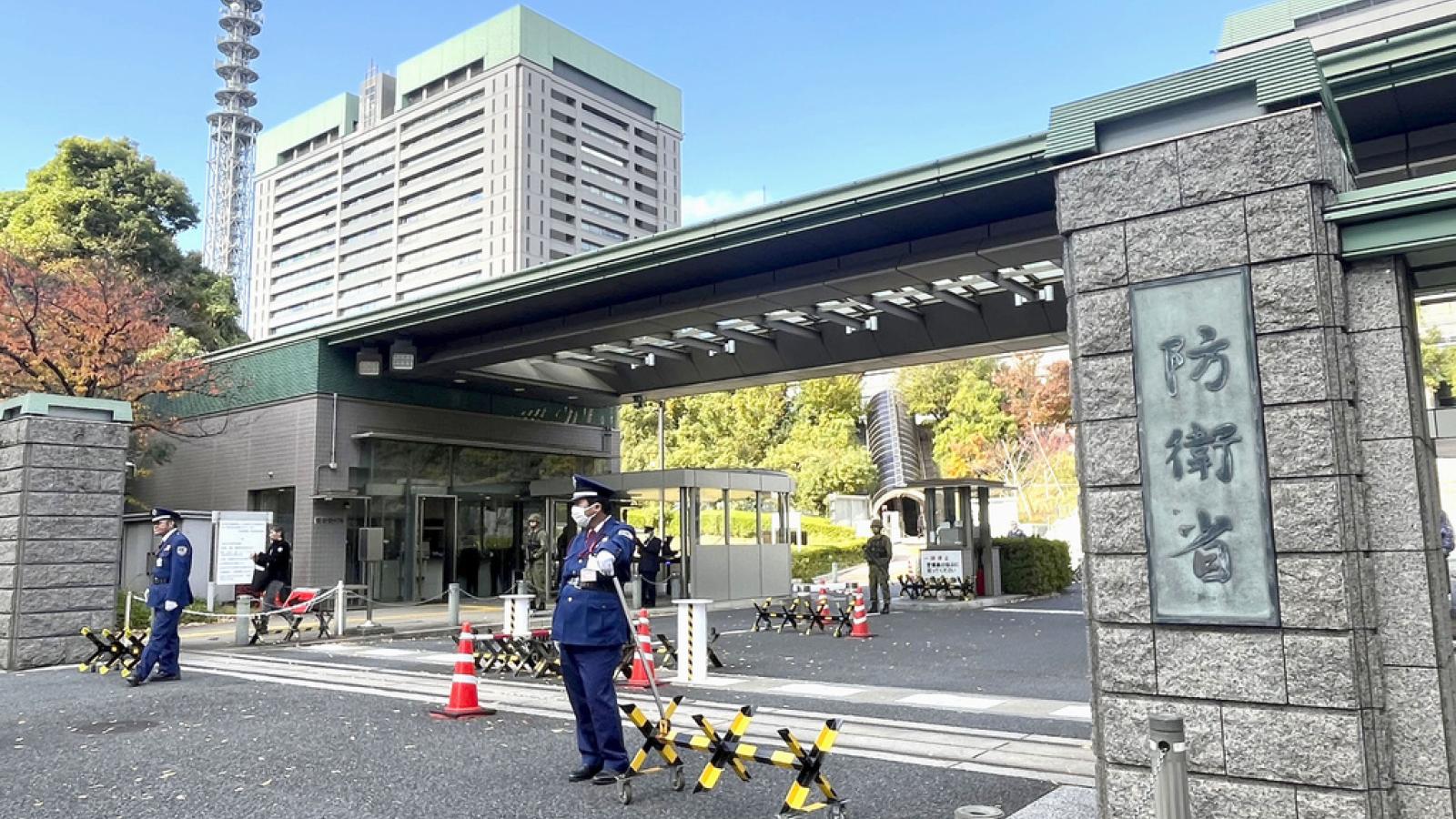
Japan's Ministry of Defense has released the '2026 Defense White Paper.' This year's edition removed phrases such as 'affects Japan's security,' retaining only 'the stability of the Taiwan Strait is important for international society,' drawing significant attention.
The white paper, released on Tuesday (August 4), noted that Chinese naval vessels are expanding their activities in the Pacific, describing China's military activities as 'a serious concern and an unprecedented strategic challenge.' On Wednesday (August 5), China's Ministry of Foreign Affairs lodged a 'stern protest' over Japan's 'groundless smearing' and 'hype.'
The white paper states that given the increasingly severe security environment around Japan, Tokyo will continue to rely on the Japan-U.S. alliance while deepening security cooperation with like-minded countries to strengthen deterrence.
Public opinion in Taiwan is watching whether this change signals a shift in Japan-Taiwan relations, and whether Prime Minister Masami Takagi's previous comment that 'a Taiwan contingency is a Japanese contingency' has been compromised. Taiwan's Ministry of Foreign Affairs has not issued any official comment on Japan's latest document.
In response, Taiwanese political scholar Yuenan Hong wrote in an article for Taiwan's Central Broadcasting System, analyzing that Prime Minister Takagi's remarks last year on the 'Taiwan contingency' triggered tensions in Japan-China relations. As a result, the term 'existential crisis situation' appears only in the general explanation of Japan's security legislation this year, completely detached from any reference to Taiwan.
He said: 'This is a typical bureaucratic approach to managing political overheating: removing sentences that Beijing can directly quote and protest against, while preserving broader operational judgment.'
Taiwan-Japan relations expert Professor Tsai Shih-hsun of Tamkang University told BBC Chinese that claims of a shift in Japan-Taiwan relations are an overreaction. He explained that in the Defense White Paper, Taiwan is listed under the section on 'cooperation with allied and like-minded countries,' stating 'cooperation and coordination with allied and like-minded countries,' which already indicates deepening Japan-Taiwan relations.
Professor Tsai believes: 'Many people in Taiwan, including the government, have not recognized Japan's use of the term 'like-minded countries' and failed to respond appropriately. It's a pity. Japan cannot face China, North Korea, and Russia alone, so defense cooperation between Japan and Taiwan has entered a new stage, rather than remaining stuck in outdated terminology.'
What does the white paper say?
This year's white paper further points out that China has continued to strengthen military activities around Taiwan in recent years, normalizing the deployment of military aircraft and vessels, and exerting pressure through large-scale military exercises, aiming to undermine the Lai Qingde administration, constrain U.S.-Taiwan security cooperation, and deepen social divisions in Taiwan.
The white paper cites analysis from Japan's National Institute for Defense Studies, showing that China's related actions in 2025 increased rather than decreased, including military drills such as 'Strait Thunder-2025A' and 'Righteous Mission-2025,' exhibiting three major characteristics: realism, propaganda, and normalization.
The drills cover precision strikes, sea and air blockades, coordination with maritime law enforcement, and 'decapitation operations,' with expanded blockade areas, and use of mixed real-and-fake videos for cognitive warfare to pressure Taiwan and the international community.
Analyzing the newly released white paper, Hong Yuenan said the most sensitive change this year is the wording on Taiwan. He noted that in previous white papers, a standard phrase was used when discussing the Taiwan Strait: 'the stability of the Taiwan situation is not only important for our national security, but also crucial for international stability.' However, the 2026 edition retains only the latter half in both the 'Developments around Taiwan' and 'U.S.-Taiwan Relations' sections, removing 'important for our national security.'
Additionally, the 2025 version stated that peace and stability in the Taiwan Strait has become 'an issue of growing concern for the international community, including our country'; the 2026 version changed this to 'not only the Indo-Pacific region, but the entire international community.'
Therefore, Professor Hong said, Japan has again disappeared from the sentence. These three revisions consistently point in one direction: 'The Chinese threat has not diminished, but Japan has voluntarily stepped back from being the subject in discourse on the Taiwan Strait.'
Professor Tsai Shih-hsun explained to BBC Chinese that the 2026 Defense White Paper explicitly states on page 74 regarding China: 'its military power is rapidly increasing in both quality and quantity,' which has become 'a serious concern for Japan and the international community' and 'an unprecedented greatest strategic challenge.'
Professor Tsai emphasized that the white paper mentions Japan should respond through comprehensive national power, including its defense forces, and cooperation with 'allied and like-minded countries.' Among them, Taiwan, as a 'like-minded country' of Japan, and Tokyo's proposed 'new forms of warfare,' represent a new area of cooperation between Japan and Taiwan.
Moreover, this year's white paper has added a dedicated chapter on 'new forms of warfare' for the first time, drawing lessons from the composite attack models in the Russia-Ukraine war involving drones, AI, satellites, and electronic warfare. It maintains high vigilance over China's aircraft carrier activities in the Pacific, China-Russia joint military exercises, and the rapid tilt of the military balance across the Taiwan Strait in China's favor.
Sino-Japanese relations remain tense
In fact, observing recent changes in Sino-Japanese relations, tensions appear far from subsiding.
Earlier this month, Tokyo confirmed that China is advancing the construction of new structures west of the 'Japan-China median line' in the East China Sea, marking at least the third time Japan has expressed 'deep regret' and strong protest over similar facilities in 2026.
Japan's Ministry of Foreign Affairs believes that if completed, these facilities would become China's 24th such structure west of the median line, driven not only by resource development but also aimed at probing the commitment of the Trump administration to its Asian allies.
For example, Chen Xi, spokesperson for China's Ministry of National Defense, criticized Japan's new Defense White Paper at a press conference on Tuesday, saying it 'is full of false narratives, exaggerates the so-called 'surrounding security crisis,' and hypes the 'China threat,' completely a case of the thief crying 'stop thief,' serving as an excuse for Japan's own military loosening.' He also emphasized that the Taiwan issue is an uncrossable red line and urged Japan to stop interfering in China's internal affairs.
Since Prime Minister Takagi's 'Taiwan contingency' remarks last year, Beijing has continued selective economic and tourism sanctions, while Japan has accelerated maritime security cooperation with countries like the Philippines, with both sides mobilizing forces and seeking mutual deterrence.
For instance, The Economist noted that China is applying gray-zone strategies to pressure traditional U.S. allies like Japan, aiming to test the extent of U.S. security commitments to its Indo-Pacific allies.
However, Singapore-based independent international relations commentator Deng Mingjie told BBC Chinese that whether Taiwan can or is engaging in deeper collaboration with Japan and South Korea—within a regional dialogue almost entirely framed by Washington and Beijing—has received almost no attention.
Therefore, Deng Mingjie emphasized to reporters that Japan can actually serve as an indicator to judge the strategic direction of U.S. regional policy: 'If Takagi adjusts her 'Taiwan contingency' statement, it means maintaining stability with Beijing is now prioritized. If she does not, it indicates Tokyo's deterrence logic is still in effect. A third outcome is more likely: the statement quietly fades away without formal retraction.'
This new white paper continues to emphasize the unwavering Japan-U.S. alliance and deepening cooperation with like-minded countries, reflecting the strategic choice of the Takagi administration under this backdrop: providing sufficient justification for preparedness domestically, while avoiding further fueling already tense Japan-China relations.
FACT BOX
- Source: PR Times
- Category: News
- Organizations: BBC