Taiwan has been promoting the 'Urban Resilience Exercise' since 2025, and in 2026, it will include a first-time 'mobile network slowdown' drill. Central and northern regions will undergo phased 30-minute reductions in mobile network speeds, during which public communications will be limited to voice calls and SMS. The announcement has sparked public debate.
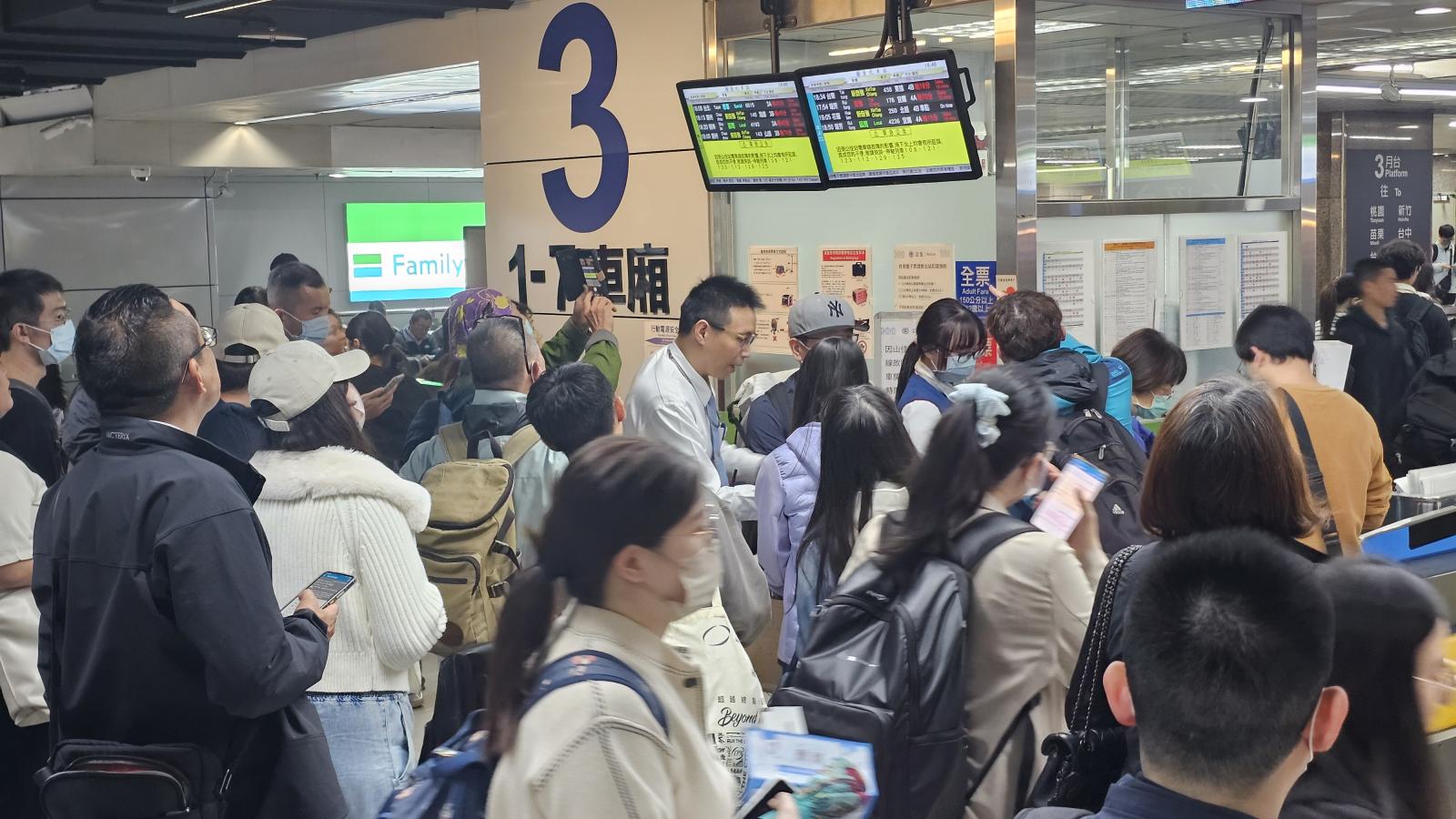
The 'internet blackout' drill in northern and central areas will take place from 2:30 PM to 3:00 PM. Today (the 7th), the Ministry of Transportation stated that travelers using Taiwan Railways, trains, and flights should allow an extra 30 minutes to reach stations or airports compared to normal times. Railway and aviation authorities have increased staffing to assist passengers and ensure smooth operations and passenger rights.
### When Will Networks Be Affected in Central and Northern Taiwan? What Is the Urban Resilience Exercise?
The Urban Resilience Exercise integrates the former 'Wan-An Exercise' (air defense) and 'Min-An Exercise' (disaster relief). This year marks the first inclusion of a mobile communication network slowdown drill, initially targeting regions with the highest nationwide mobile traffic.
The 2026 Urban Resilience Air Defense Exercise will be conducted in five phases, with two phases involving 30-minute mobile network slowdown drills:
- Central Region: August 10, 2:30 PM – 3:00 PM — Miaoli County, Taichung City, Nantou County, Changhua County, Yunlin County, Chiayi County and City - Northern Region: August 13, 2:30 PM – 3:00 PM — Yilan County, Keelung City, Taipei City, New Taipei City, Taoyuan City, Hsinchu County and City
### Actual Impacts of the Central and Northern Drills? Not a Full 'Internet Blackout' – Indoor Wi-Fi Unaffected
Regarding actual impacts, national security officials clarified that this exercise does not involve a complete 'internet shutdown,' but rather a reduction in mobile network speeds. High-bandwidth activities such as video streaming, file uploads, and video calls may be disrupted, but SMS, text messaging, regular phone calls, and disaster alerts will remain functional.
Moreover, the slowdown applies only to public 4G and 5G mobile networks. Indoor Wi-Fi and private networks used by high-tech companies are unaffected.
Concerns have also arisen about whether contactless payments will work. Officials stated that if merchants use fixed-line back-end systems, transactions should proceed normally. However, real-time online financial transactions should be avoided.
Officials emphasized that the 'mobile network slowdown' drill is not an internet blackout. (Photo credit: Yan Lin-Yu)
### Will Network Slowdown Affect Travel? Ministry Lists 3 Key Reminders
Regarding impacts on public transportation, the Ministry of Transportation explained in a press release today that TRA, THSR, and airport flights will operate normally during the drill. However, reduced mobile network speeds in the affected zones may disrupt smartphone and mobile device connectivity. As a result, opening ticketing apps may lead to slow or failed logins, identity verification, e-ticket downloads, or online refund/rescheduling functions.
To address this, travelers using TRA, THSR, and airport services are urged to pay attention to the following three points:
- Complete ticket collection in advance or carry physical tickets/cards - Depart earlier and arrive at stations or terminals 30 minutes ahead of usual time - Use station or airport Wi-Fi when connections are unstable, or seek assistance from staff
More exclusive insights from Feng Media:
· Can you use Wi-Fi during the central/northern 'blackout'? Full impact breakdown – 3 concerns raised: Can southern stock traders cope? · This Week’s Top Insider: Han Kuang in turmoil! Civilian minister pressures military, did Koo want him as bodyguard? Yang Chen-Ni bullying record—not just intimidating Yen Hui-Hsin · Are 'English teachers' everywhere during Han Kuang drills? Scholar warns rising US-Taiwan cooperation risks: Trump might say one sentence
FACT BOX
- Source: PR Times
- Category: News