Whether from sea or air, the Chinese People's Liberation Army continues to pressure Taiwan's defense systems. Yet, to foreign media and experts, Beijing's military strength is not the only threat: beyond missiles, China is now targeting Taiwan's 'political mindset,' aiming to convince its people that resisting unification is futile. Bloomberg columnist Karishma Vaswani points out that as President Lai Ching-te enters his second year in office, Taiwan faces escalating internal tensions. The DPP-led government struggles to function under a fragmented legislature, with defense budgets delayed and political infighting pushing cost-of-living issues to the sidelines—exactly reinforcing Beijing’s narrative that democracy is chaotic and inefficient.
In her view, drones, fighter jets, and missiles alone cannot fully defend Taiwan’s hard-won democracy. Beijing’s current tactics are cheaper, lower-risk, and directly undermine governance effectiveness. Compared to direct military confrontation, this gradual erosion of public trust in democratic institutions is far harder to counter.
The PLA Eastern Theater Command released a drill poster targeting both northern and southern Taiwan, vowing to 'seal ports and cut communications' (screenshot from PLA Eastern Theater Command WeChat official account).
Meanwhile, President Lai’s firm sovereignty statements, while rallying support, have triggered stronger reactions from Beijing, making domestic political consensus even more difficult to achieve.
Hankuang Exercise Tests Anti-Blockade Capabilities for the First Time
On the surface, Taiwan remains an economically successful island. In the first half of 2026, Taiwan’s GDP growth reached 13.72%, the fastest pace in nearly 50 years. TSMC, the core of its technological prowess, remains the indispensable 'national guardian mountain' in the global semiconductor industry.
Yet economic prosperity does not guarantee absolute security. In July, the PLA conducted a two-day live-fire drill in the Taiwan Strait. In June, China Coast Guard vessels patrolled for several days in eastern Taiwan waters and, for the first time, boarded and inspected foreign merchant ships—demonstrating Beijing’s expanding jurisdiction beyond traditional boundaries.
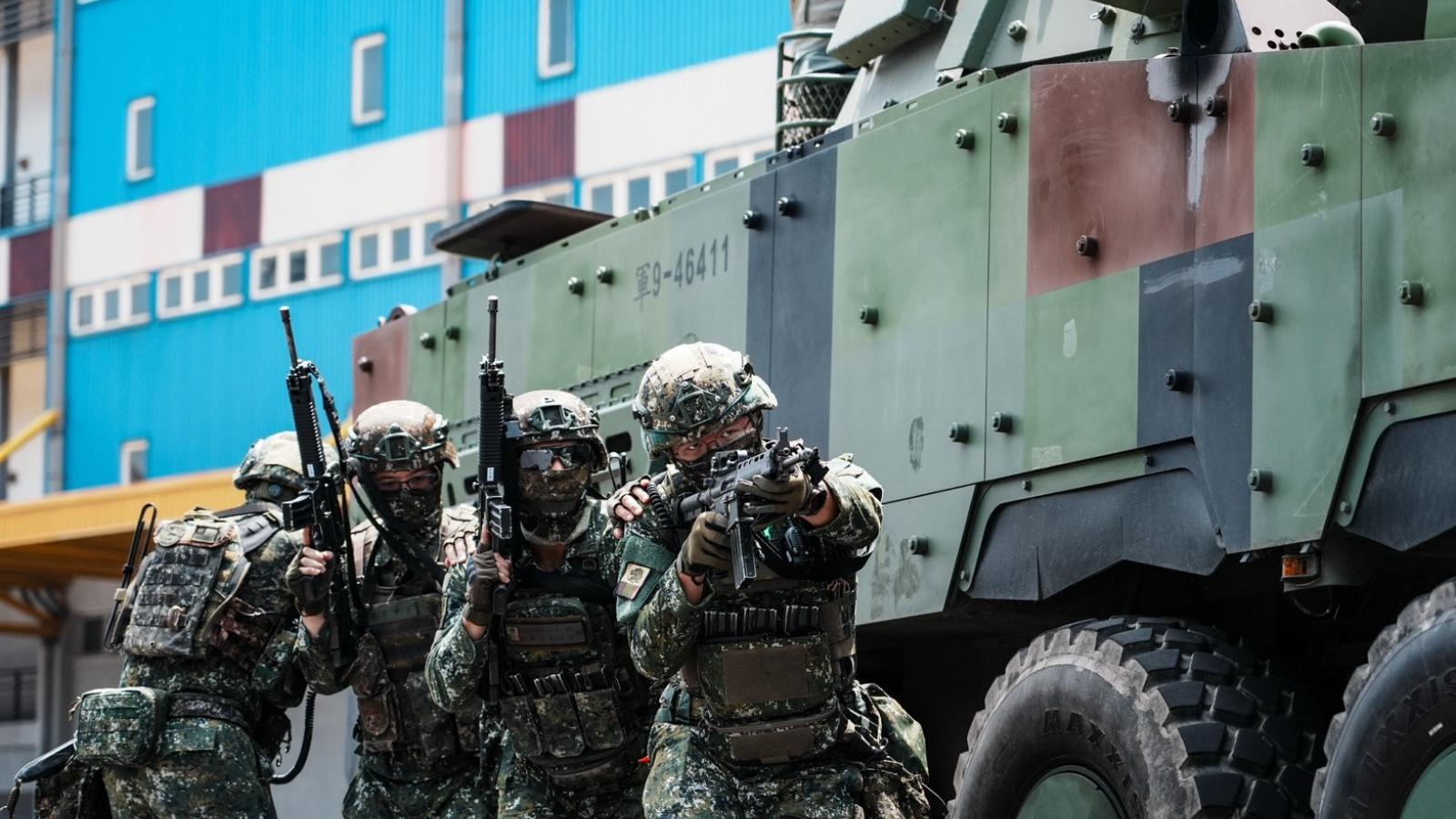
To counter potential threats, Taiwan launched its 10-day annual 'Hankuang Exercise,' for the first time including 'anti-maritime blockade' as a key drill focus. Alongside active and reserve forces, the exercise simulated civil defense responses under disrupted mobile and communication networks.
Strengthening Local Identity as Key to Resisting Influence
Cognitive warfare is taking effect, particularly among youth. A 2025 study found that Taiwanese frequent TikTok users are more likely to accept narratives such as 'unification is inevitable' or 'democracy should be sacrificed for peace.'
At the same time, polls show that young people born and raised in a democratic environment, with no emotional ties to China, increasingly identify as 'Taiwanese' rather than Chinese. Beijing knows it cannot win Taiwanese hearts overnight and has opted for a long-term war of attrition. For Taiwan, the greatest future challenge lies in ensuring that the next generation continues to believe that democracy is worth fighting for and defending.
FACT BOX
- Source: PR Times
- Category: News
- Organizations: TSMC / Bloomberg