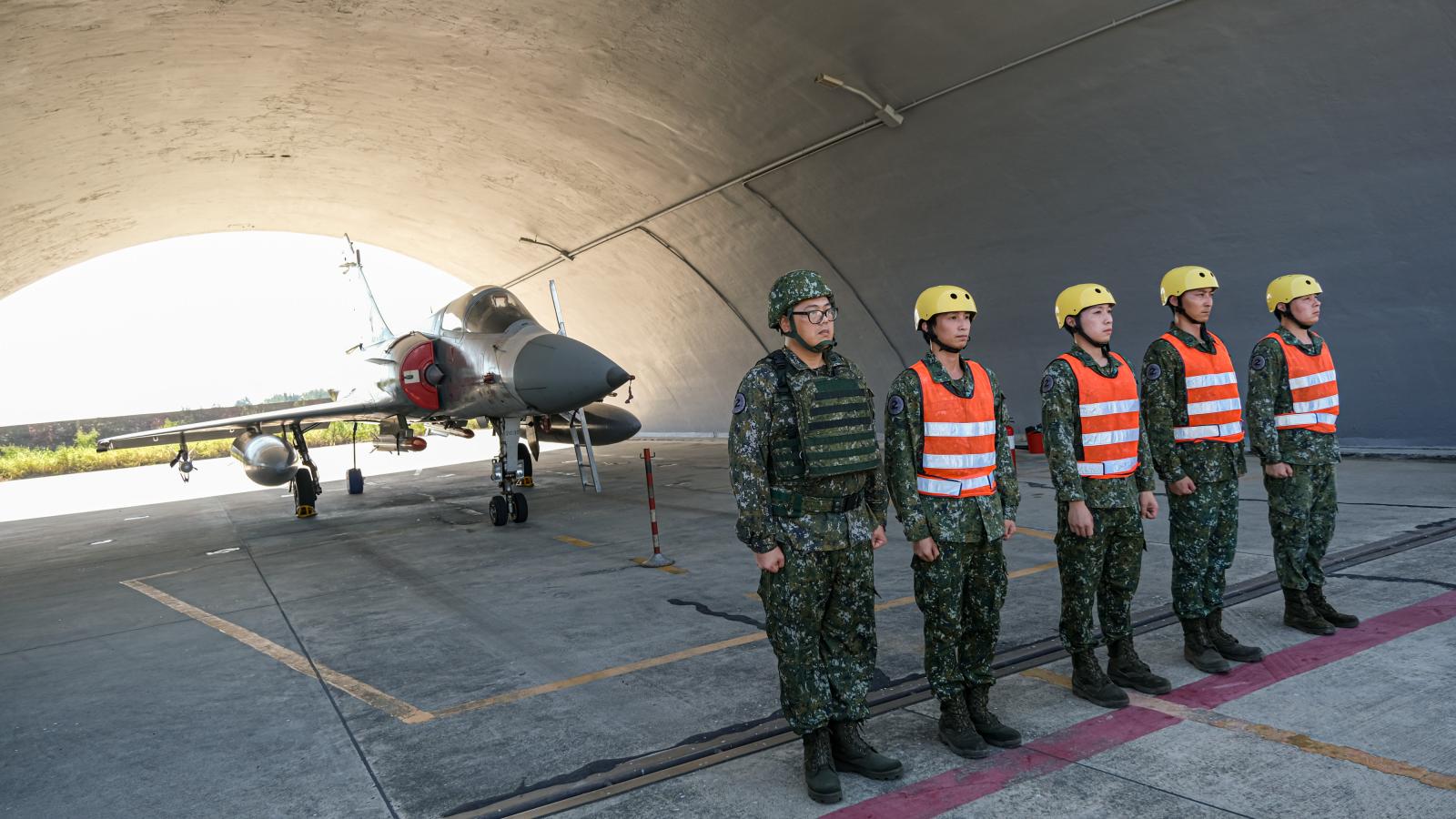
The Han Guang 42 live-fire exercise entered its third day today (7th), with the Air Force's 2nd Tactical Wing conducting drills on runway and taxiway repair, rapid rearming (known as 'potential arming'), and emergency takeoffs. Notably, Mirage 2000 fighters were required to complete emergency takeoffs within 6 minutes of an alarm, making it a true race against time.
'Potential arming' refers to specialized personnel completing the loading of weapons and external fuel tanks onto fighter jets within a specified timeframe. Depending on operational needs, readiness is categorized into 'full' and 'recovery' levels. Today, the Mirage 2000 was configured to the 'recovery' standard air defense setup, carrying two Magic missiles on outer stations and two MICA missiles on the centerline station.
Regarding runway repair, the Air Force simulated wartime scenarios in which airport runways and auxiliary strips would be primary enemy targets. If not promptly repaired to allow aircraft takeoffs and landings, air superiority capabilities would be lost. Therefore, runway repair is a critical recovery operation following base attacks. Today’s drill included crater filling and the deployment of foldable fiberglass runway mats.
A media briefing for the 'Han Guang 42 Exercise Live Drills' was held at Hsinchu Air Base on the 7th. Photo: Magic missile. (Photo by Liu Wei-Hung)
An Air Force field spokesperson noted that due to time constraints, today’s simulated bomb crater was limited to 20 feet in diameter, though regular training can handle up to 50 feet. Typically, completing earthwork and leveling takes about 90 minutes, followed by laying 30x54-foot fiberglass runway panels. Additionally, behind the runway, a ground-launched Sky Sword I surface-to-air missile system was deployed for low-altitude defense to protect repair crews from enemy fire.
Lieutenant Colonel Lin Chih-Hsuan, Commander of the Facilities Squadron, Air Base Support Group, stated in an interview that today’s drill was a scaled-down version. In actual operations, a damage assessment team first uses drones to survey the entire runway, selects the most viable takeoff and landing spot, and then completes repairs—typically taking about four hours.
At the end of the drill, the Air Force conducted two Mirage 2000 sorties, including taxiing and emergency takeoffs. Upon the alarm, all crew members rushed out of the readiness room and successfully launched within 6 minutes. Currently, Taiwan’s Mirage 2000 fighters are stationed at Hsinchu Air Base, primarily responsible for northern Taiwan’s air defense and high-altitude interception missions.
FACT BOX
- Source: PR Times
- Category: Event