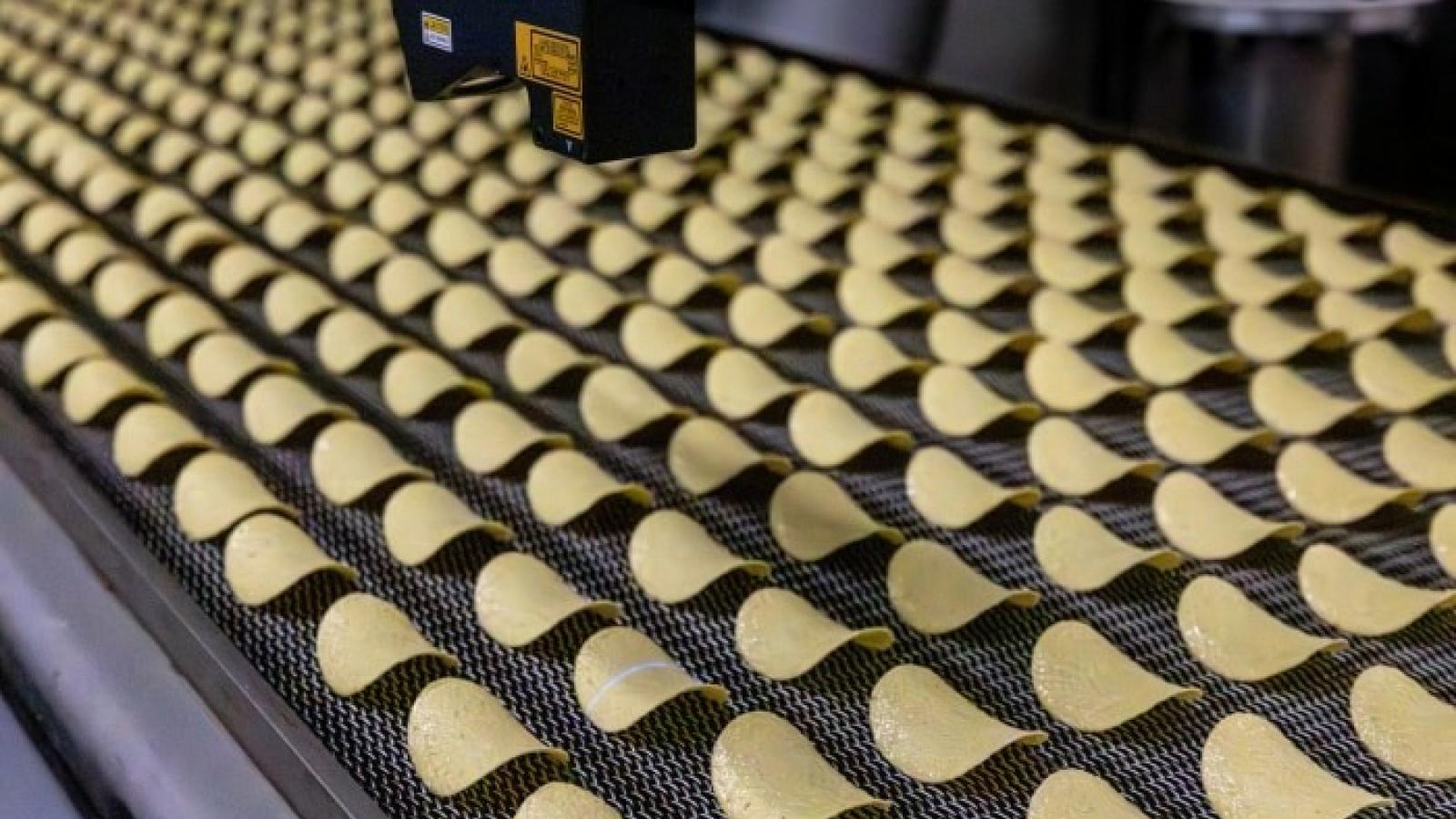
After implementing AI on its European Pringles production line, productivity has significantly improved: output increased by 10%, and raw material waste decreased by 13%. With an investment of approximately $4 million to $5 million, the return on investment reached 40%.
Kellanova, the parent company of Pringles, partnered with Siemens to create a real-time 'digital twin' for the continuous dough-processing stage at its factory in Poland. While digital twins are not a new concept, integrating AI enables more immediate adjustments to production parameters.
'Every batch of potatoes we receive is different,' said Cedrik Neike, Member of the Siemens Board and CEO of Digital Industries, who developed the AI system. 'But now, no matter what kind of raw material we use, we can ensure that every Pringles chip meets the expected specifications.'
The AI system continuously analyzes sensor data from the production line, dynamically adjusting variables such as temperature, pressure, cutting speed, and frying time. This ensures consistent texture, appearance, and flavor across all chips, even when potato quality fluctuates due to seasonal or regional differences.
This initiative exemplifies the shift toward smart manufacturing in the food industry. By combining industrial IoT, real-time analytics, and machine learning, Kellanova and Siemens have created a scalable model for quality control and operational efficiency. The success in Poland may lead to global rollout across other snack production facilities.
The project also supports sustainability goals by minimizing food waste and optimizing energy usage. As consumer demand for both consistency and eco-friendly practices grows, such AI-driven solutions are becoming essential for major food manufacturers.
FACT BOX
- Source: PR Times
- Category: Partnership
- Organizations: Siemens / Kellanova
- Products / services: Pringles / Digital Twin