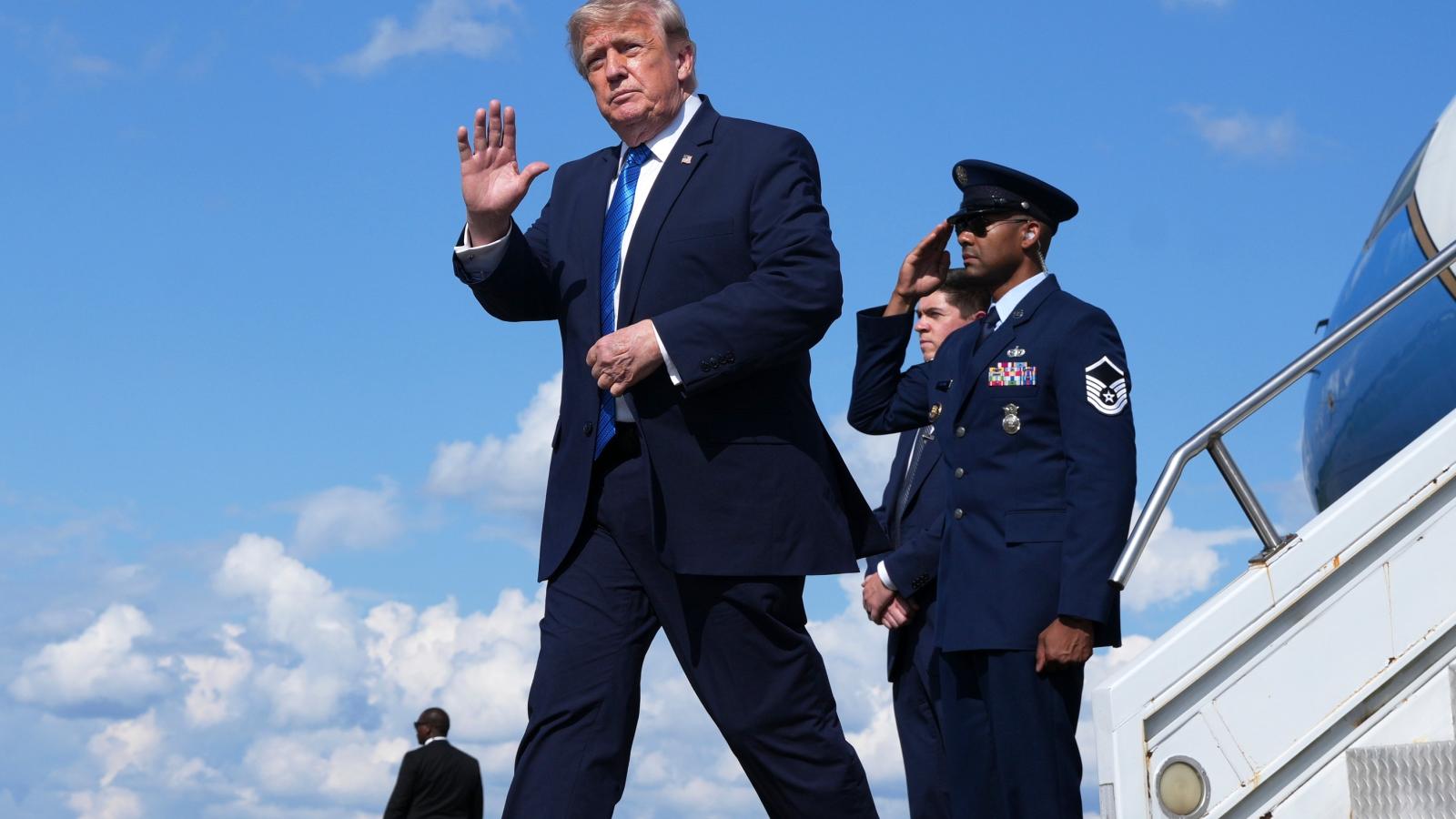
While political non-fiction book sales in the U.S. have been sluggish over the past year, the newly released book 'Regime Change: Inside the Imperial Presidency of Donald Trump' by New York Times reporters Maggie Haberman and Jonathan Swan has broken records, selling over 300,000 copies in its first week. This book defies the 'Trump fatigue' phenomenon, becoming a bestseller. Author Maggie Haberman is a senior political reporter for the New York Times and a Pulitzer Prize winner. Over the past decade, she has been the most closely involved reporter in covering Trump. Her previous book, 'Confidence Man: The Making of Donald Trump and the Breaking of America,' established her authority in analyzing Trump's psychology and power mechanisms. Co-author Jonathan Swan is also a well-known political reporter for the New York Times (former Axios chief national political reporter) and a member of the Council on Foreign Relations. He has won the Gerald Loeb Awards twice and received an Emmy Award in 2021 for his sharp interview at the DealBook summit. This 464-page work is the first comprehensive report on Trump's second term, based on hundreds, even thousands, of in-depth interviews conducted over three years. The narrative is strictly based on direct quotes from interviewees, contemporaneous notes, meeting recordings, and official written records. The book focuses on the first 14 months of Trump's second term, a critical period when his governance model underwent a fundamental paradigm shift, shaping a highly personalized 'imperial presidency.' Trump's second presidential term is not yet halfway through, but his 'imperial' governance may have already changed the role of the president. Haberman and Swan say, 'This is actually a fundamental reshaping of the presidency. It's not just about how Americans view the president or how the president acts, but also how other countries view the U.S. president.' The authors state that they are witnessing a form of regime change in their own country. The Trump administration is highly secretive, but Haberman and Swan's new book 'Regime Change' delves into the core of Trump's power, obtaining a wealth of internal information. During his first term (2017-2021), Trump did not understand how Washington worked, so he appointed a group of traditional establishment figures, including former Defense Secretary James Mattis and former Secretary of State Rex Tillerson, to manage the government. By the latter part of his first term, Trump was very dissatisfied with the impact these people had on his presidency, as they not only did not follow his orders but often dissuaded him from doing what he wanted, such as launching large-scale trade wars, withdrawing U.S. troops from around the world, pursuing more radical foreign policies, and attacking his enemies. This time, Trump deliberately did not allow those who 'hated his worldview' into the government. This term, Trump is almost unrecognizable from his previous term. Trump has broken long-standing presidential conventions. He has become almost unconstrained, relentlessly trying to make the federal government, cultural institutions, and the media submit to his will. He does so partly because the Supreme Court has granted him presidential immunity, partly because Republican lawmakers in both houses are completely afraid of him, and partly because he has a highly loyal team around him. He now acts almost entirely on instinct. He is reshaping the world with naked unilateral power, unconstrained by the usual checks and balances. As an example of this new power, Haberman and Swan recount Trump's decision to go to war with Iran, including a secret briefing in the Situation Room. On February 11, Netanyahu sat across from Trump and made a one-hour presentation to the president and his senior aides. He believed Iran was ready for regime change, and a joint U.S.-Israel military operation could overthrow the Islamic Republic. During the presentation, he played a video that included a series of figures who could potentially lead Iran after the fall of the theocracy, including Reza Pahlavi, the eldest son of the last Shah of Iran. Israeli leaders and their advisors painted a picture of near-certain victory: Iran's missile program would be destroyed in a few weeks, the Strait of Hormuz would remain open, and retaliation against U.S. interests would be minimal. The Israeli intelligence agency Mossad could help incite uprisings within Iran to deliver the final blow. Trump's response was quick and clear, and to most people in the room, it sounded like agreement. He told the Israeli prime minister, 'I'm listening, and it sounds good.' U.S. analysts worked overnight to assess Netanyahu's proposal. The next day, they gave a blunt conclusion in another Situation Room meeting. U.S. intelligence officials believed that the first two goals proposed by Israel—killing the supreme leader and weakening Iran's ability to threaten its neighbors—were achievable. However, the latter two goals proposed by Netanyahu and his team—inciting uprisings within Iran and replacing the Islamic government with a new secular leader—were not achievable. CIA Director John Ratcliffe described these regime change plans with one word: 'ridiculous.' Secretary of State Marco Rubio translated that word: 'In other words, it's nonsense.' Trump listened to this assessment—then dismissed it. He said, 'Regime change is their problem.' His interest in eliminating Iran's supreme leader and dismantling its military capabilities had not diminished. Vice President James David Vance was the strongest opponent of this war—and the only one who put up a strong argument. He told colleagues that launching a regime change war against Iran would be a disaster. In front of the president and other advisors, Vance warned that the conflict could lead to regional chaos and massive casualties, tear apart the president's political coalition, and be seen as a betrayal by voters who supported the promise of 'no new wars.' He emphasized the depletion of U.S. ammunition reserves and the possibility of Iran carrying out massive and unpredictable retaliation due to the stakes of regime survival. He also warned about the Strait of Hormuz and the possibility of a surge in gasoline prices. Vance originally leaned toward not taking any action. But knowing that Trump was very likely to act, he tried to guide Trump to choose more limited options. When that also failed, he advocated using overwhelming force to end the war quickly. At the final meeting on February 26, he was blunt with the president: 'You know I think this is a bad idea, but if you decide to do it, I will support you.' The core circle had different positions, but there was one commonality: no one, except Vance, took strong measures to try to change Trump's decision. Defense Secretary Peter Hegseth was the most active supporter. On February 26, the day before Trump issued the final order, he told the team, 'We're going to have to deal with the Iranians sooner or later, so why not now?' Secretary of State Rubio was more conflicted—he leaned more toward continuing 'maximum pressure' rather than full-scale war, but he did not try to persuade the president to abandon the idea. White House Chief of Staff Susan Wiles was concerned that U.S. involvement in Middle East conflicts would affect the midterm elections, but she thought she should not express her concerns about military decisions to the president in large meetings. Some advisors had serious concerns privately but ultimately obeyed the president. Chairman of the Joint Chiefs of Staff General Daniel Caine had serious concerns about the war and continuously pointed out various risks: weapons consumption, the possible closure of the Strait of Hormuz, and the unpredictability of Iran's response. But he was extremely cautious, never taking a clear position, always emphasizing, 'It's not my job to tell the president what to do,' to the point that some people thought he seemed to be supporting all views at the same time. Trump often only heard what he wanted to hear. President Trump was convinced that this would be a quick and decisive war.
FACT BOX
- Source: PR Times
- Category: Survey