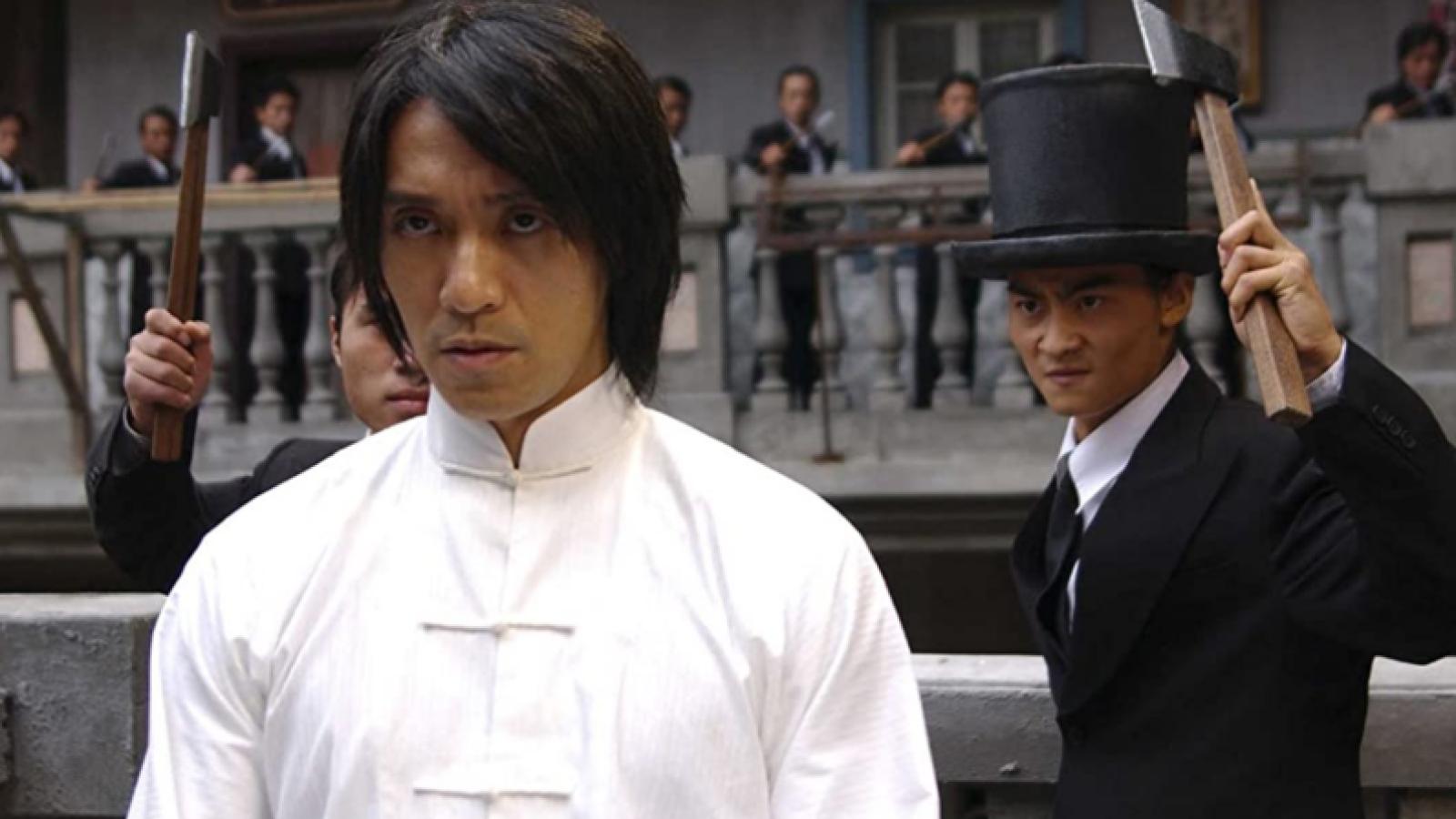
The box office success of <Kung Fu Girls> in mainland China has reignited discussions about Stephen Chow (referred to as 'Brother Chow') and his absurdist style, which has been harshly criticized by veteran figures in the Chinese entertainment industry. These veterans argue that Chow should not have altered <Journey to the West> and that his absurdist style is not refined enough for high culture. Some critics even label it as a form of 'colonialism,' though they fail to explain how or why. I suspect they mean that absurdist humor is a marginalized form of performance that gained popularity because it originated in pre-colonial Hong Kong, which mainland Chinese people (in the past) were drawn to. Once a work is released, the author becomes part of the audience; the author's interpretation of the work may change over time. The so-called core spirit of a work is only relevant in a specific time and place. This is the well-known 'author theory.' Therefore, the extensive cuts made to the script of <Odyssey> are not a big issue. In the 1990s, the two adaptations of <The East is Red> (1992, 1993) directed by Ronald Cheng differed significantly from Jin Yong's <The Return of the Condor Heroes>, yet audiences did not complain. Chow's <The Deer Hunter> (1992) was also a major adaptation of the original work. I cannot say whether criticizing Chow under the name of 'colonialism' is a misapplication of the term or a misuse of a popular phrase. However, in <National Hero> (1994), Chow used a marginalized Chinese butcher to defeat a Westernized, modernized, and industrialized Chinese superhero, which is a prime example of subverting postcolonial cultural violence. (Arif Dirlik 1997) Chow may not frequently use terms like 'postmodern' or 'postcolonial,' and he humbly admits that he does not understand acting, but he is certainly aware of and sensitive to his cultural situation, which gives him a deep sense of perception.
FACT BOX
- Source: PR Times
- Category: News