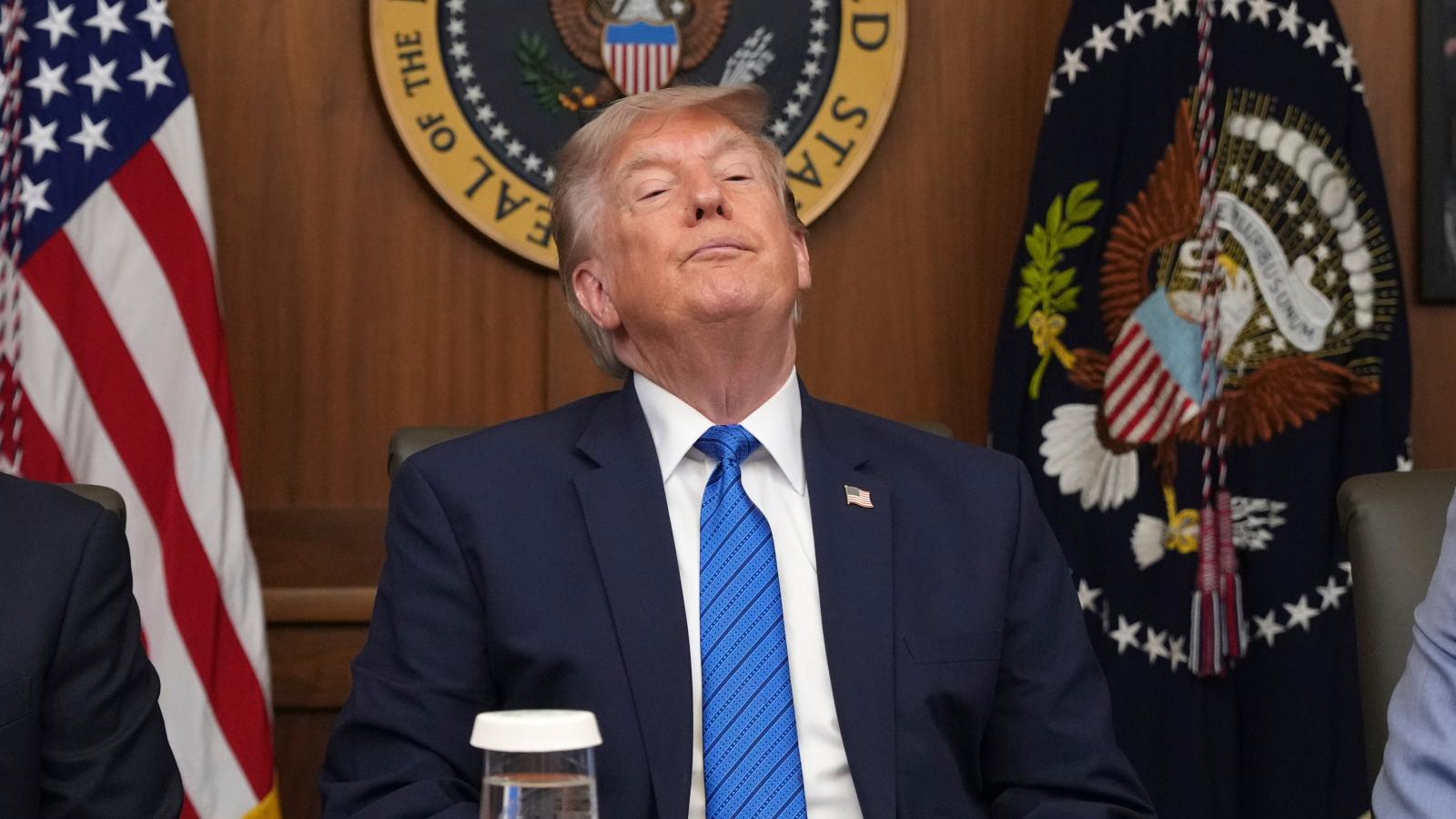
Former U.S. President Donald Trump’s $10 billion defamation lawsuit against the British Broadcasting Corporation (BBC) has seen a significant judicial development. On August 6, Eastern Time, just hours before the deadline, a U.S. federal court in Miami, Florida, granted Trump’s emergency motion for a temporary stay, halting the BBC’s access to a large volume of financial documents related to Trump’s business empire. As a result, tax returns, financial statements, and corporate ownership records—originally scheduled for delivery that day—will not be submitted for now.
This ruling means the trust managing Trump’s business interests is temporarily exempt from a court order requiring it to hand over financial records from approximately 400 companies. However, this is only a procedural, temporary victory. The court must still determine whether the BBC has a legal right to obtain these documents and whether Trump’s claimed massive economic damages are substantiated.
U.S. Federal District Judge Roy K. Altman ruled to pause the discovery order issued on July 27 by U.S. Magistrate Judge Enjolique A. Lett. Under Lett’s order, entities managing the 'Donald J. Trump Revocable Trust' were required to begin submitting the first batch of financial documents on August 6, including tax returns, financial statements, and equity and ownership records for around 400 companies.
Judge Altman, however, determined it was appropriate to pause enforcement of the order while the court considers whether to allow Trump to amend his complaint. The court noted that if Trump is ultimately permitted to amend his complaint, the current legal dispute over financial disclosure might become moot.
Trump’s legal team filed an emergency motion the previous day, strongly opposing the BBC’s request for broad corporate data. The lawyers argued that the BBC’s investigation scope was 'shockingly broad' and far exceeded what was necessary for the case. They claimed that even if the order were later overturned, the damage from exposing confidential financial information to the BBC would be irreparable.
Therefore, the legal team requested the court to halt all document transfers until key legal issues are resolved.
The central legal battle between the parties revolves around the nature of Trump’s damages. In the original complaint, Trump alleged that the BBC documentary not only harmed his personal reputation but also severely damaged his brand value, real estate, and various businesses, justifying a $10 billion damages claim. The BBC countered that since Trump claims significant financial losses to his enterprises, he must provide concrete financial evidence.
Thus, the BBC requested full financial records to verify whether Trump’s businesses actually suffered the claimed losses and whether those damages can be directly attributed to the broadcast program. Additionally, the BBC noted the documentary aired primarily in the UK, so financial data is needed to assess whether the program truly caused such massive economic impact on Trump’s enterprises.
Last month, Magistrate Judge Lett ruled that because Trump has cited reputational harm and economic damages as primary grounds for compensation, his financial status has become a central issue in the case. Therefore, the court determined the BBC has the right, through discovery, to investigate the trust managing Trump’s business assets. This trust holds the majority of Trump’s commercial interests and is currently managed by his eldest son, Donald Trump Jr. If the original order had been enforced, the BBC would have gained access to vast operational, asset, and financial data from Trump’s enterprises.
Facing the risk of widespread disclosure of corporate financial data, Trump’s legal team is attempting to shift the litigation focus by amending the complaint. In the proposed revised version, Trump would no longer base his damages claim primarily on business revenue and commercial losses, instead refocusing the case on personal reputational harm. If the court approves the amendment, the scope of financial data the BBC can request may be significantly reduced. Notably, even with this adjustment, Trump maintains the $10 billion damages figure without reducing the claim amount.
Although document delivery is currently paused, if the BBC ultimately succeeds in obtaining the files, the public could gain rare insight into long-unseen financial information about Trump’s business empire. However, even if discovery is permitted, the court may issue a protective order restricting the documents to litigation use only, preventing public disclosure.
The lawsuit originated from an editing dispute in the BBC’s 'Panorama' documentary. Trump filed the case in December 2025, alleging that a 2024 BBC 'Panorama' special titled 'Trump: A Second Chance?' used edited clips of his January 6, 2021, speech in Washington, D.C., to falsely suggest he encouraged supporters to attack the U.S. Capitol. Trump claims the editing severely distorted his intent, causing significant reputational harm, hence the defamation suit and $10 billion claim.
The BBC admitted to an editing error and issued a public apology but maintains the mistake was unintentional and does not meet the legal threshold for defamation under U.S. law, which requires 'actual malice.' The BBC also plans to argue that U.S. courts lack proper jurisdiction and seeks to have the entire case dismissed.
Jury trial is scheduled to begin on February 15, 2027, in Miami, as set by Judge Altman, with an estimated duration of two weeks. This case is part of Trump’s ongoing legal campaign against left-leaning media. Besides the BBC, Trump has filed high-value lawsuits against The New York Times, The Wall Street Journal, and ABC News, alleging their reporting harmed his reputation and rights.
FACT BOX
- Source: PR Times
- Category: News
- Organizations: BBC / The New York Times / The Wall Street Journal