Traditional telephone-based public opinion surveys face challenges such as high non-response rates, rising costs, and difficulty in responding promptly to sudden events. Now, artificial intelligence is entering the field of public opinion research.
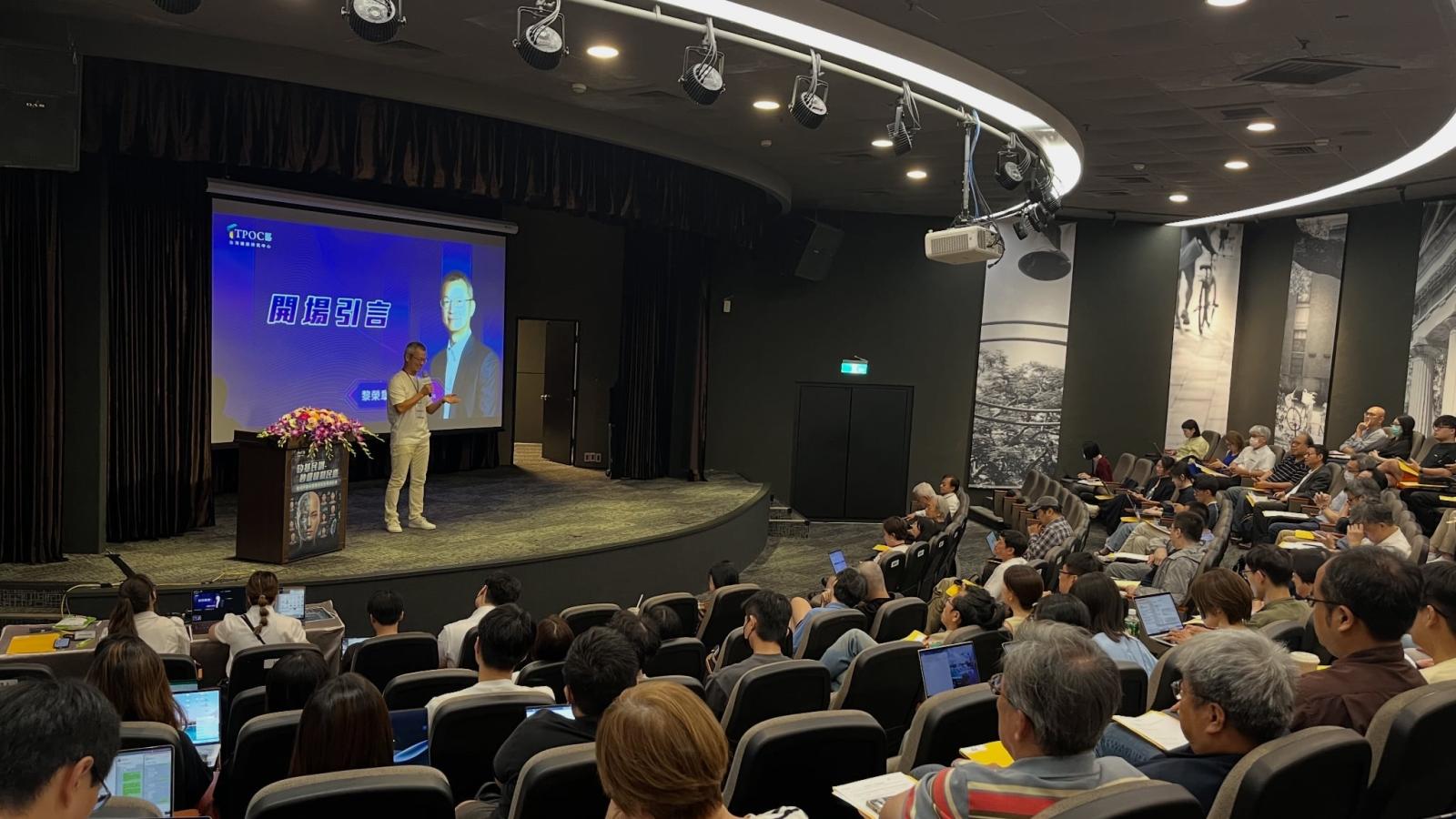
Today, TPOC Taiwan Issues Research Center hosted the Taiwan Silicon Sample Experimental Research Symposium at the NTU Conference Center, unveiling for the first time its 'Silicon-Based Polling'—a research outcome combining large language models, social science, and big data. This innovation aims to provide a new simulation tool for election analysis and public policy formulation.
### Building 3,000 AI Virtual Citizens with 28 Attributes to Simulate Public Opinion
Zhao Yujuan, TPOC's R&D Director, explained that the research team constructed 3,000 AI virtual citizens, embedding 28 attributes including demographic structure, social experiences, media usage habits, split-voting behaviors, and non-response tendencies. By integrating social listening and real-time舆情 data, the system observes how different agents might shift their stances after receiving news.
To reduce AI randomness and model bias, the team established six validation frameworks to check population structure, agent design validity, alignment with real-world human data, stimulus-response consistency, bias distortion, and result stability. Special attention is paid to AI over-rationality and social desirability bias.
### Testing Crisis Strategies in Parallel Universes — Finding Common Ground Before Policy Rollout
Lin Yucheng, TPOC's Data Analyst and Project Director, pointed out that silicon-based polling can be applied to daily election tracking, campaign strategy testing, and public policy deliberation. In crisis scenarios, the system can create different situations to compare how public opinion shifts when different figures issue apologies or adopt varying statements.
In public policy, the system enables deep dialogue with AI through information interventions, simulating how people make trade-offs between values like resident safety and ecological protection, helping decision-makers anticipate controversies and communication risks in advance.
### Scholars Acknowledge Innovation but Issue Warnings — Human Emotion Remains the Final Benchmark
Participating scholars cautioned that AI agents may exhibit ecological fallacy, complacency traits, and echo chamber bias, suggesting they are currently better suited as theoretical simulations or decision sandboxes rather than direct replacements for human sample surveys.
Multiple scholars believe that a hybrid model combining real human surveys with AI agents may become a key direction for the polling industry, though continuous calibration via statistical models remains essential. Human performance in moral judgment, emotional response, and social context remains an irreplaceable standard for validating results.
TPOC stated that silicon-based polling is scheduled to officially launch on September 1, positioned not as a replacement for traditional human polls, but as a repeatable scenario simulation and risk forecasting tool. Complete research data will also be made freely available for download on the official website.
FACT BOX
- Source: PR Times
- Category: Survey