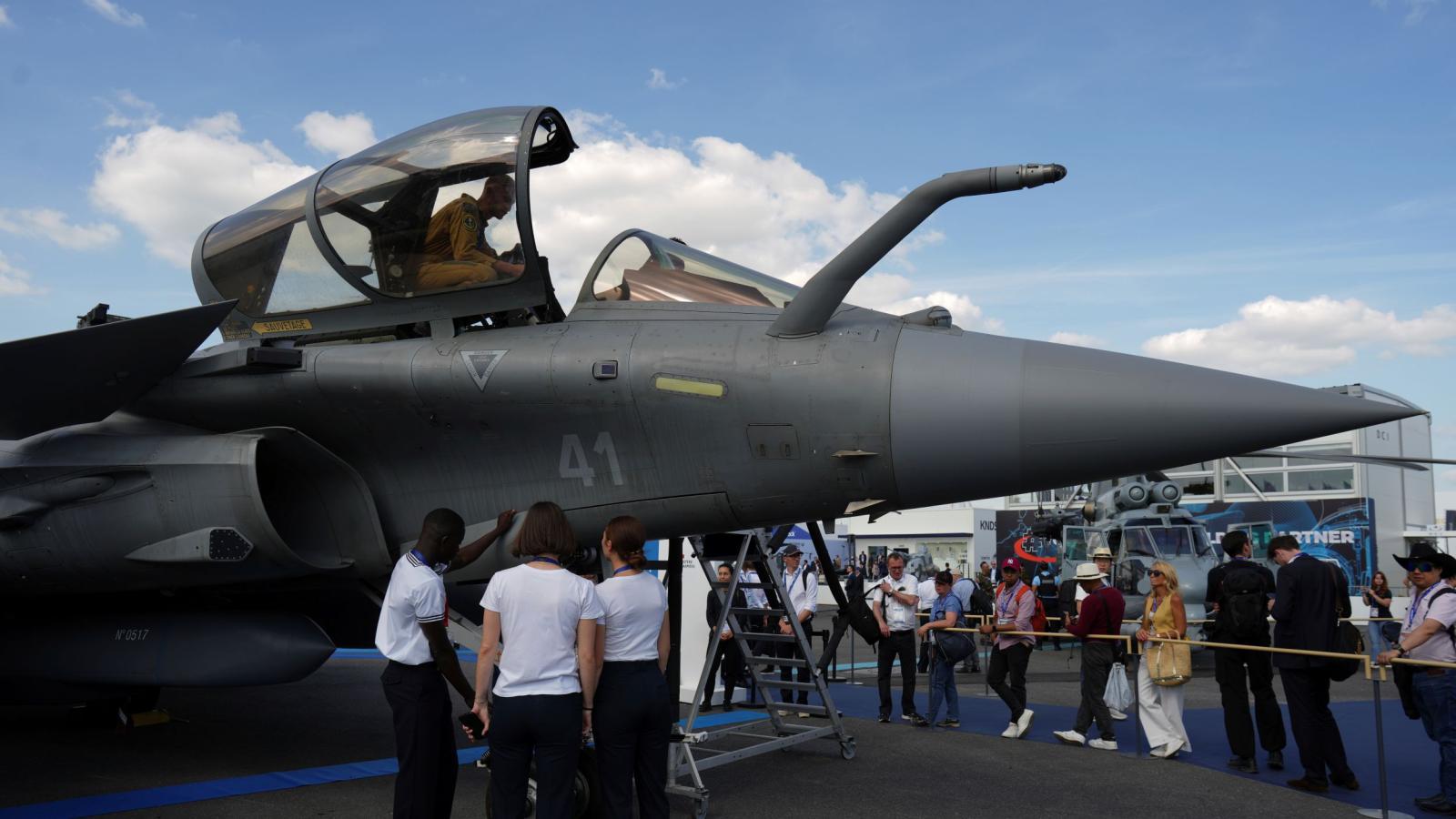
France has formally responded to India’s formal procurement request from May, with Paris submitting a detailed technical and commercial proposal regarding 114 'Rafale' fighter jets. Additionally, France has proactively proposed providing New Delhi with significantly expanded technology transfer to assist in developing its domestic defense industry, including local assembly and manufacturing of 94 of these aircraft within India. It also offers support in integrating India’s indigenous weapon systems, enabling missiles to be mounted on the Rafale platforms.
Foreign media reports indicate that this proposal is currently undergoing in-depth review and evaluation by India’s Ministry of Defence Acquisition Wing and the Indian Air Force (IAF). The French proposal specifically outlines a large-scale localization manufacturing blueprint and commits to supporting the integration of India’s domestically developed military equipment systems. One key focus of the Indian military’s assessment is determining whether these Rafale fighters can carry India’s indigenous 'Astra' beyond-visual-range air-to-air missile as part of their armament.
The proportion of local production will be substantially increased. Under the cooperation terms offered by France, 94 out of the 114 Rafale fighter jets are to be assembled and manufactured locally in India through collaboration with Indian domestic partners. French suppliers—Dassault Aviation, missile manufacturer MBDA, engine giant Safran, and defense electronics firm Thales—will deeply participate in the localization production activities within India.
The estimated total value of this transaction plan reaches ₹3.25 trillion (approximately NT$1.1017 trillion). As India’s domestic participation increases, it is expected to generate massive local supply chain business opportunities worth around ₹1.6 trillion (approximately NT$542.38 billion) for Indian defense companies such as Tata Group and Larsen & Toubro.
New Delhi’s strong push to increase the 'domestic manufacturing share' stems from the Indian Air Force’s serious concerns over the continuous decline in its combat squadron numbers. With aging Russian-made MiG-series fighters being progressively retired and domestic 'Tejas' Light Combat Aircraft (LCA) Mark 1A and Mark 2 models encountering bottlenecks in mass production—leading to delayed deliveries—an evident capability gap has emerged in aerial combat strength, potentially even affecting basic defense readiness.
Currently, the Indian Air Force and Navy have jointly procured 62 Rafale fighter jets. According to Indian media estimates, if the procurement intention for the additional 114 fighters is successfully realized, the total number of Rafale fighters in India could reach 176.
Should the Indian Navy proceed with its planned additional purchase of 31 carrier-based Rafale variants, combining all orders would push India’s future Rafale fleet size beyond the 200-unit threshold, making India one of Dassault’s most significant overseas customers.
Beyond accelerating the acquisition of new fighters, recently deployed Rafale jets have been dispatched to Australia to participate in the joint exercise 'Exercise Pitch Black,' demonstrating their core mature combat capabilities.
FACT BOX
- Source: PR Times
- Category: Partnership
- Organizations: MBDA