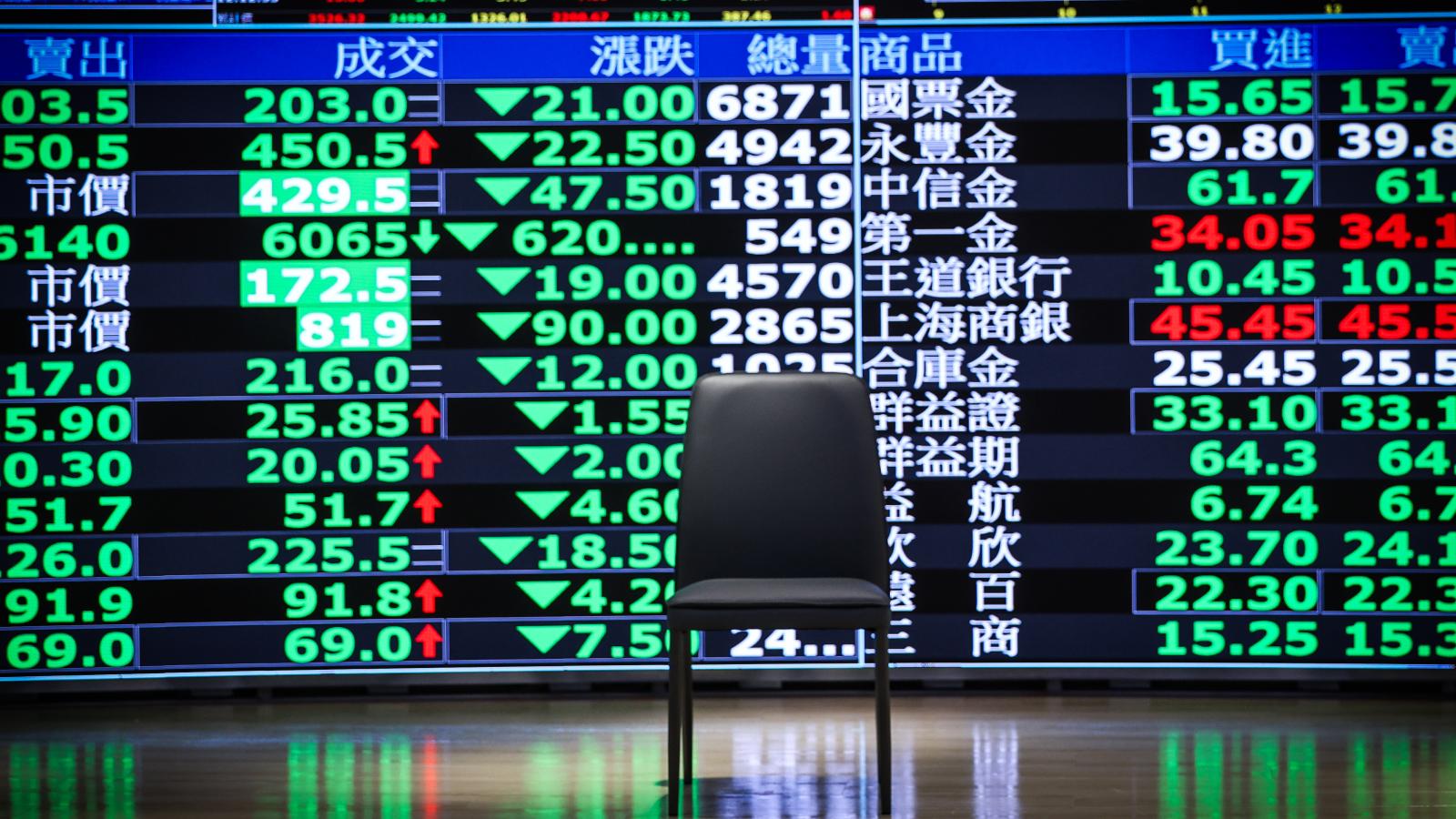
Taiwan's stock market experienced extreme volatility this summer. In late July, the weighted index briefly fell below 40,000 points, only to rebound sharply afterward, leaving investors on a rollercoaster ride. On Wednesday (August 7), the market closed down 170 points at 44,225.
Amid frequent thousand-point swings in the broader market, the Taiwan Stock Exchange (TWSE) announced that a new stock surveillance mechanism will take effect on August 10, significantly shortening the "lockdown" period for regulated stocks.
In response, investor Ah Hsun shared a post on his Facebook fan page titled "What Investors Need to Know About the New Surveillance Rules." He summarized the reform in one sentence: "This isn't about loosening speculative controls, but making the system more reasonable to avoid penalizing fundamentally sound companies."
### When Does the New Taiwan Stock Surveillance System Take Effect? What Are the Key Differences?
To enhance trading efficiency and maintain market order, the TWSE revised its "Rules on Announcing Watched and Regulated Securities." The lockdown period for regulated stocks will be drastically reduced—from 10 trading days under the old system to just 5 or 7 days. Additionally, except for special cases such as changes in trading methods, the matching frequency for regulated stocks will be shortened from longer intervals to approximately every 2 minutes.
Key differences between the old and new systems:
| Item | Old System (Before Aug 9, 2026) | New System (From Aug 10, 2026) | |---|---|---| | Surveillance Period | 10 trading days (standard) | 5 or 7 trading days | | Standard Auction Frequency | Matched every ~5 minutes | Matched every ~2 minutes | | Severe Surveillance | Matched every ~20 minutes | Now matched every ~2 minutes | | Trading Method | Call Auction per Session | Call Auction per Session | | Waiting Time for Execution | 5 min / 20 min | Reduced to ~2 minutes | | System Purpose | Reduce abnormal trading heat | Balance abnormal trading control with trading efficiency | | Stocks with Altered Trading Methods | Subject to additional restrictions | Exempt from 2-minute matching adjustment | | Altered Method + Call Auction | Subject to additional restrictions | Exempt from 2-minute matching adjustment |
### Does 'Surveillance' Mean a Full Lockdown? What Are the Real Impacts?
Ah Hsun explained that many people immediately associate "surveillance stocks" with being "locked down." This reform is good news for the market, with several key impacts:
First, the surveillance period is effectively halved (from 10 to 5 trading days for standard cases), greatly reducing capital lock-up time. Second, matching speeds up—from potentially 20 minutes to just ~2 minutes—enhancing liquidity. Third, high-priced stocks (e.g., "thousand-dollar stocks") are less likely to be mistakenly flagged. For example, MediaTek was previously placed under surveillance due to price fluctuations. With higher warning thresholds under the new system, blue-chip stocks like TSMC and MediaTek will face lower risks of being locked down.
### How Will the New System Affect Investors?
Regarding investor impact, Ah Hsun pointed out the biggest change: significantly improved market liquidity. Previously, when a stock was placed under surveillance, investors feared not price drops, but being unable to sell. Now, with shorter surveillance periods and faster matching, both bullish and bearish trades will flow more smoothly, aligning better with actual market dynamics.
He also reminded readers that the surveillance system itself hasn’t been abolished. Measures like margin freezing and day-trading bans remain. Stocks experiencing clear speculative overheating can still be placed under surveillance.
More exclusive insights from Feng Media: · Will Taiwan’s day-trading tax benefits disappear? Engineer reveals the 'root cause' of Taiwan’s low wages: 5% wealth tax won’t solve K-shaped economic divide · Can Yageo’s stock return to NT$1,000? Is the rebound just an exit window? Investor reveals the 'real reason' behind dual foreign broker downgrades · Taiwan stocks surge nearly 3,000 points—should you buy 0050 now it’s over NT$100 again? Xie Jinhe analyzes panic-driven declines: Rebound led by 'these sectors'
FACT BOX
- Source: PR Times
- Category: News