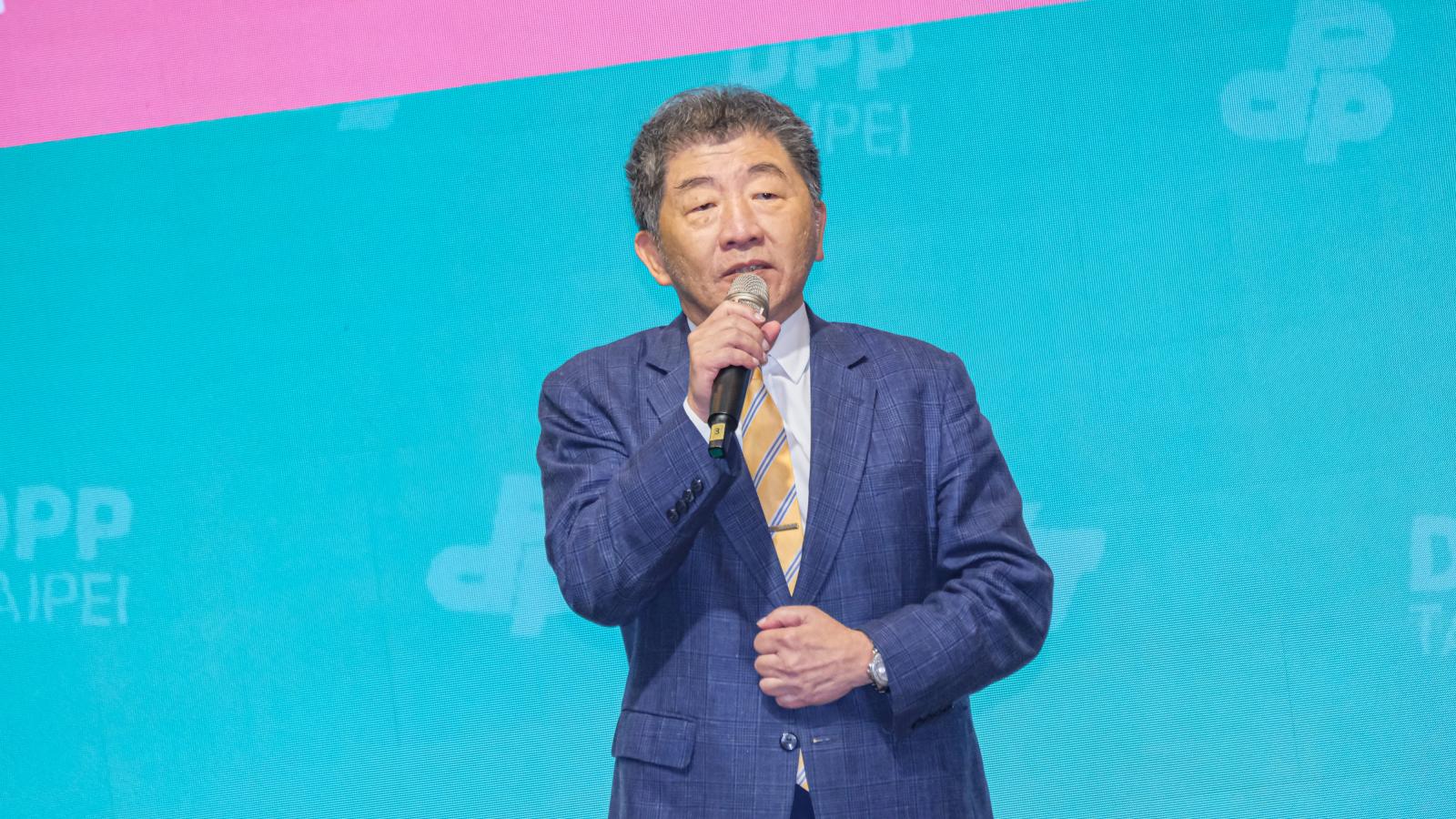
The 2021 incident involving Tzu Chi Foundation's procurement of BNT vaccines, which led to a fraud case, has once again become a focal point in political discourse. Chen Shih-chung, who served as head of Taiwan's Central Epidemic Command Center at the time and is now a policy adviser at the Executive Yuan, has called on those who made false allegations against the pandemic response team to apologize to society. However, media commentator Luo Wang-je, on the program 'News in Plain Language,' analyzed that this renewed attention has unexpectedly overshadowed the campaign of Democratic Progressive Party (DPP) Taipei mayoral candidate Shen Po-yang, bluntly stating, 'I have to say, Shen Po-yang is really unlucky.' Not only has his campaign slogan been instantly forgotten, but it has also revived public memory of controversial pandemic policies such as the '3+11' quarantine rule.
On July 7, Chen stated in an interview that due to the urgent need for vaccines at the time, the government had to carefully verify procurement sources. With the case now under judicial review, he believes 'the truth has become clear,' and those who made false claims should apologize to the public. Former President Tsai Ing-wen also posted online, reflecting on the government's vaccine procurement efforts, emphasizing that national resources were used, and every document, source, and payment was verified. She asserted that the pandemic team had raced against time while upholding due process and professionalism.
Luo Wang-je pointed out that the 2022 Taipei mayoral election already reflected voters' assessment of Chen's pandemic management and governance image. Now, with the Tzu Chi vaccine issue bringing Chen back into the spotlight, it has disrupted Shen Po-yang's campaign momentum. 'To be honest, Shen Po-yang is really unlucky,' Luo said, noting that just as Shen launched his campaign theme—'Taipei is about to get back on track'—the slogan was instantly forgotten, replaced by renewed discussion of the '3+11' controversy.
Luo further explained that mentioning '3+11' inevitably brings back public scrutiny of DPP legislator Fan Yun, who, he claimed, has never publicly apologized for her role in the controversy. 'Who is the secondary victim here? It's Shen Po-yang,' he said. He described how Shen had finally gained momentum in his campaign, only for Chen to 'suddenly emerge like a dark horse.'
Luo revealed that as Chen's public profile rises, online discussions have even begun questioning whether Shen should be replaced, with some calling, 'Why not just replace Shen Po-yang with Chen Shih-chung?' While Luo stated he has no personal opinion on this, he acknowledged, 'It's undeniable that Chen is far more newsworthy than Shen.' He also suggested that the reaction reflects internal factional competition within the DPP. Citing Tsai Ing-wen's public post on vaccine procurement, Luo speculated that factions such as the 'Lai faction' and 'New Tide' might feel uneasy seeing Chen monopolize the spotlight. He further speculated that the 'Ying faction' might be attempting to rehabilitate Chen's political image, though he emphasized this was his personal observation of intra-party dynamics.
Nonetheless, Luo expressed skepticism about whether this 'Chen Shih-chung revival' will truly benefit the DPP. 'Ordinary people are confused—why deify Chen Shih-chung now?' he asked. He argued that voters already passed judgment on Chen's pandemic performance during the 2022 mayoral election, and reviving past pandemic sentiments may offer limited gains—or even backfire. 'To be honest, this gives the DPP little advantage and might even cost them votes,' he said. Luo concluded that not all DPP figures welcome Chen's resurgence, so whether this controversy helps or harms the party remains uncertain. 'Is Chen Shih-chung really an asset to the DPP? I remain highly skeptical.'
FACT BOX
- Source: PR Times
- Category: News