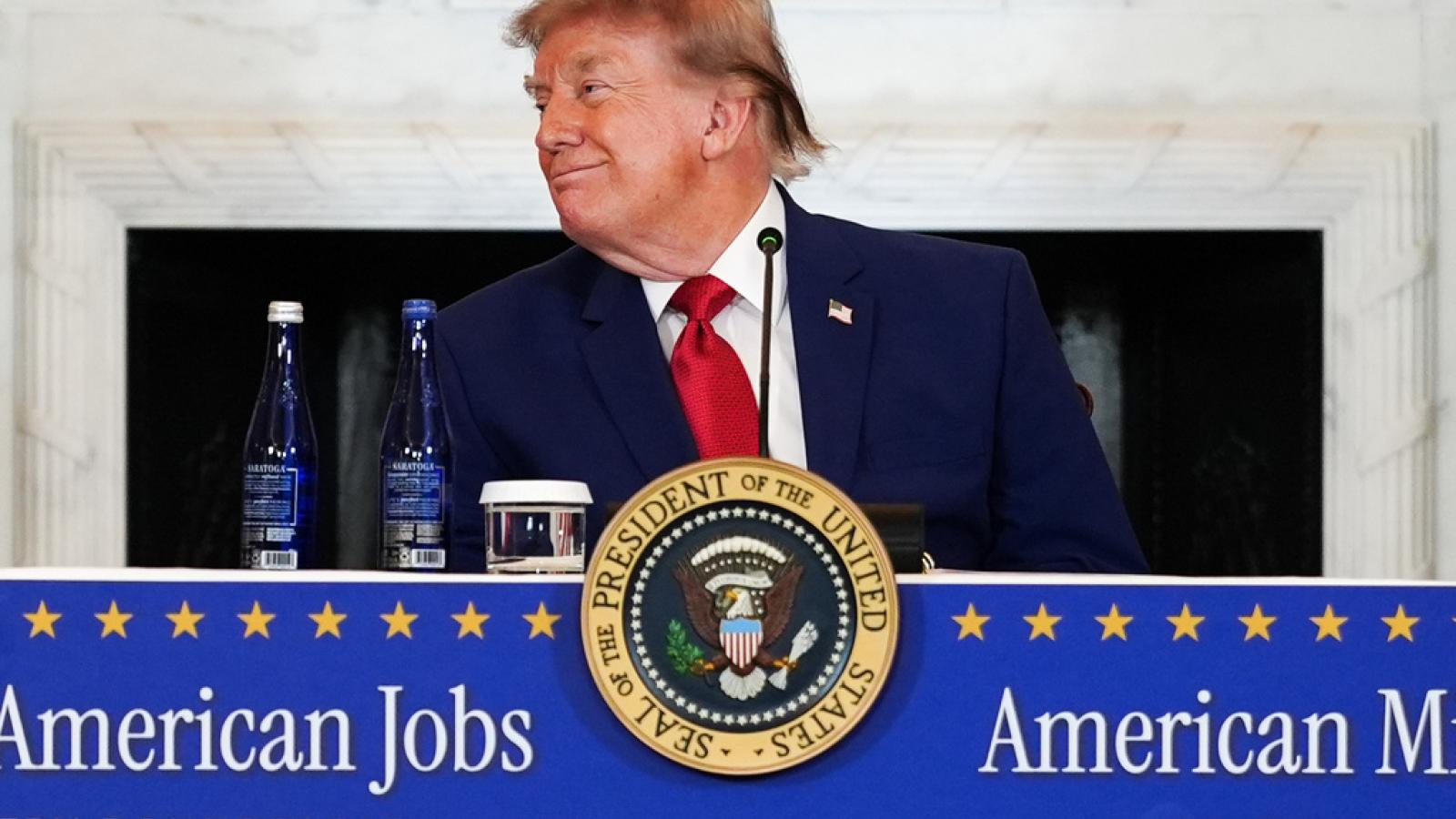
Weeks after the Supreme Court rejected his previous attempt to eliminate birthright citizenship in the United States, Donald Trump is once again trying to scale back the policy. On Thursday, August 6, the president signed two executive orders: one broadens the existing definition of 'non-citizens' whose children would not qualify for birthright citizenship, and the second bans so-called 'birth tourism,' the practice of pregnant women coming to the U.S. to give birth so their children become American citizens.
Speaking in the Oval Office at the White House, Trump said, 'This should have happened years ago, but we’re dealing with it now.' He criticized the Supreme Court for rejecting his earlier bid to end the 150-year-old policy.
The first executive order states, 'My administration has safeguarded against malicious foreign actors exploiting our nation’s generosity to deceive American citizens, posing risks.'
The order prohibits infants born in the U.S. from automatically gaining American citizenship if both parents are non-U.S. citizens and one parent is a member of a foreign terrorist organization, a foreign government employee, attempting to obtain citizenship through fraud, or residing in a U.S. territory where federal law does not grant citizenship.
Individuals born in U.S. territories—such as Puerto Rico—enjoy birthright citizenship, a right explicitly granted by federal law.
Trump and his administration officials have repeatedly criticized birth tourism, including accusing rival nations like Russia and China of exploiting birthright citizenship to infiltrate the U.S.
On Thursday, Trump announced the executive orders in the Oval Office, claiming that hundreds of thousands of babies have been born in the U.S. through birth tourism.
The nonpartisan research organization Migration Policy Institute says the most comprehensive estimate, based on census data, shows that approximately 22,000 to 26,000 babies are born in the U.S. annually due to 'birth tourism.' The institute notes government data indicates 9,600 babies were born in 2024 to mothers residing abroad.
Stephen Miller, Homeland Security Advisor and Deputy Chief of Staff for Policy at the White House, stood beside the president and said, 'People come here pretending to be tourists, pretending to be visitors.'
'But their real reason for coming here is to have a child so that child automatically becomes a U.S. citizen, then leave our country, and raise a child who is a U.S. citizen,' Miller added. He said these children later gain access to benefits, voting rights, and 'all other rights and privileges reserved only for Americans.'
Miller stated that under a provision of the Immigration and Nationality Act, the president has the authority to impose restrictions and exceptions on who can enter the country.
In 2025, shortly after taking office, Trump signed an executive order attempting to end birthright citizenship guaranteed by the Fourteenth Amendment of the U.S. Constitution.
A legal battle brought the case to the Supreme Court, which ruled in June that Trump’s 2025 policy could not stand, affirming that birthright citizenship remains the law.
That decision was a major setback for Trump’s ongoing efforts to restrict who can live, work, and become citizens in the U.S.
On Thursday, Trump said in the Oval Office that the Supreme Court made 'a terrible, very unfair decision,' adding, 'Our country has suffered because of it, and we will have a different outcome.'
Professor Gabriel Chin of UC Davis School of Law told the BBC that while parts of the order may be valid, others 'raise serious constitutional concerns.'
Professor Chin said the president does have some authority to restrict individuals entering the U.S specifically to give birth.
'But once that happens, once a child is born in the U.S., I don’t think the president has the power to decide that child is not a citizen,' he added, noting that the administration’s recent Supreme Court loss has already settled this issue.
He described birth tourism as a 'drop in the bucket' compared to the millions of newborns in the U.S.
'It’s an unusual phenomenon,' Professor Chin said.
This article was originally written in English. We used artificial intelligence to assist with translation, and it was reviewed by BBC journalists before publication. Learn more about how we use AI.
FACT BOX
- Source: PR Times
- Category: News