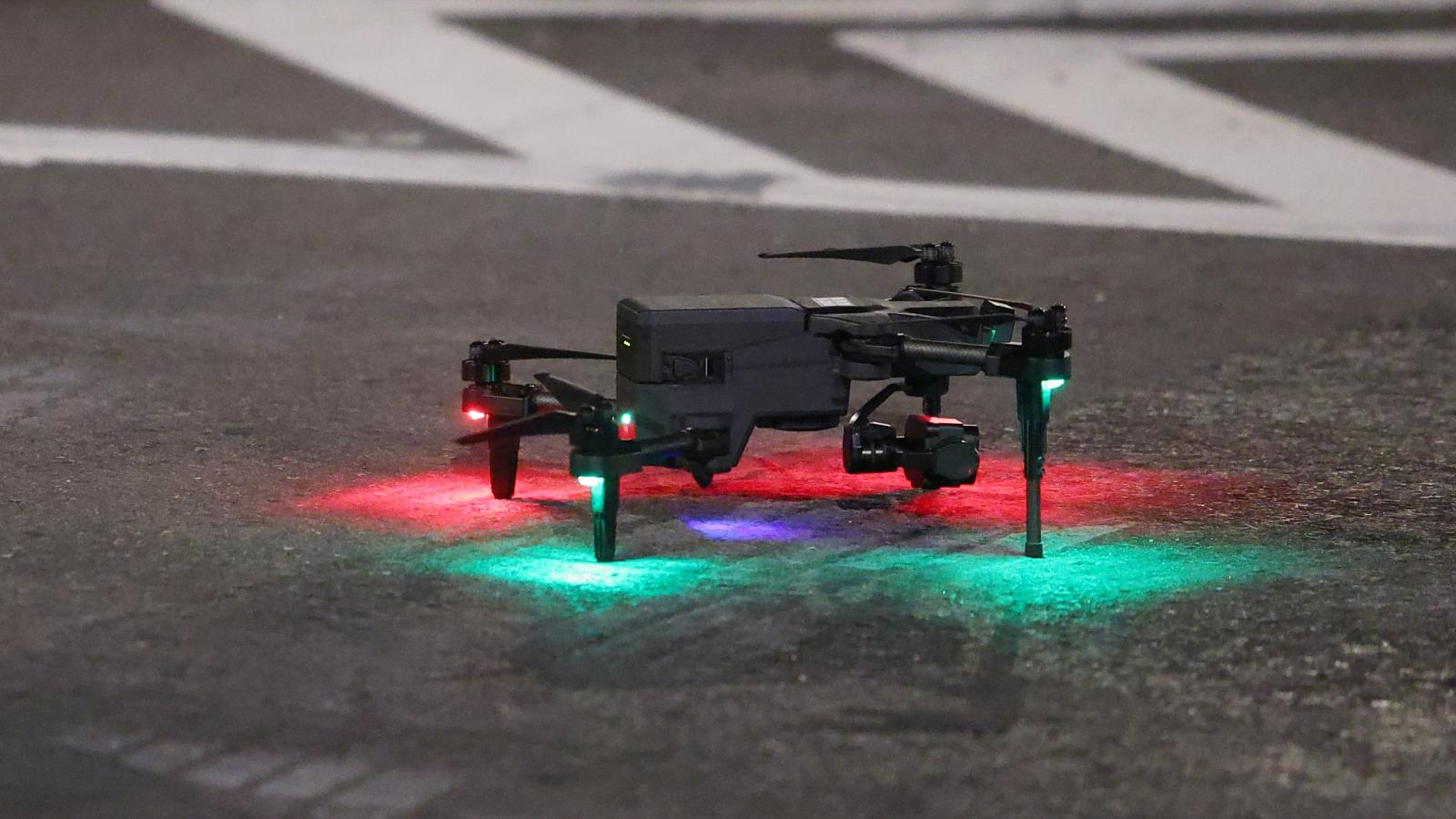
The Army's 2025 anti-drone system procurement represents a critical test for Taiwan's transition of anti-drone systems from prototype to mass deployment. The Army planned to procure 26 fixed anti-drone systems in 2025, with Chuang Wei Lai winning the bid at approximately NT$980 million. However, after failing re-inspection in 2026, the Army reported to the Ministry of National Defense in July 2026 to initiate contract termination procedures.
Chuang Wei Lai had previously participated in a 2022 test conducted by the Ministry of National Defense at the Guishan outpost in Kinmen, gaining real battlefield testing experience. It was also a key domestic developer supported by the National Security Council's Defense Industry Development Fund in 2023. Why, then, did it fail to meet contractual specifications during the Army's acceptance testing after winning the 2025 bid for 26 fixed anti-drone systems? The main reasons are analyzed as follows:
1. POC Success Does Not Guarantee Mass Production Acceptance
POC stands for Proof of Concept, meaning 'concept validation.' A POC typically proves that 'an individual system achieves specified functions under specific conditions, specific targets, known flight paths, and limited numbers of drones.' This corresponds to the stage between 'Key Technology' and 'Demonstration Confirmation' in the military's weapons acquisition process. In terms of Technology Readiness Level (TRL), this is equivalent to TRL 6, representing a system prototype stage. In contrast, mass production acceptance must prove that the mass-produced equipment can stably reproduce the contractual specifications under operational conditions, including multiple batches, multiple targets, and long-duration missions. Acceptance requires TRL 8, representing a deployable system. In other words, POC proves 'feasibility,' while acceptance proves 'reliability and deployability'—two fundamentally different requirements. A detailed comparison is shown in the table below:
| Validation Level | POC Conditions | Actual Mass Production Requirements | | --- | --- | --- | | Target | Successful countermeasure against a single, known drone model | Successful detection and countermeasure against multiple drone models, batches, and directions | | Flight Path | Pre-planned | Varying altitudes, azimuths, and approach angles | | Environment | Simple test environment | Complex electromagnetic environments (traffic, terrain, sea clutter, electromagnetic interference) | | System | Demonstration equipment functionality | Complete command and control system integrating radar, passive RF, C2, and jamming | | Prototype | Engineering prototype, manually tuned | Consistency and operational reproducibility of mass-produced units | | Success Criteria | Meets functional baseline | Continuous operation without failure under specified drone numbers and operational environments |
2. Possible Technical Reasons for Chuang Wei Lai's Failure in Acceptance Testing
The Army has not yet released a full test report. Based on currently available information and engineering principles of anti-drone systems, the failure can be analyzed as follows:
(1) Detection at 6 km Requires More Than 'Seeing'—It Must Establish a Reliable 'Track'
A radar receiving an instantaneous echo does not mean the system has successfully detected the target and generated a usable track for C2 engagement. Typically, the process involves 'detection, continuous scanning confirmation, clutter rejection, track plotting, speed/direction/altitude estimation, target classification, decision-making, jamming execution, and result reporting.' Chuang Wei Lai's active radar failed to detect targets at 6 km and could not establish reliable tracks, leaving insufficient time for classification, decision-making, and jamming, resulting in inadequate defense range.
(2) The RCS (Radar Cross-Section) of Small Drones Is Not Constant
The RCS of typical small drones is very small, approximately 0.01 m², and varies significantly based on the drone's orientation, pitch angle, metal component layout, body material, rotor phase, environmental background, and low-altitude flight. Radar detection range is roughly proportional to the fourth root of RCS. When a target turns and its effective RCS decreases, a drone previously detectable at 6 km may no longer maintain a stable track.
(3) Background Clutter Causes False Alarms or Missed Detections
The greatest challenge for low-altitude anti-drone radar is not the sky but ground clutter or sea clutter. Anti-drone radar must fuse radar and RF data to distinguish small drones from birds, vehicles, leaves, flags, buildings, and surface reflections. Overly lenient filtering thresholds generate false tracks; overly strict thresholds may miss low, slow, small targets, leading to missed detections.
(4) Multi-Target Testing Reveals System Decision-Making Limitations
Passing a single-drone test does not guarantee success with multiple or batched targets. Under multi-target conditions, system bottlenecks may include the number of tracks the radar can simultaneously track, C2 data update rate, RF sensor demodulation/direction-finding capacity, jammer beam generation, frequency matching, weapon assignment logic, and operator workload. If the system's multi-drone processing capability is too low, saturation attacks can overwhelm it, breaching the defense.
(5) 4 km Jamming Requires More Than Power—It Needs Complete Chain-of-Command Capability
To counter a target at 4 km, the system must begin processing well before the drone reaches that range. Assuming a drone approaches at 100 km/h, it takes only about 72 seconds to travel from 6 km to 4 km. All processing must be completed within this window. Otherwise, even if the jammer has 4 km capability, C2 processing delays may prevent effective countermeasures, allowing several drones to penetrate.
After several setbacks, the Army's anti-drone system procurement has ultimately moved toward termination. The lessons learned are as follows:
POC Is a Screening Mechanism, Not a Scoring Process
The purpose of POC should be to determine early whether a system is feasible and capable of meeting operational needs. Core capabilities such as detection range, continuous tracking, target identification, jamming effectiveness, response time, and multi-target handling should not be evaluated solely by weighted scoring. If a core function fails to meet minimum standards, the system should not pass, regardless of high scores in documentation or non-critical areas.
The Core of Anti-Drone Systems Is Complete Decision-Chain Capability
Anti-drone systems must not allow vendors to assemble active radar, passive detection, jamming, and control units separately. The key risk lies in system integration—fusing data, establishing reliable tracks, and enabling real-time classification, decision-making, and jamming. Among domestic capabilities, only the National Chung-Shan Institute of Science and Technology (NCSIST), with long-term military-grade system development and delivery experience, can meet these requirements. A reasonable procurement approach, similar to the U.S. military, is to first define specifications, allow vendors to integrate subsystems, and then conduct operational testing to select qualified vendors for selective bidding, avoiding vendor hesitation due to penalty risks.
Procuring Immature Systems in Bulk Carries High Risk
Procuring 26 units at once reduces unit cost and accelerates deployment, but only if the system is mature. Procuring immature technology in bulk increases failure risk, potentially disrupting military development timelines, budgets, deployment, and readiness. A prudent approach is phased: first develop two prototypes (engineering development), then small-batch production, and only proceed to full-scale production after verifying reliability and operational effectiveness.
Procuring Military-Grade Systems with Commercial-Grade Budgets
For military-grade systems targeting small RCS drones, foreign active radar quotes approach NT$100 million. NCSIST's system for Taoyuan Airport costs nearly NT$200 million per unit. In contrast, the Army allocated only NT$30+ million per unit—far below market rates. For domestic vendors, meeting specifications under such constraints is nearly impossible. Specifications should be re-evaluated based on operational needs, or costs should reflect realistic market conditions.
Anti-Drone Defense Cannot Be 100% Effective
Drones continuously evolve anti-jamming capabilities (the 'spear'), while counter-drone systems (the 'shield') advance in response. However, the cat-and-mouse game continues, and RCS varies with flight posture. Therefore, the current 100% countermeasure requirement should be reviewed and adjusted, possibly adopting missile interception rate models.
3. Will the Police Agency's 2026 Anti-Drone System Project Repeat the Same Mistakes?
The Police Agency's 2026 anti-drone system specification has been downgraded to 5 km (RCS unspecified); active radar must cover 360 degrees depending on the scenario (number of faces unspecified), with vertical scanning required—making cost estimation impossible; passive detection systems require rare takeover functions, effective only for drones with known communication protocols; and acceptance testing explicitly uses only two known drones. Overall, compared to the Army's specifications, these are significantly lower, limiting defense to known drones. Whether this ensures resilience for critical infrastructure is questionable. Analysis follows:
The first phase of the anti-drone system tender does not accept inquiries, only allowing them after the second-phase announcement. This prevents bidders from confirming costs and supplier capabilities during integration, leading most to adopt a strategy of passing initial qualification first, then re-evaluating system capabilities and suppliers in the second phase. Thus, the Police Agency cannot confirm bidders' technical capabilities.
The 2026 anti-drone system does not allow alternative solutions to replace the primary system. Bound by contractual specifications, this reduces space for technological innovation and performance improvement. If technical immaturity, supply issues, or interface incompatibility arise later, there may be little room for adjustment.
The scope of special qualifications is overly broad, encompassing general electrical, information and communication,
FACT BOX
- Source: PR Times
- Category: News