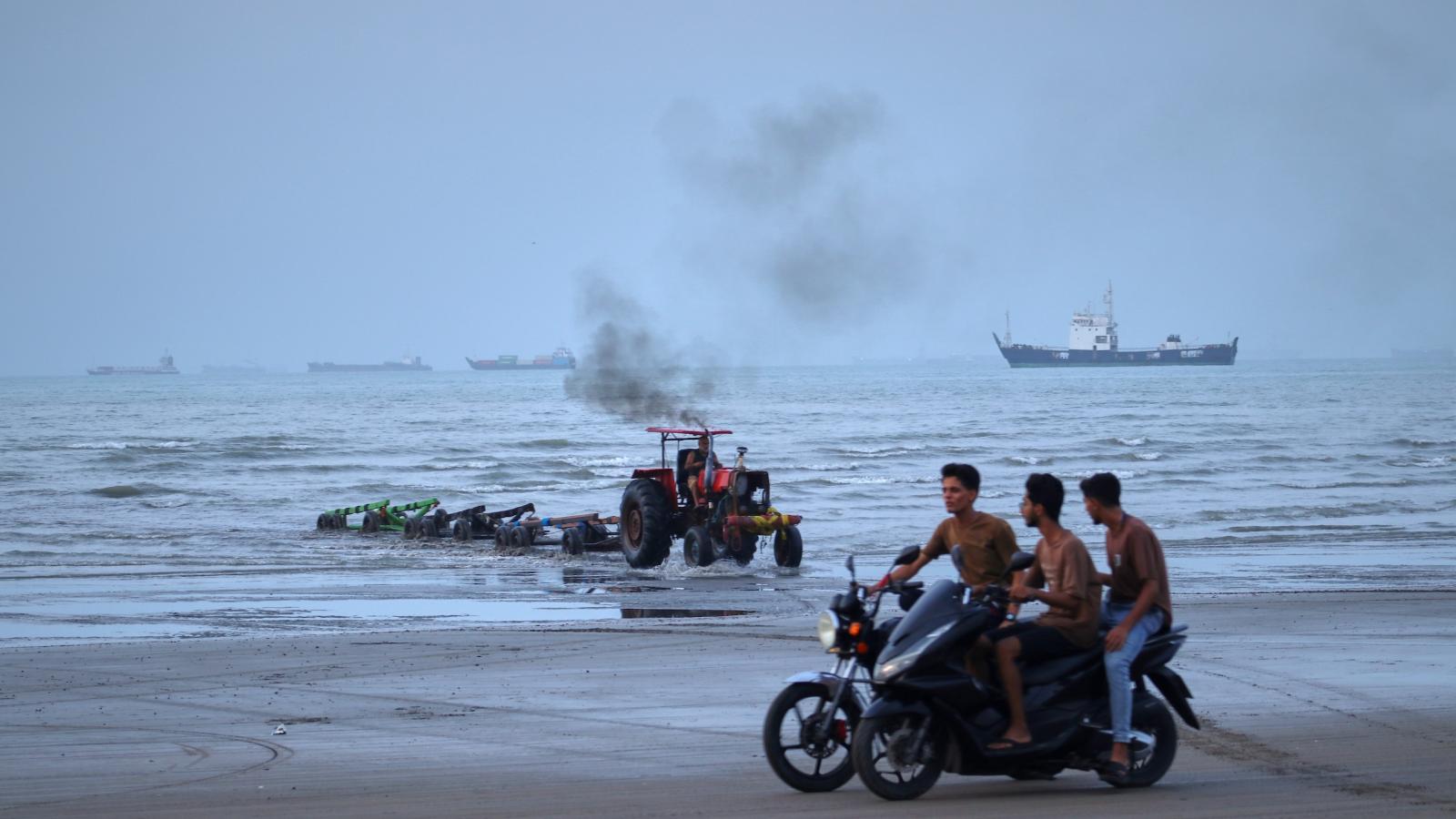
The Gulf nation of Oman has stated it is holding active negotiations with Iran over securing shipping routes through the Strait of Hormuz. However, Tehran has warned that no agreement will immediately reopen this vital waterway. Both sides said on Saturday (August 8) that talks are progressing, but the timing of a final agreement remains unclear. In response, Oman's Foreign Ministry warned that attacks on shipping could hinder the agreement. Iranian Foreign Minister Abbas Araghchi said negotiations have entered the final stage, but the reopening of the strait still 'depends on other conditions.' Since the U.S. and Israel began attacking Iran in February, Tehran has effectively blocked this waterway, through which about one-fifth of the world's oil and gas normally passes. Recent talks have focused on the possibility of Iran and Oman agreeing on a new route through the strait, jointly operated by both countries, with hopes that it could help restore shipping traffic. But Araghchi said the full reopening of this busy maritime route depends on whether other conditions are met, which he assessed broadly. He emphasized that Iran must receive compensation from the U.S., as Tehran claims Washington violated a ceasefire and war-ending agreement signed in June. That agreement—known as a Memorandum of Understanding (MoU)—quickly collapsed, diplomatic talks failed, and both sides resumed tit-for-tat attacks within days of signing. Additionally, Iran's security chief Mohammad Baqer Zolqadr told the semi-official Tasnim news agency that the Strait of Hormuz will not reopen unless the U.S. 'corrects' its behavior. He also said Washington must meet Tehran's six demands, including ending threats against Iran, lifting the naval blockade on Iranian ports, and releasing Iran's frozen assets. Since July 20, Iran-backed Houthi rebels in Yemen have imposed another blockade on Saudi Arabian ports in the Red Sea. Earlier this week, U.S. President Donald Trump said an agreement with Iran 'could happen very soon.' But Vice President Vance appeared skeptical on Saturday, telling Fox News that despite progress, much work remains. 'We're still in the crucial stage of the game. The game isn't over,' Vance said. He added, 'We're employing a range of tools—diplomatic, economic, and military—to ensure the best outcome for the American people.' He also claimed oil output from the Gulf of Mexico will match pre-February 28 levels when U.S. military operations began, though he provided no details. 'What we're really studying now is how to design traffic plans so ships can pass safely,' he emphasized. One major point of contention between Tehran and Washington is Iran's alleged threat to charge fees for ships wishing to cross the Strait of Hormuz. Reuters previously cited an Iranian official saying Tehran is seeking to charge 5% to 7% of cargo value for vessels transiting Iran. Vance downplayed these reports, saying, 'Iran has told us they have no plan to charge tolls in the Strait of Hormuz.' As Oman warned of attacks on ships in the strait, the United Arab Emirates said on Saturday that Iran attacked an oil tanker belonging to its state-owned oil company ADNOC. The UAE's Foreign Ministry said in a statement that 'Iran launched a hostile attack,' hitting an ADNOC tanker with missiles. The statement added that there were no casualties. Later on Saturday, the UK Maritime Trade Organisation (UKMTO) also reported that a vessel was hit by 'unidentified projectiles' near the Omani coast, causing a 'fire that was extinguished,' but no casualties were reported. It is unclear whether the vessel reported by UKMTO is the same one mentioned by the UAE. This article was originally written in English. We used artificial intelligence to assist with translation, and it was reviewed by BBC journalists before publication. Learn more about how we use AI.
FACT BOX
- Source: PR Times
- Category: News
- Organizations: ADNOC