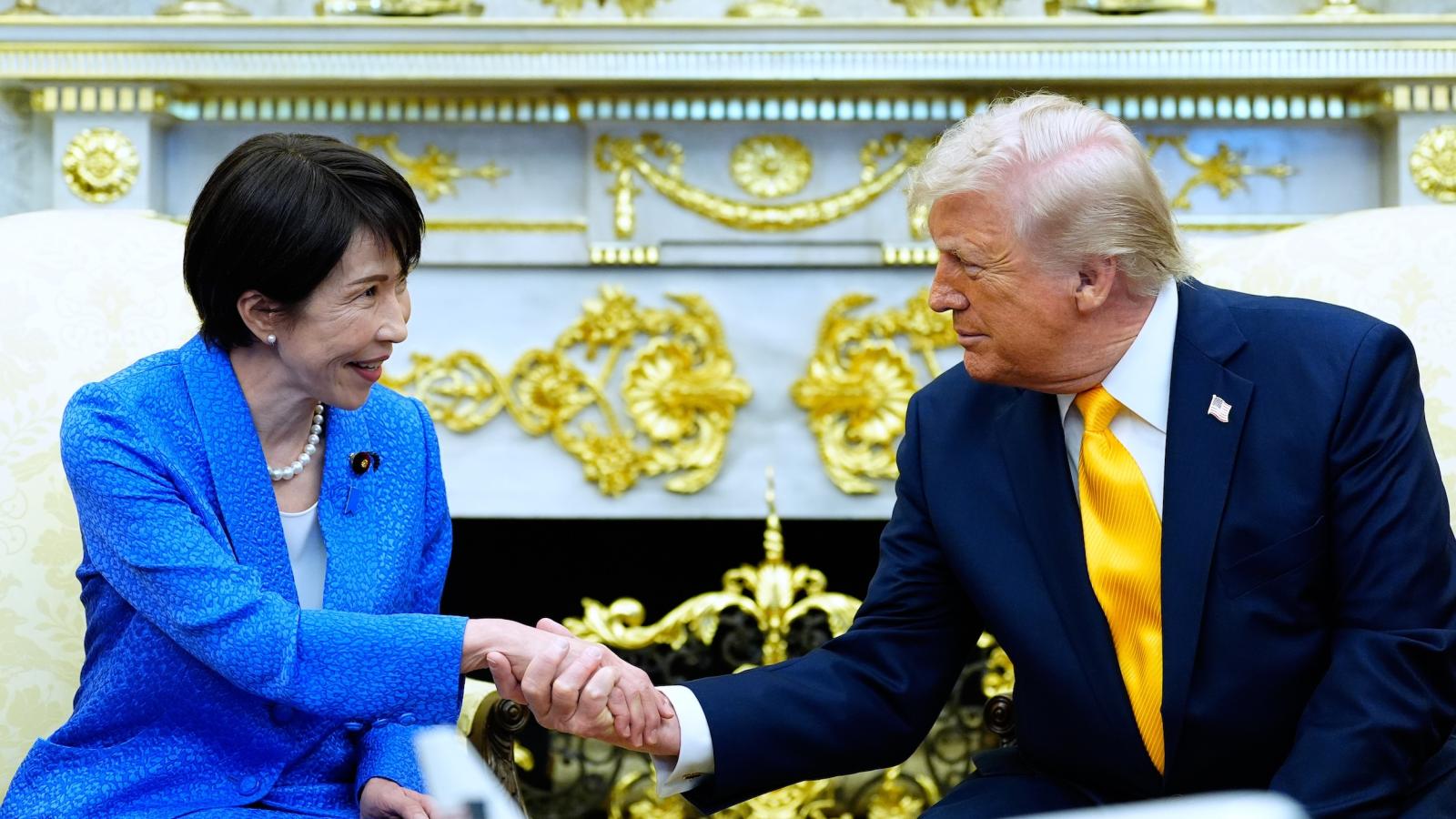
The Japanese yen continues to depreciate, reaching a 40-year low in exchange rates, leading the United States and Japan to potentially collaborate on currency intervention for the first time since the 1998 Asian financial crisis. US Treasury Secretary Besent emphasized that the US will do 'whatever it takes' to help Japan stabilize its exchange rate. In response, former legislator Kuo Cheng-liang, on the 'New Zealand Chinese International Channel' program, stated that the US and Japan might use a 'repurchase mechanism' to intervene and halt the yen’s depreciation. However, due to limited quotas, the US may raise Japan’s limit, which could be viewed as 'cheating' by the International Monetary Fund (IMF).
Kuo explained that due to the interest rate differential between the US dollar and the Japanese yen, many investors borrow yen, convert them into dollars, and invest in US stocks. Therefore, if Japan raises interest rates, the interest rate gap between the two currencies would narrow, potentially forcing many US financial institutions to 'sell US stocks to repay yen-denominated debt.' This is why the US fears the disappearance of the interest rate differential and wants to prevent Japan from raising rates, while also worrying that Japan might sell US Treasury bonds.
Kuo speculated that the US and Japan might use the 'Foreign and International Monetary Authorities Repo Facility' (FIMA) to prevent the yen’s depreciation. Specifically, Japan could use its US Treasury holdings as collateral to borrow dollars from US banks and then use those dollars to intervene in the foreign exchange market to support the yen. However, Kuo questioned the effectiveness, noting that the FIMA mechanism allows only up to $60 billion in dollar loans, which may not be sufficient. Japan’s past market interventions have averaged $40–50 billion per operation, meaning 'FIMA can only be used once.'
Kuo said the US Treasury Department might increase Japan’s repurchase limit to $100 billion, but the IMF would likely view this as 'cheating' and issue a warning, as IMF rules restrict the US and Japan to using FIMA no more than three times per year. According to Kuo, if the US and Japan conduct FIMA operations three times a year, the maximum dollar amount available would be $180 billion. If the US Treasury relaxes the cap, it could reach $300 billion, an amount sufficient to support the yen until year-end. However, 'no one can keep playing this game forever,' he emphasized.
Kuo also noted that Japan’s economic growth rate this year has not reached 1%, and the Iran war has rapidly worsened Japan’s fiscal situation, resulting in national debt reaching 250% of GDP—the highest in the world. For Japan, the best solution to the weakening yen, Kuo argued, is to sell its dollar-denominated assets. Japan holds $1.1 trillion in dollar foreign exchange reserves, and Japanese life insurers hold over $3 trillion in dollar assets. However, the US does not allow Japan to sell these assets. 'Because the US won’t allow it, these twisted and distorted tactics have started to emerge,' Kuo concluded.
FACT BOX
- Source: PR Times
- Category: News
- Organizations: IMF