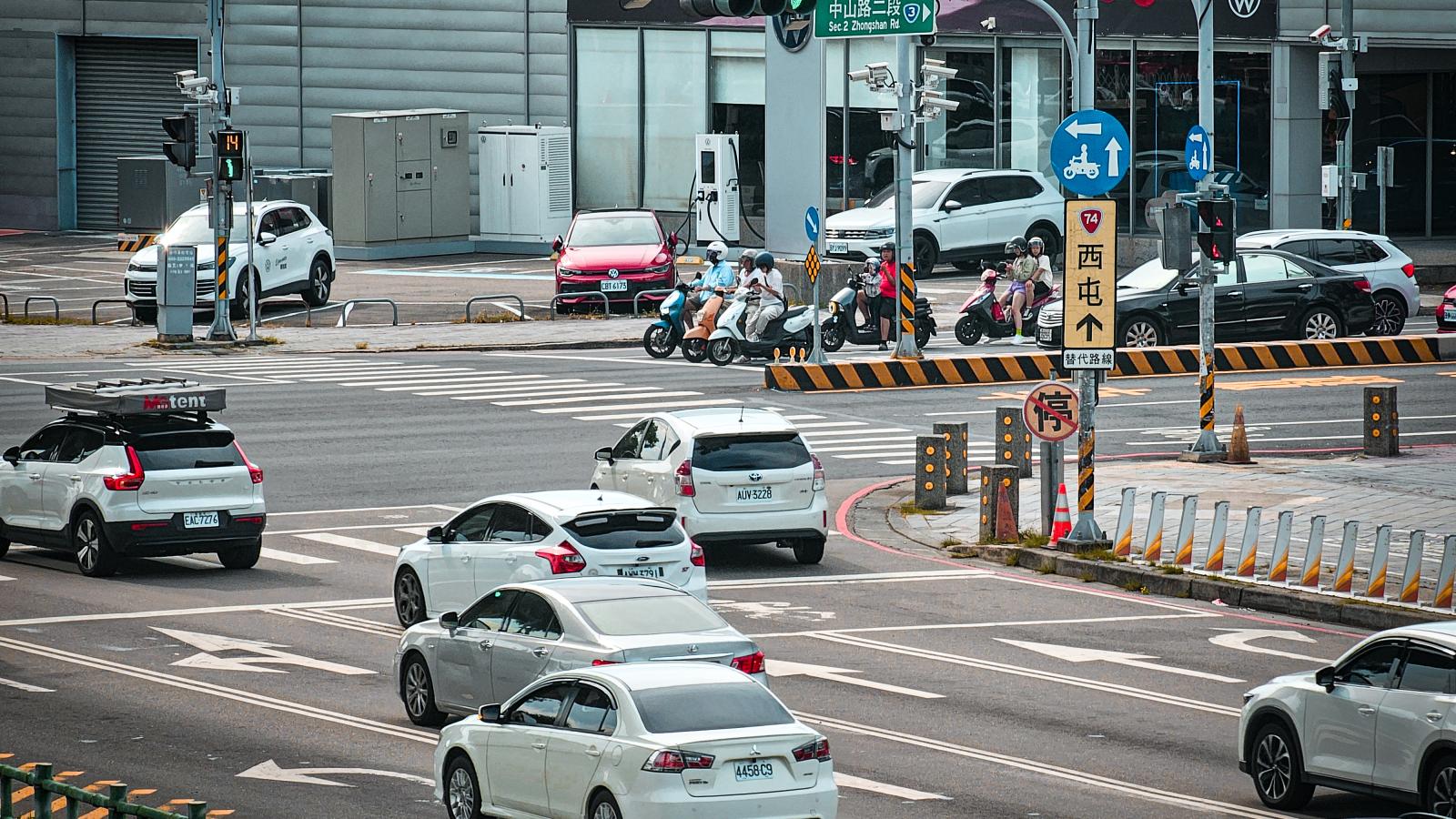
In busy urban streets, finding a curbside parking spot can be extremely difficult. Many drivers, upon spotting an empty space, rush to back in, often confusing whether to use 'turn signals' or 'hazard lights (double yellow flashers)'. So, what is the correct way to use lights when backing into a parking spot? The 6th Precinct of Tainan City Police Department has released the official answer: failure to follow the correct procedure may result in a fine of up to 3,600 New Taiwan Dollars (NTD).
Should You Use Hazard Lights or Turn Signals When Parking Curbside? Police Reveal the Correct Answer — 'Mistakes Could Cost You 3,600 NTD'
A netizen posted on Threads asking whether drivers should use turn signals to alert following vehicles when parking curbside, or switch to flashing hazard lights. He bluntly stated, 'Aren't most drivers getting this wrong?'
The post sparked numerous responses from users sharing their habits: 'The correct name for hazard lights is actually “danger warning lights” — as the name suggests, they’re not meant for parking, but everyone uses them as a temporary stop signal'; 'When starting to park, use turn signals — right turn signal when parking on the right, left turn signal when parking on the left in a one-way street; use hazard lights only when temporarily stopping'; 'Turn signals are correct'; 'My personal interpretation: use turn signals when pulling to the curb, then after parking and engaging the handbrake, turn on the hazard lights.'
Police Reveal the Standard Procedure: Use Turn Signals When Pulling Over, Reverse Lights When Backing
To address confusion over light usage during curbside parking, the 6th Precinct of Tainan City Police Department clearly outlined the correct procedure in a traffic safety campaign:
Step 1: Preparing to pull over — Turn on your turn signal early to inform vehicles behind of your intention.
Step 2: Backing into the parking spot — Activate your reverse lights so that vehicles and pedestrians behind can detect your movement and stay alert.
Step 3: Departing after parking — Before pulling out, turn on your turn signal, check for oncoming vehicles or pedestrians, and yield to moving traffic and pedestrians.
The police department warns that under Article 42 of the Road Traffic Management Penalty Act, drivers who fail to use lights correctly may be fined between 1,200 and 3,600 NTD.
Nine Common Vehicle Lights and Their Correct Usage Scenarios
Driving Scenario — Correct Light Usage
Turning — Turn on turn signal 30 meters before an intersection Changing lanes — Activate turn signal to inform following vehicles of your movement Parking curbside — Use turn signal first to indicate your intention Backing into a parking spot — Use reverse lights to alert others Pulling out from curbside — Use turn signal first, yield to moving vehicles and pedestrians Vehicle breakdown — Park on the roadside, turn on hazard lights (double yellow), and place a warning triangle behind the vehicle Emergency situation — Brake lights Headlight usage — At night, in tunnels, reversible lanes, mountainous areas, special sections, or during fog, rain, or low visibility Nighttime oncoming traffic or close-following — Use low beams when within 100 meters of an oncoming or preceding vehicle
Source: Tainan City Police Department, 6th Precinct
FACT BOX
- Source: PR Times
- Category: News