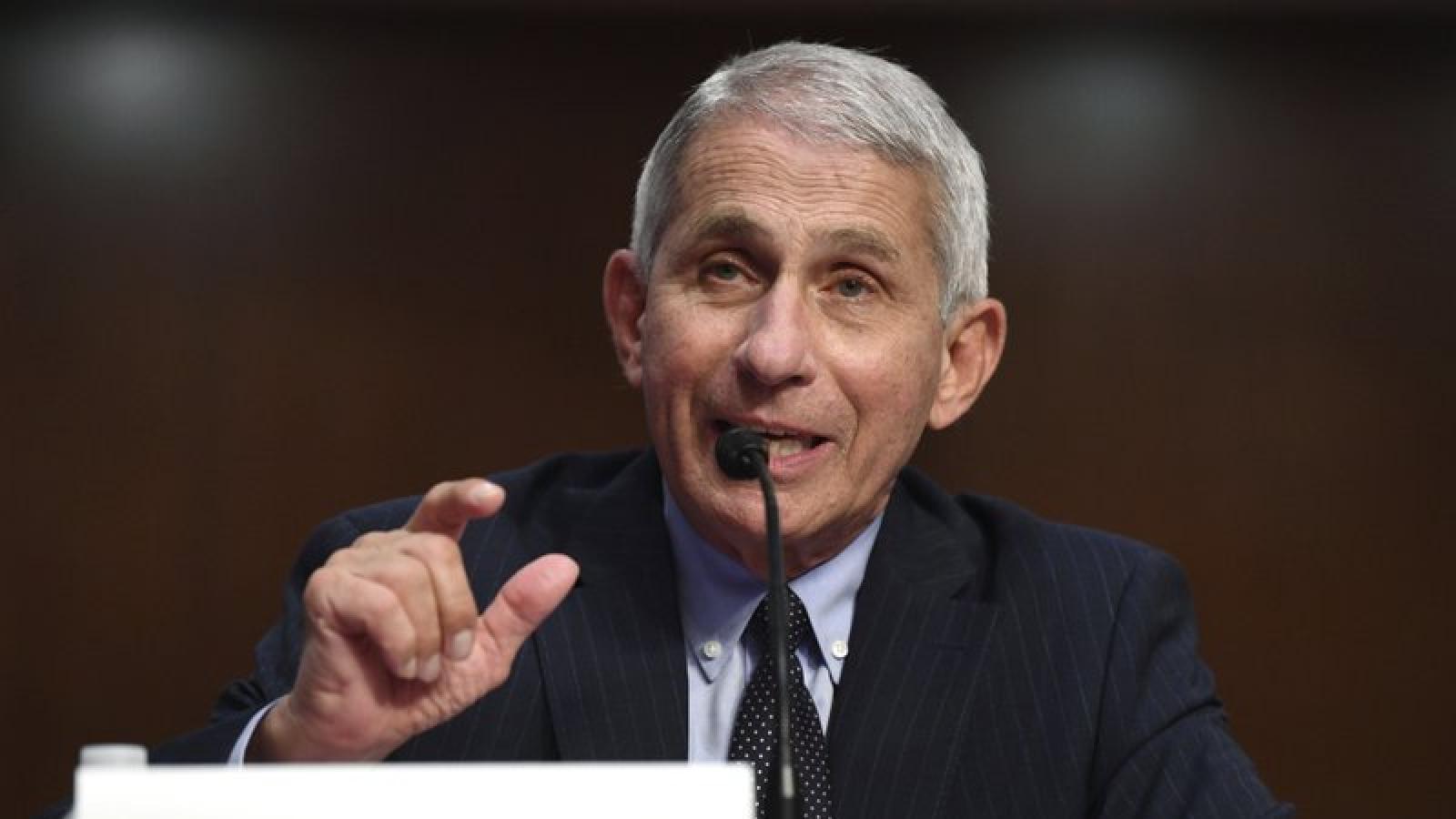
On July 29, 2026, former White House pandemic advisor Dr. Anthony Fauci appeared before the Senate Committee on Homeland Security and Governmental Affairs. The hearing was led by Republican Senator Rand Paul, a long-time critic of Fauci, and was intended to hold him accountable for decisions made during the pandemic and the origins of the virus. In his opening statement, Fauci noted that out of respect for Congress, he had testified or briefed lawmakers over 200 times in the past 38 years. However, on this occasion, following legal advice, he declared he would not answer any questions. Over the course of nearly three hours, Fauci invoked the Fifth Amendment of the U.S. Constitution 111 times, refusing to incriminate himself. His stance angered critics, and Paul announced plans for a Senate vote to charge Fauci with 'contempt of Congress.' The situation quickly escalated from the federal to the state level, with multiple states announcing investigations into Fauci.
Fauci's legal risks can be divided into three distinct areas.
First, the validity of the federal pardon. On January 19, 2025, just hours before leaving office, President Biden granted Fauci a 'full and unconditional' preemptive pardon. This covered any potential federal crimes committed by Fauci from January 1, 2014 onward, in his roles as director of NIAID, member of the White House COVID-19 task force, and chief medical advisor. This was an unprecedented form of pardon—one issued to someone who had not yet been formally investigated, let alone charged with any specific crime. Biden framed the pardon as protection against 'politically motivated persecution.' Fauci publicly expressed gratitude, stating, 'I have committed no crimes, and there is no reasonable basis to accuse or investigate me.'
However, the pardon only covers federal crimes committed before January 19, 2025. While this scope is clear, the legal validity of the pardon itself faces another challenge: the 'autopen controversy.' In March 2025, Trump claimed on Truth Social that Biden’s pardons for members of the 'January 6 Committee' were signed using an autopen (a mechanical signature device) and were therefore 'immediately null, void, and without legal force.' This claim later extended to Fauci. Ed Martin, a Justice Department pardon attorney appointed by the Trump administration, stated in an October 2025 email that his office 'could not support the validity of autopen pardons for Fauci, Adam Schiff, Mark Milley, and others until further investigation and factual determinations are made.' The House Oversight Committee’s final report in October 2025 also declared such autopen-signed pardons 'invalid.'
Yet, this argument is strongly countered by a broad legal consensus. The Constitution does not require the president to sign pardons by hand. Legal scholars point out that both a 1929 memo from the DOJ’s Office of Legal Counsel and a 2005 memo under the Bush administration explicitly stated that presidential signatures on documents—including pardons—do not need to be handwritten and that mechanical signatures are legally valid. Thus, even if the pardon was signed with an autopen, it poses no legal issue, as the key factor is whether the document reflects the president’s decision and authorization, not the handwriting itself.
Moreover, once a pardon is delivered and accepted, it cannot be revoked—a principle established in the 1869 case In re De Puy. President Johnson issued a pardon the day before leaving office, but because it had not yet been delivered to the recipient, incoming President Grant ordered it withdrawn, and the court upheld the revocation on the grounds that it had 'not yet been delivered.' This ruling indirectly confirms a crucial principle: once delivered and accepted, a pardon cannot be revoked. Fauci’s case clearly falls into the 'delivered and accepted' category—he publicly acknowledged and accepted the pardon on January 19, 2025. This means that even under the logic of the De Puy case, Fauci’s pardon has passed the only window during which it could have been revoked.
Therefore, the claim that 'autopen renders the pardon invalid'—while politically repeated—lacks substantial legal support. It functions more as political rhetoric than a viable legal path to overturn the pardon.
Second, can Fauci be charged with 'contempt of Congress'? Does he have the right to invoke the Fifth Amendment? The Fifth Amendment protects the right against self-incrimination, one of the most fundamental principles in American law. Critics argue that since Fauci has already received a preemptive, blanket federal pardon for all possible crimes from 2014 onward, he no longer faces any risk of self-incrimination and thus has no reason to invoke the Fifth Amendment.
For example, Senator Paul contends that Fauci has no right to invoke the Fifth Amendment because he has already been pardoned. This forms the basis for pushing a congressional vote on 'contempt of Congress.' Republican Senator Josh Hawley questioned Fauci during the hearing: 'You don’t have a Fifth Amendment right because you’ve already been pardoned—you know that in your heart.' In short, critics argue that the pardon eliminates any risk of self-incrimination, so Fauci has no justification for remaining silent.
However, even within the Republican party, there are dissenting voices. During the same hearing, Republican Senator Lankford stated: 'He does have Fifth Amendment rights based on protection from state crimes or any future crimes. That’s a separate issue from the origins debate.'
On this matter, Fauci clearly has the right to invoke the Fifth Amendment.
First, the issue is not whether Fauci has been pardoned, but whether anything he says now could be used to incriminate him. As Fauci noted, Senator Paul has repeatedly called for him to be imprisoned over the years. The purpose of this hearing is not genuine congressional oversight but to extract statements that could be used to re-prosecute him.
Second, nearly simultaneously before and after the hearing, attorneys general from multiple states publicly announced investigations into whether Fauci violated state laws. Louisiana Attorney General Murrill explicitly stated, 'Fauci lied,' and said he would investigate whether Fauci committed 'other crimes prosecutable in our state courts.' These actions effectively declare that anything Fauci says could be used as evidence in state-level prosecutions.
This is precisely the scenario the Fifth Amendment is designed to address. Fauci’s lawyers do not need to prove that state prosecutors 'will definitely prosecute'—only that the risk of state-level prosecution is 'real and not imaginary.' The public announcements by multiple state attorneys general constitute the strongest possible proof. Republicans simultaneously launch high-profile state investigations into Fauci while criticizing him for invoking the Fifth Amendment—a contradiction. If there were truly no risk of state prosecution, the investigations would be meaningless. But if the investigations are real and serious, then Fauci’s invocation of the Fifth Amendment is exactly the right move, not an 'evasion.'
Looking back at Fauci’s situation, the irony is striking: Biden’s federal pardon was meant to protect Fauci from 'politically motivated persecution.' But precisely because the federal route has been blocked, critics have turned to the state level. And it is these state-level investigations that provide Fauci with the strongest justification for invoking the Fifth Amendment. The very state probes launched by critics to circumvent the pardon objectively strengthen Fauci’s constitutional defense.
The committee chaired by Paul can push for a 'contempt of Congress' vote based on Paul’s on-the-spot declaration during the hearing that 'the Fifth Amendment does not apply because of the pardon,' ordering Fauci to answer, and Fauci refusing. Paul defines this refusal as 'obstructing a congressional investigation.'
However, this charge only stands if Fauci’s Fifth Amendment claim is unreasonable. But as shown above, the risk of prosecution Fauci faces is not limited to 'federal, pre-pardon' crimes. It includes ongoing serious investigations by multiple states and the risks arising from answering questions now—neither of which are protected by the pardon. Therefore, the invocation of the Fifth Amendment fully applies. The on-the-spot ruling that 'the Fifth Amendment does not apply' is itself incorrect. And the 'contempt of Congress' charge is built directly on this flawed ruling. If a person has a legitimate constitutional right to remain silent, exercising that right cannot constitute 'obstruction of an investigation.'
Even if the committee votes to proceed, the resolution may face Democratic filibuster in the full Senate. Even if it passes, when referred to the Justice Department, federal prosecutors must decide whether to present the case to a grand jury. The key question the grand jury would examine is whether Fauci’s invocation of the Fifth Amendment was justified. Based on the above analysis, the answer is likely 'yes'—meaning the entire 'contempt of Congress' path would collapse at the very first legal hurdle. At this stage, the vote appears more politically symbolic than legally consequential.
FACT BOX
- Source: PR Times
- Category: News