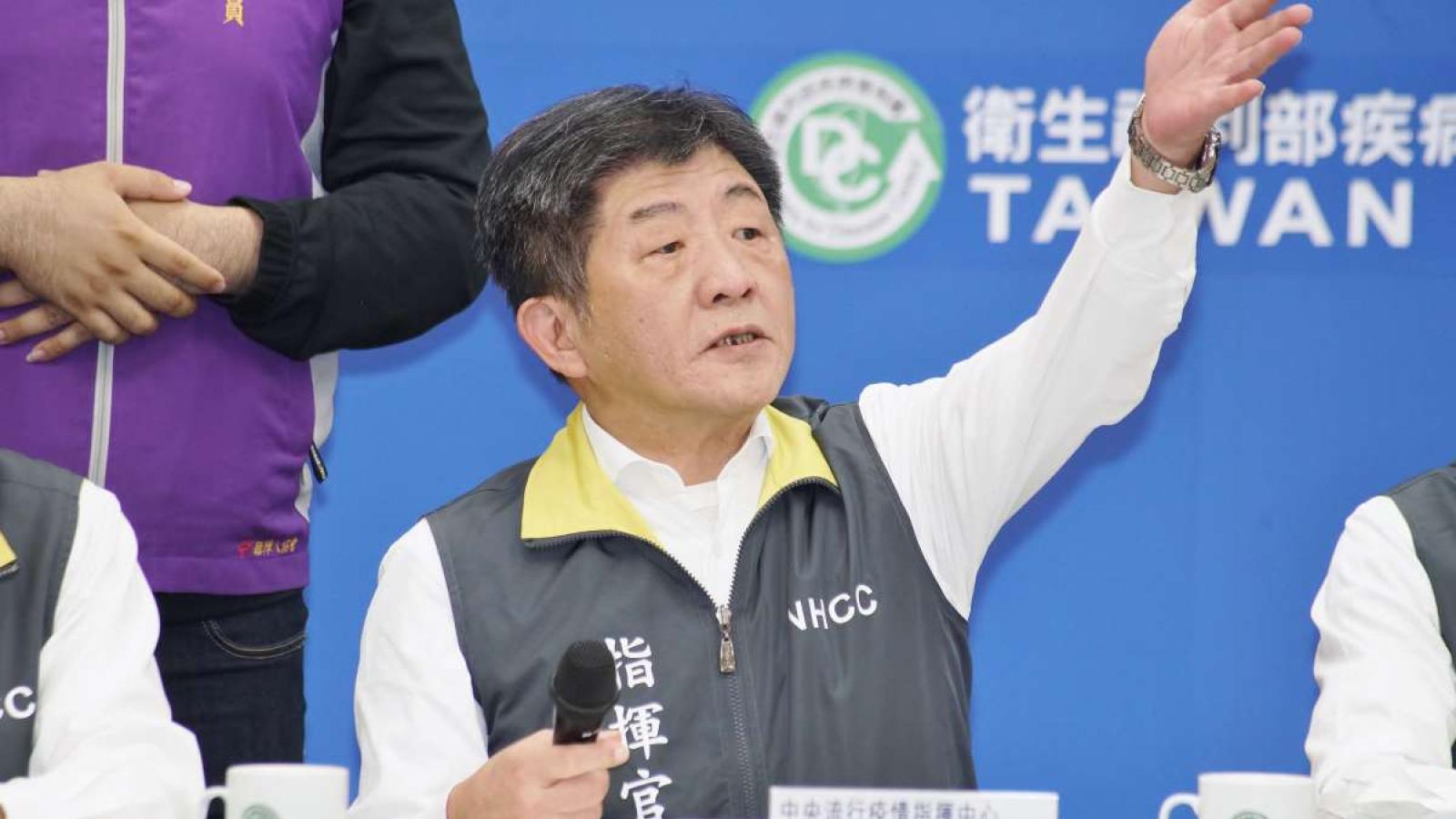
During the pandemic, Tzu Chi attempted to procure vaccines but was defrauded of 1 billion TWD. Chen Shih-chung, a senior government official, stated he had repeatedly warned about fraud risks and now claims 'the truth is clear,' demanding that political figures who previously accused him of obstructing vaccine access apologize to the public and the pandemic response team. This has escalated into a political battle between the ruling and opposition parties.
In response, writer Piaolang Daoyu posted on Facebook, reigniting debate over pandemic-era decisions. He argued that if old pandemic records are to be reviewed, Chen's most controversial misstep was his overly optimistic fatality rate projection. The government initially estimated around 2,000 deaths, but the actual number approached 20,000—ten times higher.
Piaolang Daoyu noted that the Tzu Chi vaccine fraud case has revived painful pandemic memories. He claims the government is now attempting to rewrite history by asserting it never blocked vaccines, echoing Chen's narrative that too many private entities trying to procure vaccines caused confusion—a reflection of the government's true stance at the time.
He emphasized that Chen's biggest controversy lies in his overly optimistic fatality projections. The initial estimate was 2,000 deaths; the final toll was nearly 20,000—a tenfold difference.
In 2022, Taiwan shifted from a zero-COVID strategy to 'living with the virus.' Chen proposed following New Zealand's model, projecting a 0.05% fatality rate, 3.5 million infections (about 15% of the population), and 1,700–2,000 deaths. However, experts like Huang Li-min warned that booster vaccination rates among the elderly were only around 70%, significantly lagging. They cautioned that opening up could sharply increase the death rate.
At the time, Ko Wen-je predicted 40,000 deaths, which the government dismissed as alarmist. Academic estimates suggested around 14,000 deaths. Yet, after transitioning to coexistence with the virus and facing a massive Omicron wave in May, infections surged, and deaths rose dramatically.
Ultimately, Taiwan's infected population exceeded 10 million—far beyond the 3.5 million forecast. Deaths reached nearly 20,000, not 2,000. The case fatality rate was not 0.05% as in New Zealand's model, but 0.18%.
Piaolang Daoyu stressed that Chen's projections were clearly wrong. Despite later claims that 'Taiwan was a top-tier pandemic responder' with a lower fatality rate than Western countries, Taiwan ranked behind South Korea and Singapore in Asia, placing in the mid-tier alongside Japan (0.20%).
More importantly, underreporting of COVID-related deaths persists. Many deaths attributed to chronic illnesses may have been caused or accelerated by infection but were not counted in official statistics. Experts studying excess mortality have found a significant increase in 2022.
He emphasized that what people found most painful in the pandemic's later stages was the sheer number of deaths. Due to防疫 measures, many families could not see their loved ones in their final moments, were not allowed to open body bags, and were simply notified to collect ashes after cremation. This sparked criticism: 'If we're living with the virus, why can't we see our relatives?' Restrictions were only lifted in March 2023.
If we are to revisit pandemic records, Taiwan was not the worst, but it was far from perfect. The turbulent process must be fully reviewed—not selectively rewritten.
FACT BOX
- Source: PR Times
- Category: News