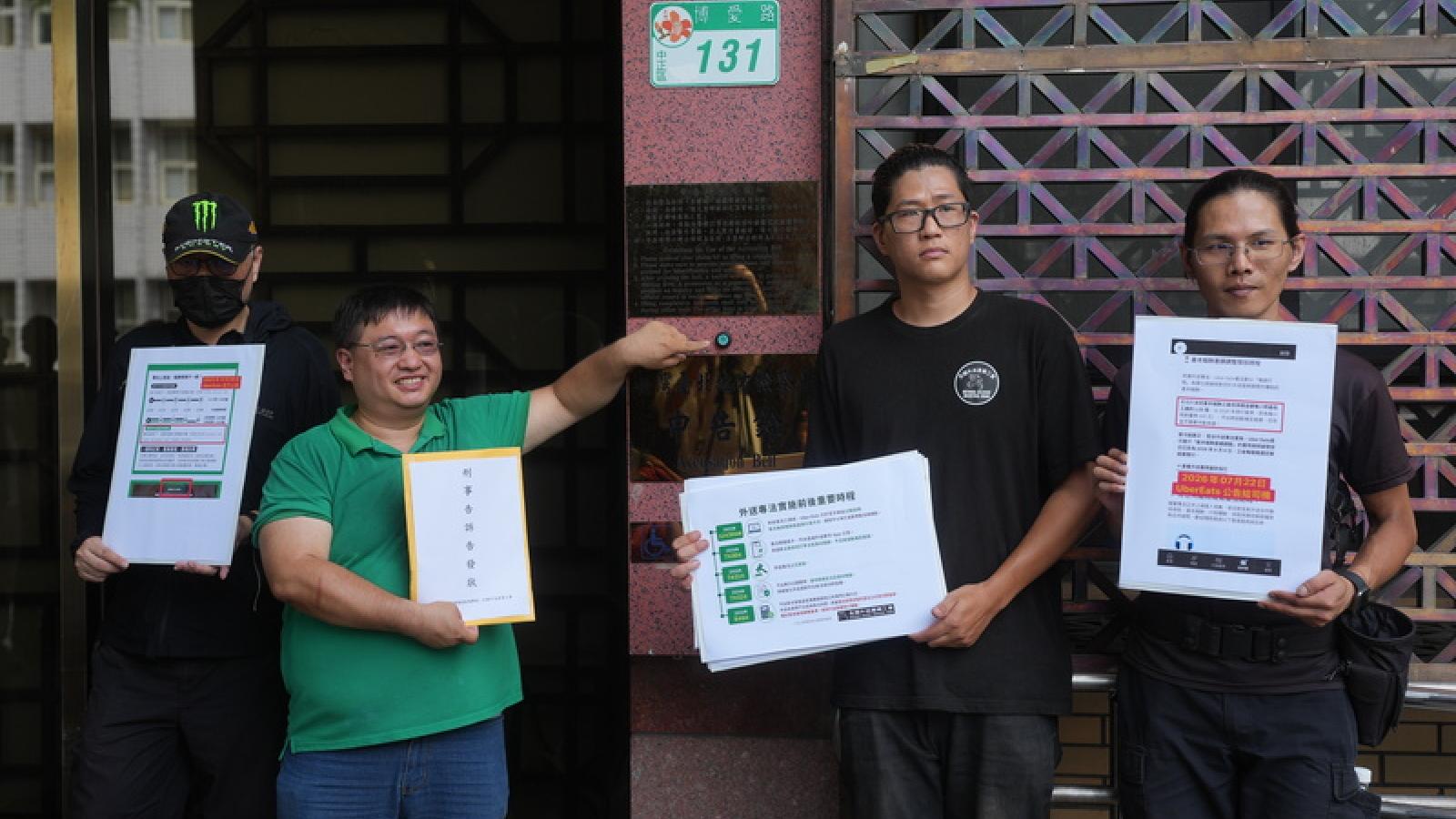
The 'Delivery Worker Rights and Platform Management Act' officially took effect on July 21, stipulating that delivery workers must receive a minimum of NT$45 per order and NT$4.1 per minute, and requiring individual billing for each order. The Taiwan Delivery Industry Rights Alliance and National Delivery Workers Union argue that Uber Eats has misinterpreted the regulations and is misleading delivery workers about their compensation. Today (the 10th), they filed fraud charges against the company at the Taipei District Prosecutors Office. The unions emphasize that multinational platforms must comply with Taiwan's laws and cannot use technical methods to circumvent regulations. They pledge to continue assisting delivery workers in reclaiming the full compensation they are legally entitled to.
Chen Yu-an,理事长 of the National Delivery Workers Union, stressed that delivery platforms have long used opaque algorithms to control dispatching and settlement, leaving workers in the dark about how the system operates. The purpose of the delivery-specific law, he said, is to bring the platform economy under legal oversight and prevent algorithmic opacity from overriding the law. He emphasized that multinational platforms operating in Taiwan use Taiwan's public roads and infrastructure and profit from the labor of local delivery workers, and therefore must abide by Taiwan's laws. Platforms cannot treat Taiwan as a testing ground for violating legal boundaries, using information and technological advantages to evade regulations while frontline workers bear the losses.
The 'Delivery Worker Rights and Platform Management Act' officially took effect on July 21, stipulating that delivery workers must receive a minimum of NT$45 per order and NT$4.1 per minute, and requiring individual billing for each order. (Central News Agency)
Su Po-hao, spokesperson for the Taiwan Delivery Industry Rights Alliance, also issued a stern statement, asserting that the delivery-specific law was passed by the legislature with a three-reading majority and that the competent authority has clearly explained its implementation. He stated that multinational corporations operating in Taiwan must comply with local laws. Deliberately refusing to pay legally mandated wages despite knowing the regulations constitutes a challenge to the authority of Taiwan's government, and the union absolutely cannot accept multinational platforms disregarding Taiwan's laws. In the coming period, the union will continue collecting order records and settlement data to assist affected workers in filing complaints with local labor authorities, and will pursue accountability through both administrative and criminal legal procedures, vowing to help delivery workers recover every cent they are legally owed.
The union alleges that the platform, fully aware of the legal requirements, publicly claimed to be paying in accordance with the law to gain delivery workers' trust and labor, but ultimately underpaid them illegally, causing financial losses. Uber Eats, they argue, has gained substantial illicit profits as a result. The union will submit complete evidence and request that prosecutors investigate the case in accordance with the law.
FACT BOX
- Source: PR Times
- Category: News
- Organizations: Uber Eats