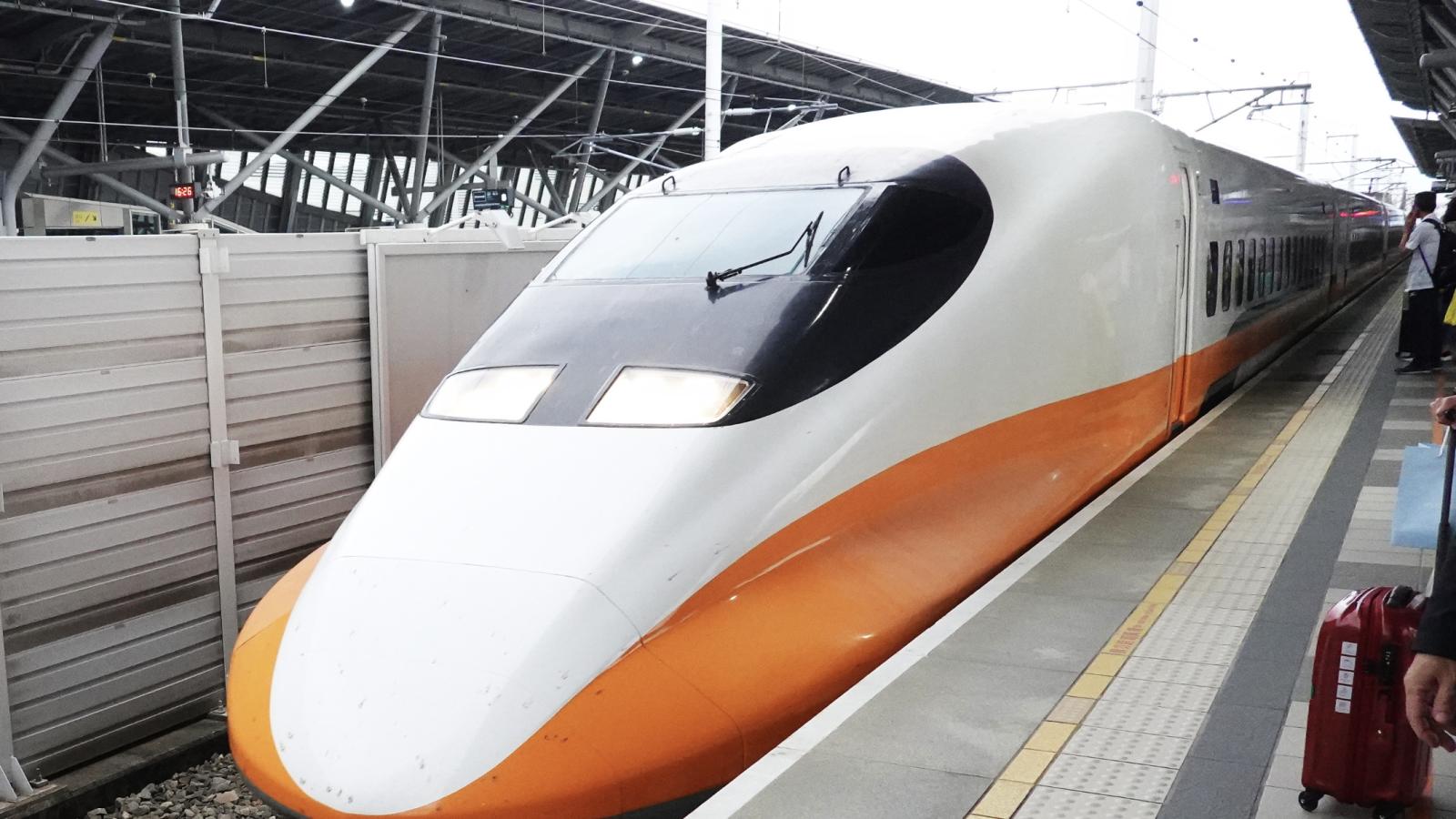
The rail construction between Taipei and Yilan has long been mired in a route dispute between 'HSR extension' and 'direct rail.' Opposition to the HSR extension often centers on several points: continuously rising costs, the risk of significant additional expenditures after construction begins, limited effectiveness in alleviating peak congestion in the Snow Mountain Tunnel, minimal local cost-sharing, overly optimistic benefit assessments, and inconvenient transfers and insufficient system integration.
These criticisms have merit. However, upon closer examination, most of these concerns also apply to the so-called alternative—direct rail. If standards are not uniformly applied, public discourse risks devolving into selective attacks rather than genuine institutional review.
Risk of Cost Escalation
First, consider costs. The HSR extension project started at around NT$170 billion and has since risen to the current approved budget of approximately NT$350 billion. Early estimates for direct rail typically ranged from NT$60 to 70 billion, or around NT$100 billion, but the latest official assessment (for a feasible route avoiding water catchment areas) has reached about NT$220 billion. Whether it's the Northern Yilan HSR or direct rail, both have seen significant cost increases due to inflation, deeper engineering assessments, and more comprehensive inclusion of project components. If 'financial projections increasing over time' is itself a problem, then direct rail has undergone the same process.
Next, consider the hypothetical risk that 'costs may escalate further once construction begins, leading to uncontrolled overruns.' Common factors in large-scale rail projects—geological conditions, land acquisition, construction timelines, and inflation—affect both options equally. No one can guarantee that direct rail won't face additional cost increases after groundbreaking, yet this 'potential future risk' is disproportionately emphasized for HSR alone. This asymmetry is problematic.
Common Corridor Benchmark
A fairer comparison would first establish a shared rail corridor between Taipei and Yilan as a baseline. Then, under identical route alignment, similar land use, and comparable civil engineering conditions, the total cost difference between adopting the TRA direct rail system versus the HSR system should be calculated.
Current public discussions often directly compare two total figures, but the route alignments, tunnel ratios, and system specifications are not entirely identical, making such comparisons akin to 'apples to oranges.' Only by evaluating the incremental cost (the additional ~NT$130 billion) against the benefits gained—time savings, capacity, and system integration—on a common benchmark can we clearly answer whether the investment is 'worth it.'
Notably, both the Northern Yilan HSR and direct rail proposals involve new corridor development between Taipei and Yilan, rather than upgrading the existing TRA Yilan Line. As such, both options are less constrained by existing infrastructure limitations such as tunnel clearances, bridge load capacities, and curve radii. New routes can be designed from the outset according to the selected system specifications, offering greater engineering flexibility.
This makes the choice of system specifications even more critical. Under identical new-line conditions, how much more does adopting a standard-gauge HSR system cost, and what long-term network flexibility does it offer? Conversely, how much is saved by choosing narrow-gauge direct rail, and what future connectivity opportunities are sacrificed?
Congestion Relief in the Snow Mountain Tunnel Is Not the Sole Criterion
The question of 'whether it can solve peak congestion in the Snow Mountain Tunnel' is an overly narrow evaluation metric. Official data suggests the HSR extension could shift some private car usage, but the net reduction in traffic is estimated at only 3–6%, insufficient to resolve congestion. Direct rail typically has even more limited effects on diverting road traffic.
Western HSR has been operational for nearly two decades, yet national highways still experience frequent peak congestion due to induced demand and overall growth in travel volume. The value of public transportation lies in providing a reliable, congestion-free alternative that improves capacity and regional connectivity—not in guaranteeing that roads will never be congested.
Using 'whether the Snow Mountain Tunnel will remain clear' as the core benefit criterion is a standard neither option can meet, and it misaligns with the proper direction of public transport development.
Transfers and System Integration
Concerns about transfers and system integration are frequently raised: HSR stations not co-located with TRA stations, inconvenient transfers, inability to travel directly to Hualien and Taitung on a single ticket, and potential detours to reach Touqian or Jiaoxi. These issues indeed require serious attention.
However, experiences from TRA's Shalun and Liujia branch lines, as well as new stations like Wuri and Fengfu, show that proper co-location, shuttle services, and timetable integration can significantly reduce transfer difficulties. After nearly two decades of operation, connecting bus systems at HSR stations across western Taiwan are now highly developed.
If the Northern Yilan HSR is to proceed, transfer pathways, co-location design, shuttle buses, and fare integration with eastern TRA services must be incorporated early into planning and subjected to public scrutiny. These requirements should apply equally to the direct rail proposal.
Institutional Consistency
Japan's Shinkansen development system is often cited for comparison: local governments share construction costs, operating entities have a voice, benefits are quantitatively verified, and impacts on existing lines are addressed concurrently. Such 'braking mechanisms' effectively reduce the risk of 'politically favored lines.'
If the principles of local cost-sharing and strict benefit evaluation are emphasized only when opposing certain projects, while being lenient toward preferred alternatives, then principles become mere tools. True institutional progress lies in applying the same standards—fiscal responsibility, common corridor benchmarks, and comprehensive risk assessment—consistently to all major rail projects, treating HSR and direct rail equally.
Awaiting a Long-Term Vision
Regarding long-term vision, some suggest referencing Japan's Yamagata and Akita Shinkansen branches (Mini-Shinkansen). If the Hualien-Taitung line were one day upgraded to standard gauge and higher speeds, the Northern Yilan HSR, as a standard-gauge extension, could become the northern gateway to an eastern standard-gauge network, reducing transfers and enhancing overall connectivity. This adds a strategic dimension to the HSR proposal.
However, gauge upgrading for the Hualien-Taitung line remains a long-term possibility, not a confirmed policy. Even if pursued in the future, most existing tunnels, bridges, and stations are designed for narrow gauge, necessitating new tunnels and bridge reconstructions—entailing massive future costs that must be separately and rigorously evaluated. These cannot be automatically counted as benefits of the Northern Yilan HSR.
The Northern Yilan section, being a new corridor, offers higher design flexibility and can reserve future connection interfaces. However, gauge conversion of existing eastern lines represents a separate, independent investment. Until related plans are concretized, the benefit assessment of the Northern Yilan HSR should focus on functions achievable under current conditions, rather than over-relying on unrealized long-term visions.
Conclusion
There is little dispute that better rail connectivity between Taipei and Yilan is needed. The real issue is, given limited fiscal resources, which system to choose, how much to spend, and what tangible improvements to expect—all of which must be compared using consistent, verifiable standards.
Most arguments against HSR extension—rising costs, risk of cost overruns, limited congestion relief, insufficient local cost-sharing, and weak transfer integration—are equally applicable to direct rail. Acknowledging this and shifting the discussion from 'which proposal is worse' to 'measuring both with the same ruler' could help public infrastructure decisions become less political and more rational.
*The author is a retired professor at National Yang Ming Chiao Tung University and Vice Chairman of the Taiwan Industry Technology Advancement Association.
FACT BOX
- Source: PR Times
- Category: News