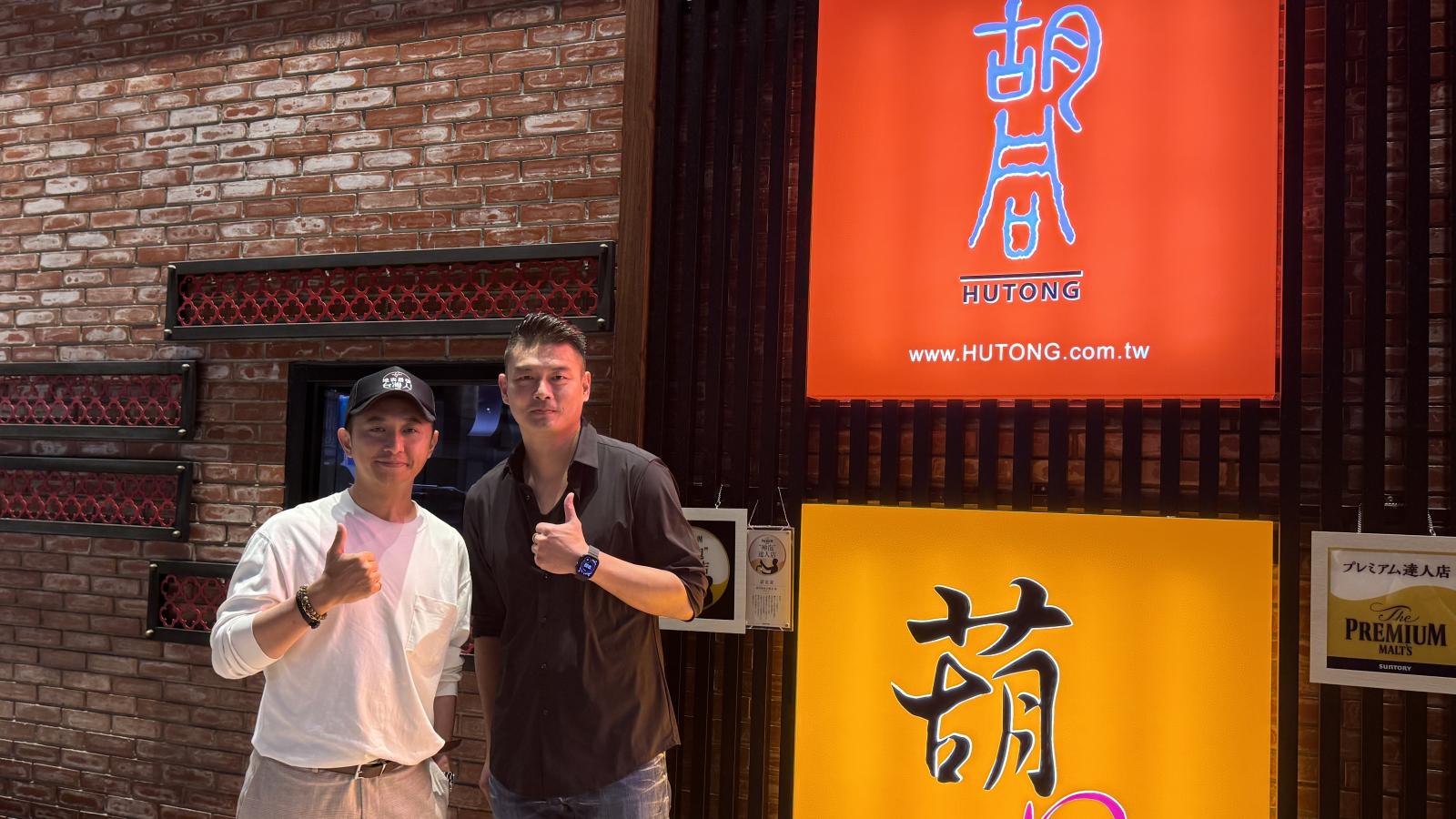
Restaurant group Orange Flame Hutong (2761) has actively driven brand upgrades, multi-brand operations, overseas expansion, and organizational restructuring over the past year. After more than a year of adjustments, the reform's effectiveness is gradually reflected in operational performance. Orange Flame Hutong currently operates 11 brands and 61 stores. In the first half of this year, consolidated revenue reached NT$725 million, a 12.12% year-on-year increase. The chain brand business unit now accounts for over 50% of revenue, becoming the group's primary growth engine. Overseas expansion continues to advance, with Kaidon's second US store scheduled to open in Q4 this year, marking its first foray into a standalone street-side store format.
One year after organizational restructuring, are the three business units beginning to fulfill their distinct roles?
Last year, Orange Flame Hutong launched a restructuring initiative, consolidating its brands into three units: 'Yakiniku Brand Business,' 'Chain Brand Business,' and 'Artisan Brand Business.' This shift moves beyond mere multi-brand expansion toward divisional management, assigning different growth missions to each brand.
General Manager Yang Che-Wei stated that 2025 was a year of reform and adjustment for the group, while 2026 to 2027 will gradually reveal results. He noted that the reform direction is already showing early signs of success. The yakiniku brand unit focuses on deepening core brands, while the chain brand unit drives growth through standardization, store expansion, and economies of scale. Currently, the chain brand unit contributes over 50% of revenue, becoming the main growth engine. In June alone, revenue surged nearly 60% year-on-year.
In the second half of the year, Shidaime Kikukawa, Kaidon (Yakiniku vs. Donburi), Pepper Lunch, and Ichigen Ramen will successively enter new locations including Taichung’s Mi Ping Fang, Nangang’s LaLaport, and Taipei’s Big City Dome, further expanding the store footprint. Yang mentioned that store count could double by 2028, advancing toward a 100-store target. With increasing store numbers, operations are expected to grow rapidly in the coming years.
Amid labor shortages, Orange Flame Hutong is actively introducing track-based food delivery systems and semi-automated equipment to enhance operational efficiency. The company is also preparing to move beyond its traditional mall food court-focused expansion model and enter the street-side store market.
Hutong Yakiniku rejuvenates its brand—June revenue up nearly 20%?
While the chain business unit grows through store expansion, Hutong Yakiniku has undergone brand revitalization, including menu updates, set meal introductions, membership marketing, and limited-time all-you-can-eat promotions to lower the decision barrier for first-time customers.
Yang stated that Hutong Yakiniku has recently returned to a growth trajectory, with June revenue increasing nearly 20% year-on-year. Notably, the brand has begun reaching beyond the traditional yakiniku market by collaborating with fast-food giant McDonald’s. Through co-branded products, return vouchers, and membership marketing, it has engaged a broader consumer base. During the campaign, store traffic reached 1.5 times that of the same period last year, with the most significant growth among new customers under 30. The campaign contributed nearly NT$20 million in revenue.
Orange Flame Hutong plans to further monitor metrics such as new customer ratio, membership sign-ups, revisit rates, and revenue conversion, aiming to transform one-time marketing campaigns into long-term membership assets and rebuild its younger customer base. Additionally, Hutong Yakiniku recently partnered with Taipei Marriott Hotel to launch the 'Ultimate Grill Journey – One Stay, Two Meals' package, combining accommodation, dining, and premium yakiniku experiences. This cross-industry collaboration reaches diverse customer segments and expands the brand’s consumption scenarios.
Kaidon’s first US store turns profitable—can the second street-side store replicate success?
Beyond brand reforms in Taiwan, Orange Flame Hutong’s overseas expansion has entered its next phase.
Kaidon entered Los Angeles, USA, in August last year. The first store, located in a mall food court, specializes in yakiniku donburi with an average check of around $14. It currently generates approximately $90,000 in monthly revenue, has turned profitable, and achieved single-store break-even—validating the overseas business model. Notably, the customer base differs significantly from Taiwan. Yang noted that about 60% of customers are Mexican-American, while Chinese customers account for only about 30%, indicating Kaidon is building a local consumer base beyond the Chinese diaspora.
With the first store’s success validated, Orange Flame Hutong will open its second US store in Los Angeles in Q4 this year. Spanning about 50 ping (165 sqm), it will be the brand’s first standalone street-side location. Unlike the first store in a mall food court, the second will test product offerings, supply chain, and staffing under a different store format. Yang stated that if both mall and street-side models prove successful, the group will accelerate its North American expansion and gradually establish a replicable overseas store standard.
Currently, Orange Flame Hutong operates 11 brands and 61 stores. First-half revenue has already reached NT$725 million, up 12.12% year-on-year, with 13 new stores planned this year. Operationally, the group is forming three core growth pillars: 'core brand optimization, chain brand expansion, and overseas market validation.' The yakiniku unit is boosting traffic through product and customer adjustments, the chain unit is enhancing scale efficiency through expansion and semi-automation, and Kaidon is further testing replicability in the US market.
FACT BOX
- Source: PR Times
- Category: News