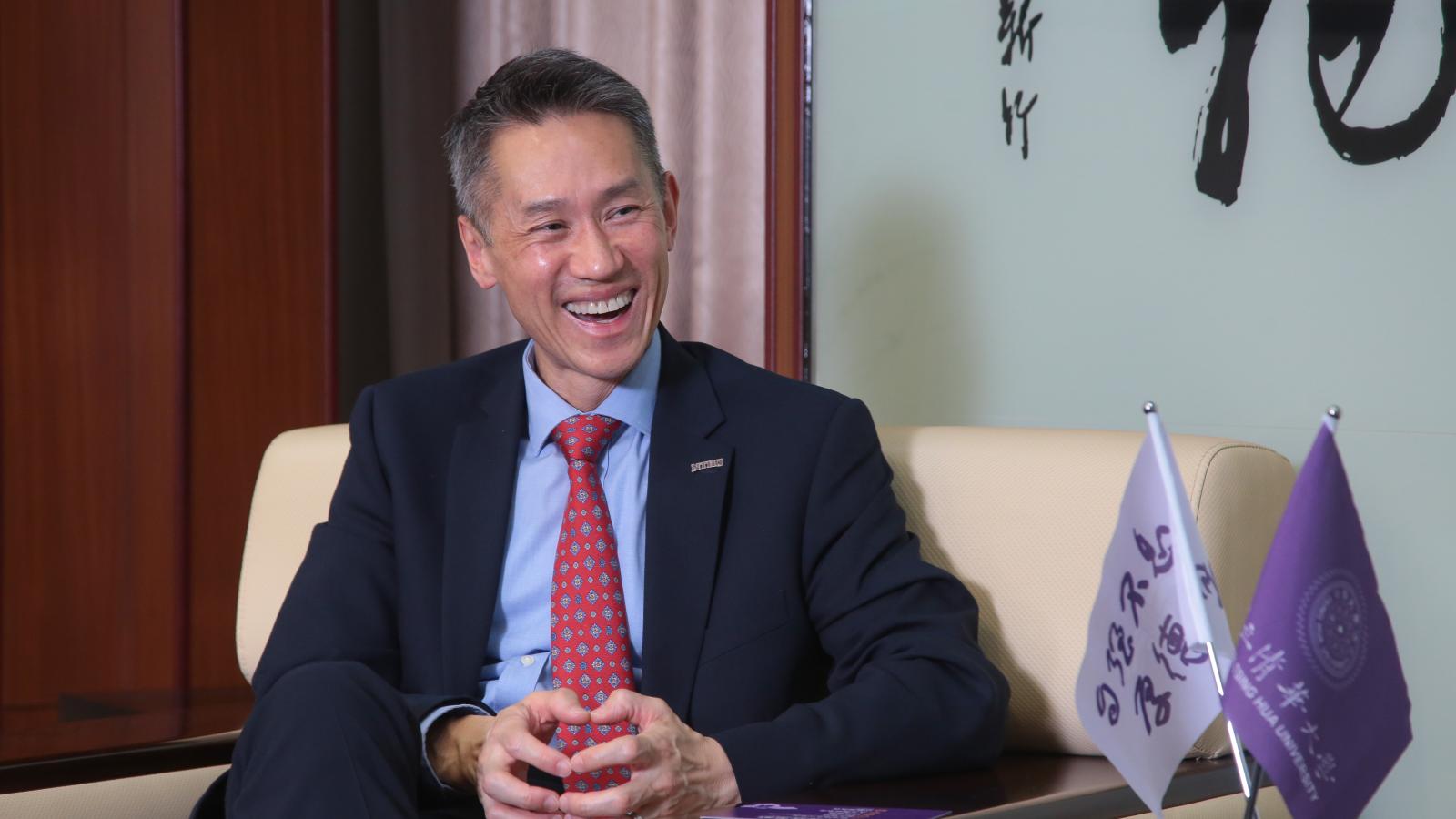
National Tsing Hua University (NTHU) President Kao Wei-yuan officially began his second four-year term on May 1. Just days later, from May 4 to 5, he traveled to the United States to participate in the presidential selection process for the University of Hawaiʻi at Mānoa. This move sparked criticism over 'job hunting while already employed' (riding a donkey while looking for a horse) and raised concerns about broken trust and ethical conduct.
After remaining silent for several days, Kao issued a statement late on the evening of September 9 via email addressed to 'fellow Tsinghua members,' expressing deep regret for the distress and anxiety the news and subsequent public discourse had caused.
In the letter, Kao acknowledged that recruitment is common in both academia and industry, but noted that it is rare for foreign universities to recruit sitting university presidents from Taiwan. 'When such an opportunity arose, it indeed sparked my curiosity,' he said, attributing his actions to a lack of understanding of cultural differences between Eastern and Western workplace norms. He emphasized that he deeply values his connection with every member of the Tsinghua community and expressed hope for continued support to jointly achieve new heights for the university.
However, Dr. Chang Jui-hsiung, Honorary Chair Professor at National Taipei University of Business, posted a critique on Facebook after reading the letter. He argued that Kao's apology 'apologized for the wrong thing'—he expressed regret for the public backlash, not for the act of seeking another presidency while still in office. In other words, Kao seemed to regret the exposure of his actions, not the actions themselves. The core public anger, Chang noted, centers on integrity, yet the letter did not mention it once.
Chang highlighted the word 'curiosity' as particularly problematic. The University of Hawaiʻi presidential search had been launched as early as February, and by late April, Kao had already been announced as one of three finalists. In contrast, NTHU’s reappointment vote for Kao had been completed as early as March of the previous year. This was not a spur-of-the-moment decision driven by curiosity, but a months-long, deliberate planning process. Therefore, describing it as a fleeting curiosity was unconvincing and appeared to sidestep the real issue.
Chang also dismissed the explanation of 'cultural differences' as inadequate. While academic mobility is common in the U.S. higher education system, Kao is not an ordinary scholar—he is a university president who was reappointed with 84.72% voter turnout and majority support from the Tsinghua community. The faculty and students cast their votes as an expression of trust in his leadership for the next four years. Yet, less than a year and a half after that vote of confidence, he quietly participated in another university’s selection process. This, Chang argued, is not a matter of cultural difference, but a betrayal of trust.
Chang emphasized that a sincere apology must answer two questions: 'What did I do wrong?' and 'What will I do to make it right?' Kao’s letter failed on both counts. It did not acknowledge that secretly applying for another presidency after reappointment was inappropriate, nor did it propose any concrete remedial measures—such as explaining the situation to the faculty council or committing to disclose future plans in advance.
Empty calls for 'continued support,' Chang warned, will not mend the breach of trust and may only deepen the rift. The Kao incident reflects deeper structural challenges in Taiwan’s higher education governance. While it is indeed difficult to retain international talent and there are long-standing systemic issues like salary disparities with global markets, these institutional challenges cannot serve as a shield for personal integrity failures.
If Taiwan wishes to attract and retain top-tier academic leaders, improving compensation and presidential selection systems is necessary—but more importantly, it must rebuild a culture of accountability centered on transparency and integrity.
FACT BOX
- Source: PR Times
- Category: 人事