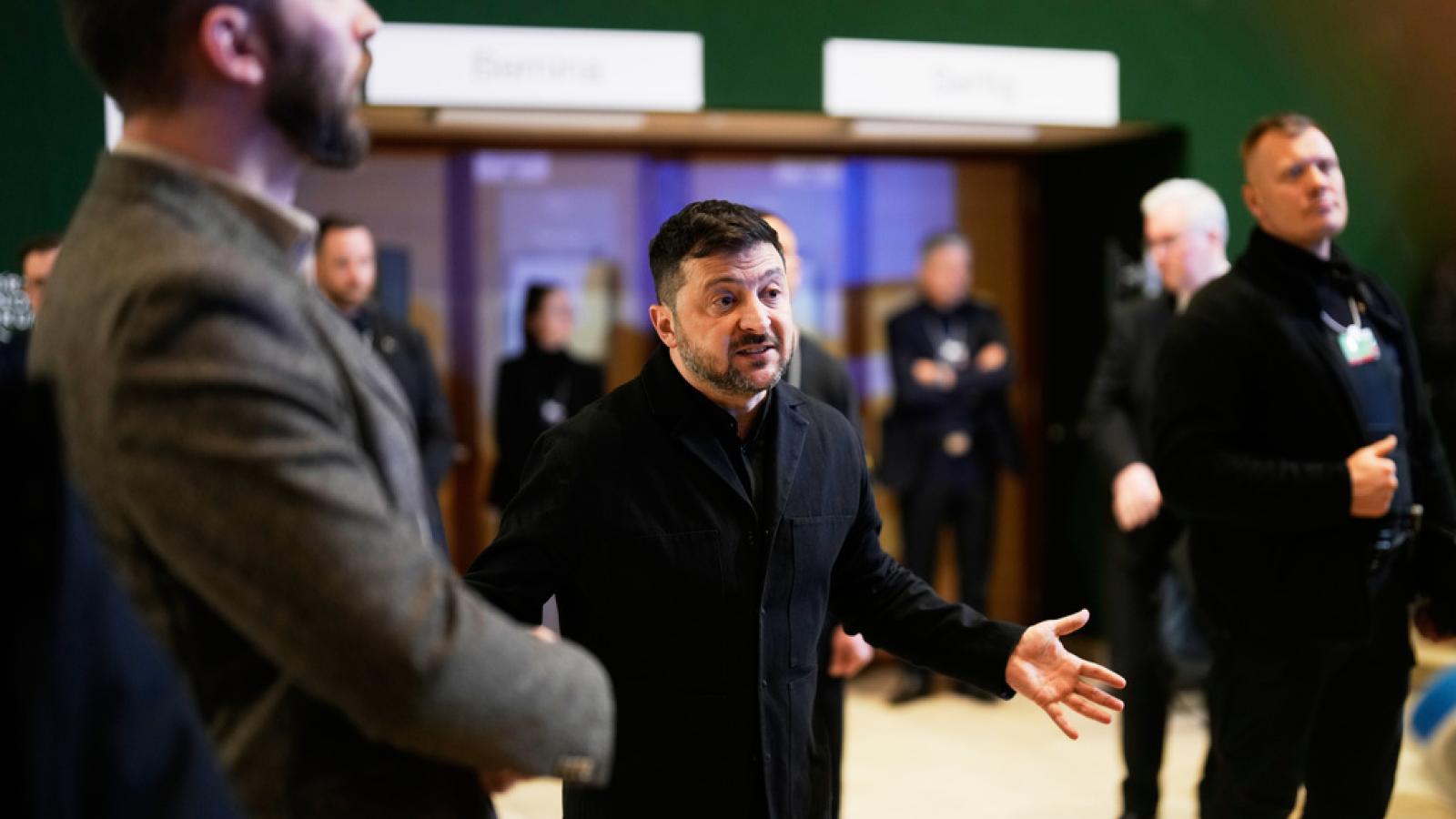
As the Russia-Ukraine war drags into a prolonged war of attrition, Ukraine has become an unexpected battleground for military, industrial, and diplomatic competition between North and South Korea. Ukrainian President Volodymyr Zelenskyy recently called on Seoul to provide air defense systems, while Ukraine’s Defense Intelligence Directorate (GUR) confirmed that Pyongyang has not only supplied millions of artillery shells to Russian forces but also deployed a dedicated missile unit to Voronezh Oblast in Russia. As Kim Jong-un leverages this European conflict as a 'real-world testing ground' for modern warfare, South Korea finds itself at a crossroads in its security policy.
North Korea’s military support escalates
According to Reuters, citing Ukraine’s GUR, North Korea’s military assistance to Moscow has evolved from initial logistical support to deep integration of troops and advanced weaponry. The GUR confirmed that Russian forces plan to deploy a North Korean missile unit within the 112th Missile Brigade in Voronezh Oblast, equipped with 120 ballistic missiles and six launchers. Pyongyang recently delivered around 40 KN-23 and KN-24 ballistic missiles, which Ukrainian officials say Russian forces began using in early August. One such missile struck a residential home in Radushne, a village in central Ukraine, killing five members of a family.
In addition to missile units, Ukrainian assessments indicate that of the 15,000 North Korean troops reportedly sent to Russia’s Kursk Oblast in 2024 to assist in countering Ukrainian offensives, approximately 9,500 remain stationed there. Russian Security Council Secretary Sergei Shoigu has also publicly confirmed that North Korea will send 1,000 combat engineers and 5,000 military construction personnel to assist Russia with demining and infrastructure reconstruction. Ukrainian intelligence estimates that since mid-2023, North Korea has supplied Russian forces with around 4 million artillery shells (excluding mortar rounds) and approximately 150 ballistic missiles—amounting to nearly half of Russia’s frontline ammunition consumption.
Regarding the threat posed by North Korean missiles, Rob Lee, a researcher at the U.S.-based Foreign Policy Research Institute (FPRI), told Reuters: 'Ballistic missile defense is one of Ukraine’s greatest weaknesses, so an increase in the number of enemy ballistic missiles presents a more severe challenge.' Ukrainian military sources note that while North Korea’s KN-23 and KN-24 missiles are less accurate than Russia’s Iskander systems, they carry heavier warheads, have longer ranges, and fly on high-arcing trajectories that are extremely difficult to intercept—posing a major security threat to Kyiv as it prepares for winter energy infrastructure defense.
Zelenskyy turns to the 'South Korea card'
Facing the rapid advancement of North Korea’s military-industrial complex and real-world combat experience, President Zelenskyy publicly appealed to Seoul on September 9 via social media platform X and in interviews with Ukrainian media. Zelenskyy stated that Pyongyang plans to send an additional 30,000 to 50,000 troops to Russia and urged South Korea to establish closer defense cooperation with Ukraine. 'In my view, the Republic of Korea should have closer cooperation with Ukraine. We are open to this and very much hope to receive South Korean support in the areas where we are most lacking—specifically, air defense systems,' he said.
To encourage a response from Seoul, Zelenskyy proposed a 'Drone Deal'—a long-term international cooperation framework—offering Ukraine’s frontline combat experience, drone technology, and defense industry collaboration in exchange for South Korean defense resources. He also issued a warning to Indo-Pacific nations: 'North Korean forces are learning modern warfare in this conflict, gaining Russian technology licenses and various military tools. If crises erupt in other regions, such as the Pacific, North Korea will inevitably apply the modern warfare experience it has gained under Russian command.'
Although South Korea is currently restricted by domestic laws from exporting lethal weapons to active conflict zones, and its Ministry of Foreign Affairs has remained silent on Reuters’ inquiries, military analysts believe that while direct weapon transfers are highly unlikely, opportunities for joint defense ventures or technology sharing still exist.
Japan’s cautionary precedent
The Japan Times reported that while Japan eased restrictions on lethal weapon exports in April 2024 and reached an agreement with the U.S. allowing Mitsubishi Heavy Industries to produce Patriot air defense missiles, Japanese law still strictly prohibits direct weapons transfers to combatant nations, permitting them only under 'special exceptional circumstances' and limited to the 17 countries with which Japan has signed the Agreement on Defense Equipment and Technology Transfer.
Ukraine had hoped to explore defense industry cooperation with Japan’s Mitsubishi Heavy Industries after former U.S. President Donald Trump briefly signaled authorization. However, Trump reversed his decision weeks later, stalling Japan-Ukraine defense collaboration. Zelenskyy recently acknowledged that while he appreciates Japan’s support, the assistance provided by Tokyo 'has not met Kyiv’s high expectations.' This experience has underscored for Ukraine the diplomatic challenges of overcoming legal export restrictions among its East Asian allies.
FACT BOX
- Source: PR Times
- Category: News