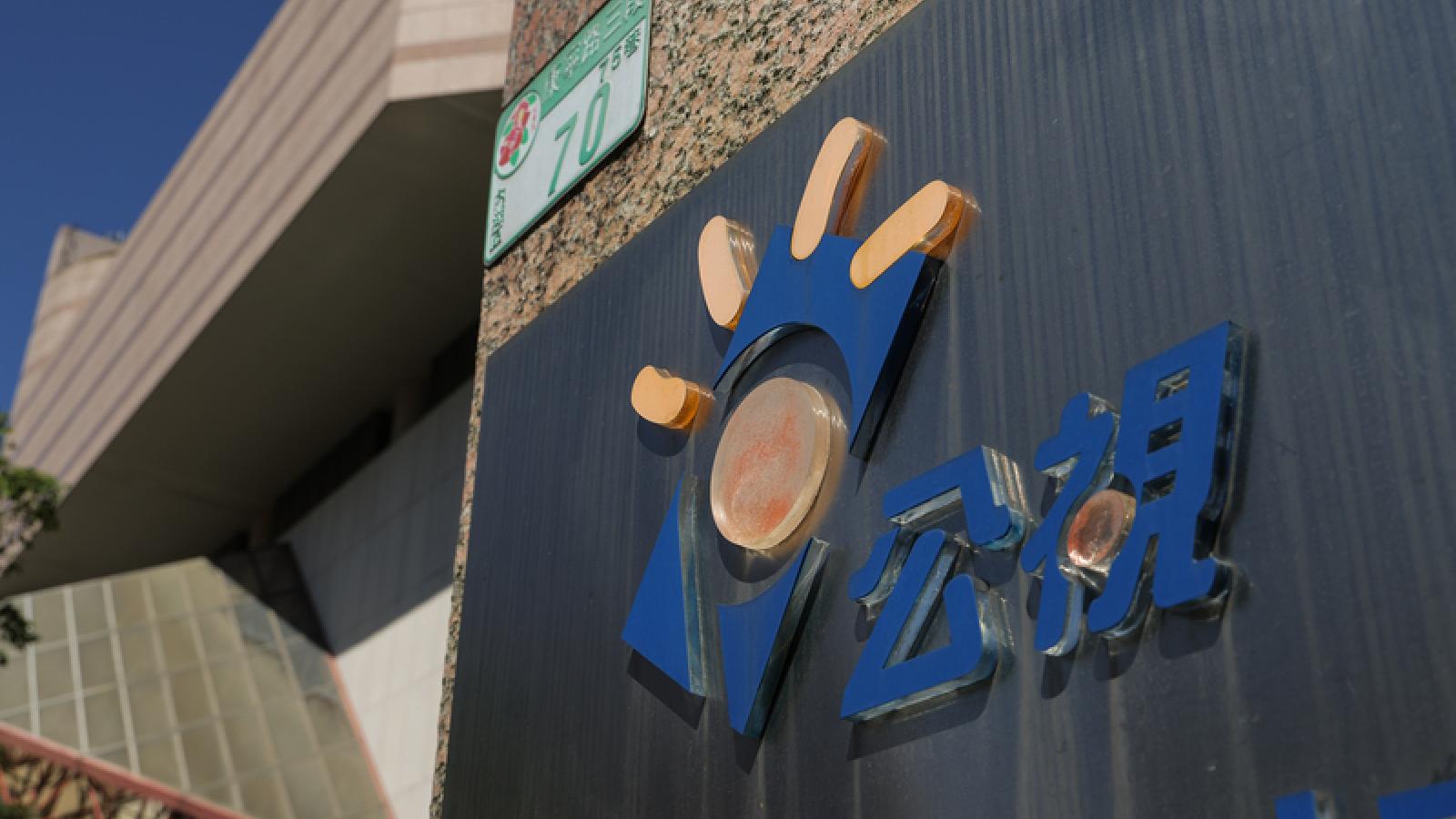
The legislature, led by the Blue-White coalition, has revised the 'party-state-military clause'—a principle the DPP has treated as sacred in media policy for over two decades. On the surface, it appears the Blue-White alliance has won another battle in the media arena. Yet, the ongoing debate over whether TaiwanPlus should cease operations reveals that this government-created channel has, in fact, slapped the party-state-military clause in the face.
TaiwanPlus, operated by Public Television Service (PTS), has been on air for over three years but faces criticism over its effectiveness. Established in 2021 and originally under the Central News Agency (CNA), TaiwanPlus relies entirely on government subsidies, with personnel and operations under government control—directly contradicting the DPP's oft-repeated principle that 'the party, state, and military must not operate media.' The platform aims to 'convey Taiwan's voice and local perspectives internationally' and 'showcase Taiwan's diverse culture,' operating similarly to China's CGTN.
TaiwanPlus receives approximately 1 billion TWD (about 100 million JPY) annually in government subsidies—nearly three times more than CNA and comparable to the parent organization of the public broadcasting group, PTS. Critics argue that the competition between CNA and PTS for operational control is less about 'making the world hear Taiwan's voice' and more about seizing this substantial funding.
Li Yuan, the Minister of Culture who once served as General Manager of CTV during the early days of the public broadcasting group, admitted that TaiwanPlus is a 'disaster'—and indeed it is. TaiwanPlus was created to promote Taiwan internationally through English and other languages. Ironically, before CNA won the rights to operate TaiwanPlus, it already had its own English international news platform, 'Focus Taiwan.' The following year, PTS—which took over TaiwanPlus—already operated 'PTS WORLD TAIWAN,' offering English-language video content. This has created redundant structures between CNA and PTS.
Moreover, TaiwanPlus has faced continuous management chaos. Beyond legislators' criticisms of its obvious political bias, the channel still operates with acting executives, and key managers are rarely present in Taiwan.
Even more absurd is that for over two decades, the DPP has championed the principle that 'the party, state, and military must not interfere in media,' with green-aligned legislators calling it the DPP's 'media sacred cow.' This was meant to highlight how the KMT, starting with the establishment of Taiwan Television (TTV) in 1962, created China Television (CTV) and CTS within a decade—all under party-state-military control—and how founders of newspapers like China Times and United Daily News were KMT Central Standing Committee members.
The DPP not only demanded the KMT exit media but also codified this into law. The 'Three Broadcasting Laws' include clauses stating: 'Except as otherwise provided by law, the government and political parties shall not subsidize the establishment of private broadcasting or television enterprises or satellite broadcasting services,' and 'the government, political parties, their funded foundations, and their trustees shall not directly or indirectly invest in system operators.'
Twenty years ago, these provisions forced TTV (funded by the Taiwan Provincial Government) and CTV (funded by the KMT) to privatize. CTS, funded by the Ministry of National Defense and Ministry of Education, merged with PTS to form the public broadcasting group, nominally 'publicized.' As the 'Big Three' networks distanced themselves from party-state-military control, the DPP began using government grants and subsidies to operate on the edge of legality—establishing Hakka TV, Indigenous Television, and Hoklo TV under PTS, later channeling funds through government donations to foundations supporting these channels.
This is government intervention in media by 'changing the container but not the content.' The government even pressured cable operators to carry TaiwanPlus, creating dilemmas for the industry—despite TaiwanPlus targeting overseas audiences, it demands domestic cable carriage.
Media critics argue that the DPP-led 'party-state-military clause' since 2000, unchanged for over two decades after the KMT's exit from the Big Three, has been hollowed out. In those 20 years, the DPP itself used state power to establish four TV stations. The existence of TaiwanPlus is a slap in the face to the very clause it claims to uphold.
Now, the Blue-White coalition has passed amendments to Article 10 and Article 58 of the Cable Broadcasting and Television Act (the party-state-military clause), relaxing shareholding restrictions and increasing industry liquidity. The previous rule—prohibiting any indirect shareholding by the government, political parties, their funded foundations, or trustees in system operators—has been relaxed to allow up to 1% ownership. Though only 1%, this change took over 20 years to achieve; now it awaits implementation by the Executive Yuan.
Meanwhile, TaiwanPlus—called a 'disaster' by the Culture Minister and facing legislative proposals to cut its budget—receives nearly three times the annual funding of CNA. Some media observers suggest merging it with CNA's English platform 'Focus Taiwan' and reducing its budget. CNA recently appointed a new chairman, Sz-Ma Wen-Wu. When Tsai Ing-wen originally planned TaiwanPlus, she intended for Sz-Ma to lead it, but due to timing, PTS took control. Now, returning TaiwanPlus to CNA—entrusting operations to Hsu Wan-Ling, a veteran in video production, under Sz-Ma's supervision—could be a viable solution. A compromise: let TaiwanPlus leave the PTS group swiftly.
*Author is a veteran media professional with over 30 years of experience. Republished with permission from Ju Media.
FACT BOX
- Source: PR Times
- Category: News
- Products / services: TaiwanPlus / Focus Taiwan