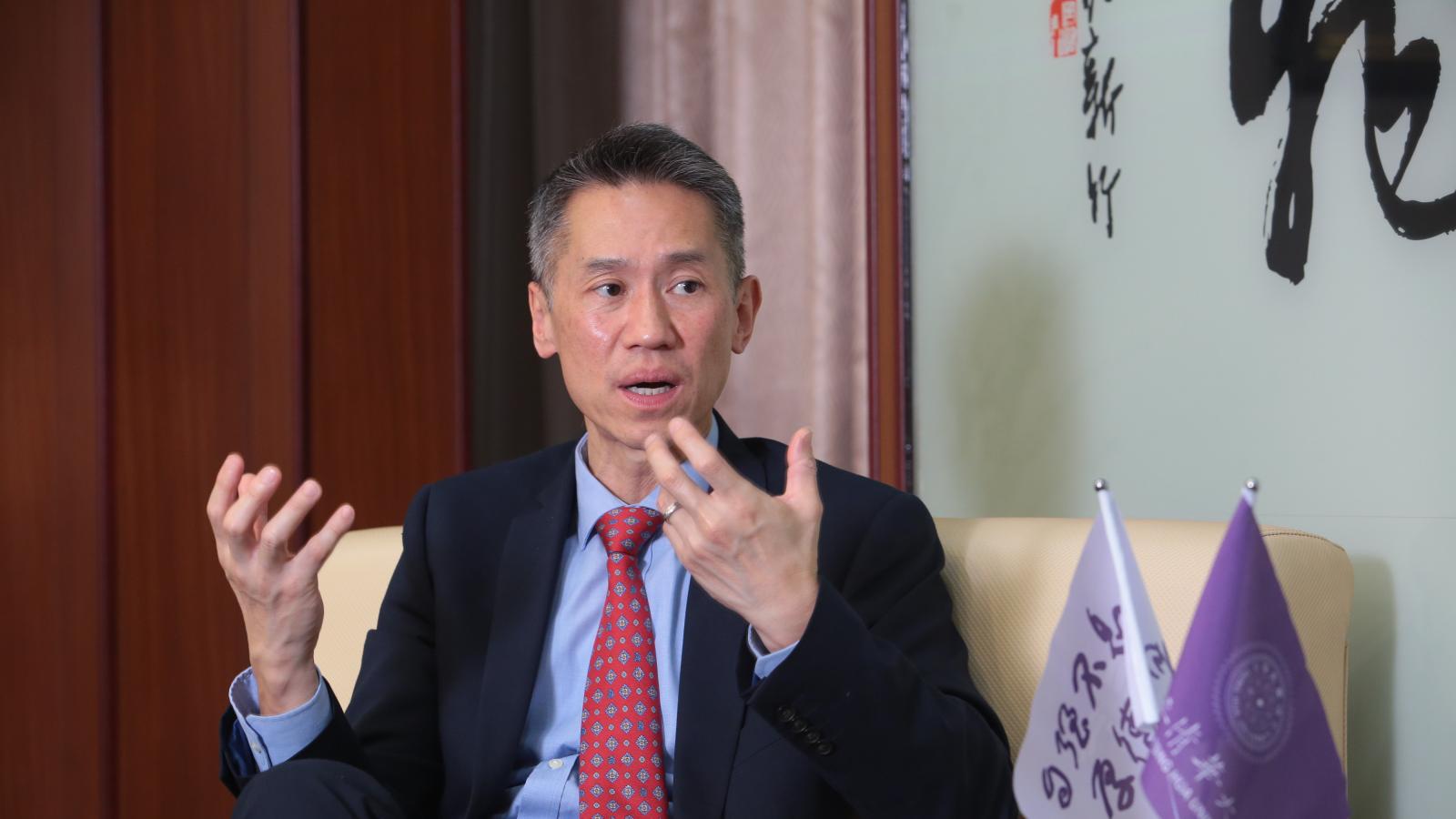
National Tsing Hua University (NTHU) President Kao Wei-yuan officially began his second four-year term on May 1, 2024. However, just three days after his reappointment was confirmed, he traveled to the United States on May 4–5 to participate in the presidential search at the University of Hawaiʻi at Mānoa (UH Mānoa). He was not ultimately selected. The revelation sparked public controversy over accusations of 'job-hopping while still in office' or 'keeping options open.'
On the evening of May 9, Kao issued an open letter via email to the 'Tsinghua community,' expressing deep regret for the distress and unease caused by the news and subsequent public discourse. He acknowledged that while poaching is common in academia and industry, it is rare for a foreign university to recruit a sitting university president from Taiwan. 'When such an opportunity arose, it indeed piqued my curiosity,' Kao stated, adding that this reflected his insufficient understanding of cultural differences between Eastern and Western workplace norms. He emphasized his appreciation for his relationship with the Tsinghua community and urged continued support to achieve new heights.
In response, former Executive Yuan official Chang Ching-sen posted a scathing critique on Facebook. 'After hiding for nine days, he finally came out to explain. But after reading his statement, I am disappointed,' Chang wrote. 'Is this the level of explanation expected from the president of Tsing Hua University?'
Chang sharply criticized Kao’s justification of 'curiosity,' asking, 'Are you still in puberty?' He argued that while curiosity might explain motivation, it does not absolve responsibility. 'Too many unacceptable actions could be excused with “I was just curious,”' he said, likening the situation to a 'jerk cheating on his partner' who claims, 'I was just curious about another woman,' questioning whether such an excuse could ever be forgiven.
Chang further condemned the 'cultural differences' explanation, suggesting it insulted NTHU’s faculty and students by implying they were unsophisticated 'country bumpkins' unfamiliar with Western culture. He pointed out that UH Mānoa had publicly announced Kao as one of three final candidates on April 26 and scheduled his campus visit for May 4–5. The core issue, Chang stressed, was whether Kao had honestly disclosed his concurrent candidacy to those responsible for deciding his reappointment at NTHU.
'This is a matter of integrity,' Chang asserted. 'Does Western workplace culture permit a candidate to conceal such information? Is honesty expected differently across cultures?'
He compared Kao’s actions to 'going on a blind date four days after marriage while hiding it from one’s spouse,' accusing him of treating NTHU as a 'backup option' (beita). Kao had made numerous commitments to NTHU’s faculty and students during his reappointment process, only to secretly pursue another position immediately after being confirmed—'a betrayal of trust,' Chang said. He questioned which Western workplace norms this behavior aligned with.
Chang emphasized that Kao’s real audience is the NTHU community. The fairest solution, he proposed, would be to allow those who originally voted for Kao’s reappointment to reconsider and vote again after hearing his full explanation and knowing all the facts. Otherwise, the shadow of 'treating Tsing Hua as a backup and always ready to cheat' would follow Kao for life.
FACT BOX
- Source: PR Times
- Category: 人事