The Executive Yuan's annual urban resilience exercise this year included the first-ever mobile network slowdown drill. The central Taiwan drill took place today (10th) from 2:30 PM to 3:00 PM, covering Miaoli County, Taichung City, Nantou County, Changhua County, Yunlin County, Chiayi City, and Chiayi County.
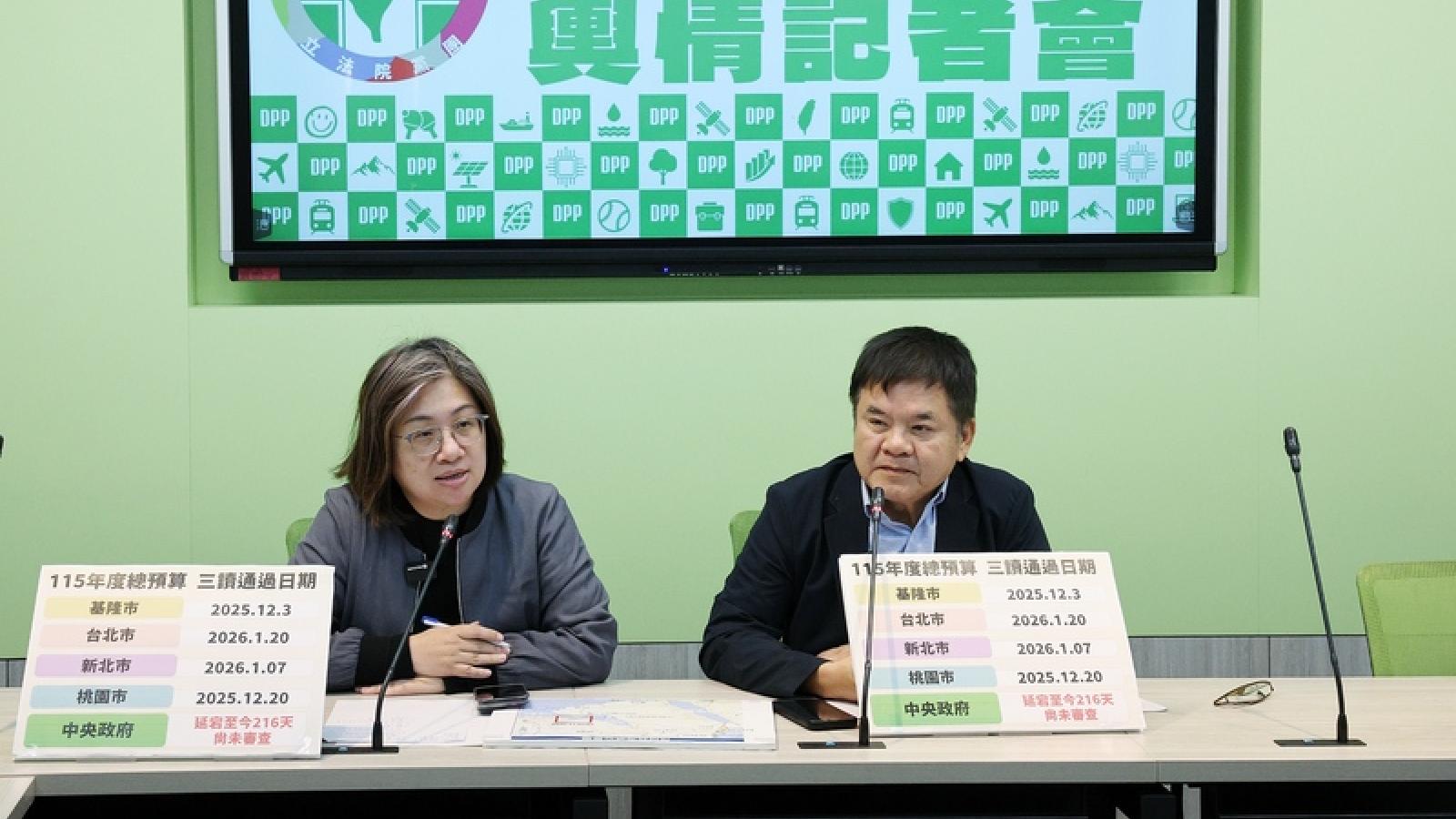
However, KMT legislator Weng Hsiao-ling posted on Facebook calling it a 'network blackout exercise,' drawing public attention. In response, the Democratic Progressive Party (DPP) Legislative Caucus held a press conference to address public concerns. Caucus Deputy Secretary-General Chen Pei-yu stated that Weng should be able to read, emphasizing that the drill was about 'bandwidth limitation,' not a complete internet shutdown. She urged Weng to read the official explanation carefully, adding, 'If you can't understand it, read it again several times.'
DPP Caucus Secretary-General Chuang Jui-hsiung and Deputy Secretary-General Chen Pei-yu explained the drill during the press conference. Chuang stated that even if a full internet blackout drill were conducted, it shouldn't be rejected outright. He emphasized that citizens should not treat Han Kuang exercises or other drills as mere 'fireworks shows.' The purpose of such drills is to prepare for potential future crises and to take preventive measures. While simulations cannot perfectly replicate real-world scenarios, practicing emergency responses for worst-case situations is essential.
Chuang noted that the current plan only involves a slowdown exercise, but in the event of actual war or major disasters, a complete internet blackout could indeed occur. The more realistic the simulation, the greater the impact on daily life. While balancing these factors is challenging, he expressed confidence that the public would understand and cooperate, recognizing that such drills simulate the worst possible scenarios.
Chen Pei-yu added that the Executive Yuan's official announcement clearly labeled the event as a 'mobile network slowdown drill.' The term 'slowdown' refers to managing limited network resources during major disasters, prioritizing military, disaster relief, and critical government infrastructure. During the drill, the general public might experience delays when streaming videos, using social media, or online shopping—despite full signal bars—due to bandwidth constraints. This is not a network blackout but a bandwidth limitation.
Chen emphasized that all local governments in central Taiwan, including Taichung City, had received official notices and explanations. She questioned why Weng couldn't understand the details, suggesting she re-read the materials. Chen also criticized KMT legislators for repeatedly making absurd statements about the slowdown drill. She pointed out that KMT legislator Alfred Kao, who claims to be an information expert, criticized the drill for disrupting the public. Yet, when undersea cables were previously severed or damaged by Chinese fishing vessels, KMT legislators did not speak up for Taiwan's people. Legislators from Kinmen and Matsu remained silent and never condemned China, revealing double standards and political opportunism.
Chen urged Weng, as a legislator representing Taiwan, to speak for the people and support the administration's policies. If she wishes to conduct substantive oversight, she should base her criticism on facts and clearly explain where the Executive Yuan has fallen short. This, Chen said, is what a responsible legislator should do and say.
FACT BOX
- Source: PR Times
- Category: News