During elections, candidates always desperately issue promises, and various parties present policies they 'believe' will win votes. Regardless of how feasible these promises are, as long as they capture public attention, their initial goal is achieved. It's common knowledge that 'money makes the world go round,' but the reality is that 'money doesn't always lead to good outcomes.' What truly matters is whether there is genuine commitment. However, 'power corrupts' is an inevitable aspect of human nature. To prevent excessive concentration of power, Western democracies champion the 'separation of powers' among legislative, executive, and judicial branches as a system of mutual checks and balances. Yet, one man—Trump—turned American-style democracy into a global joke, and Taiwan's Lai Qingde is no less guilty. Although his 'scale' is limited to the 36,000-square-kilometer island, his behavior—placing himself above all three branches—might even make Trump 'sigh in admiration' (at least U.S. Supreme Court justices dared to defy Trump, whereas Taiwan's justices seem to lack such 'backbone' before Emperor Qingde).
Chen Shui-bian rose to power thanks to the split within the Blue camp. Facing a situation where his party held a minority in the legislature, he at least 'tried' to bridge the gap. Tsai Ing-wen was fortunate—throughout both her terms, she enjoyed 'complete governance,' nearly reaching the point of 'doing as she pleased.' Lai Qingde won only because the 'Blue-White alliance' failed, yet it's a fact that his party holds a minority in the Legislative Yuan. However, he lacks Chen's political wisdom and stubbornly follows his nature—'plowing ahead recklessly.' This trait was already evident during his tenure as Tainan mayor, when he avoided the city council for over 230 days. The past two years' budget disputes have become the root of the ruling-opposition conflict.
Last year's 'Great Recall' campaign should still be fresh in everyone's memory. It began with the 'drastic cuts' to the overall budget (even exaggerated by the ruling party to claims that 'air conditioning couldn't be turned on' and 'toilet paper couldn't be bought'). Yet, the final approved budget reached a 'record high,' revealing just how 'excessive' the original budget proposals were. Perhaps the DPP, having tasted political gains from the 2000 'No matter how savage, there are things you must not do...' ad series, wants to repeat the trick 25 years later. Claiming it was 'initiated by civic groups,' with over a thousand 'cultural figures' signing in support, the entire state machinery—led by Lai Qingde—mobilized. A massive advertising campaign and promotional events spread nationwide, creating a powerful momentum. Judicial authorities used search warrants and detentions to suppress the opposition, nearly suffocating them. But as the saying goes, 'If names aren't correct, words won't follow; if words don't follow, actions won't succeed.' Ultimately, the Great Recall ended in a '32:0' defeat—the DPP's worst loss in history—sparking an ugly blame game between Lai's camp and allied civic groups.
This year's overall budget still hasn't passed. Beyond blaming 'Blue-White budget cuts' at every opportunity (such as fighter jet crashes or flood disasters), the Executive Yuan has unilaterally 'interpreted' already-passed bills or adopted a 'three-no strategy': no support, no co-signing, no implementation—placing executive power above legislative authority in a blatant 'what can you do about it?' attitude, consistent with the 'Lai Pi Liao' tradition. Yet, if the budget hasn't passed and governance is said to be 'constantly obstructed,' why do these idle officials still receive full salaries? Why not follow their American masters and temporarily 'shut down the government'?
Guarding the people's wallets is inherently a legislator's duty; crafting bills for public welfare is equally non-negotiable. Yet the Executive Yuan thinks otherwise. Since the legislature has 'objections' to the budget, it feels free to be 'rude' toward passed bills: first refusing to implement the triply-read 'Police Personnel Personnel Regulations' and 'Military Treatment Regulations'; then refusing to co-sign the amendment to the 'Fiscal Revenue and Expenditure Allocation Act'; later escalating to refusing co-signature on amendments to the 'Act on the Handling of Improperly Acquired Party Assets,' 'Satellite Broadcasting and Television Act,' and 'Legislative Yuan Organization Act,' rendering passed bills 'mere paper.' Even 38 'urgent new project budgets'—including the TPASS commuter pass, childbirth subsidies, and flood control projects—approved in March for 'preliminary use,' were ignored by the Executive Yuan, which insisted on tying them to the overall budget. The executive-legislative deadlock shows no sign of resolution in the short term. As elections heat up, it appears the DPP, having lost its 'nuclear-free homeland' and 'Taiwan independence' trump cards, is now turning 'budget cuts' into its next major campaign issue.
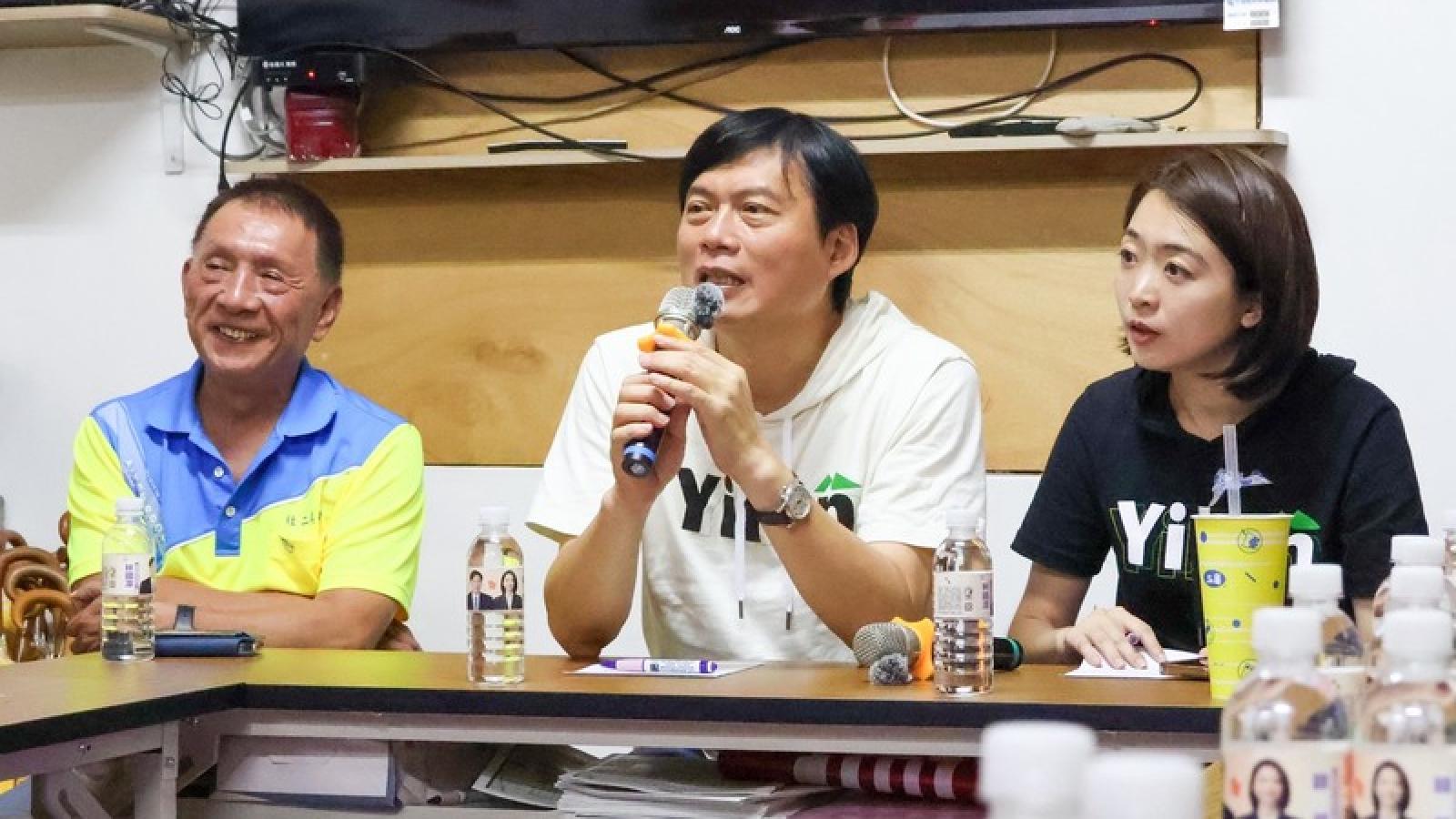
Amid the central government's cacophony, a rare piece of local news from Yilan emerged. Wu Tsung-hsien and Lin Kuo-chang both proposed their own elderly welfare policies. Amid political bickering, both surprisingly agreed to hold a 'policy debate'—a rarity in local elections and a fulfillment of the public's 'right to know.' Previously, Lin criticized Wu's proposals as 'fiscally unfeasible,' but now he's following suit. Wu demands Lin apologize first before debating; Lin responds he doesn't reject any discussion method that clarifies policy, but urges the central government and legislature to 'first' finalize the overall budget and fiscal planning.
Though some 'preconditions' remain, the policy debate appears likely. Fierce exchanges on 'where the money comes from' and 'how it should be spent' are expected. Wu's 'spending' proposals are backed by the expectation that, after the revision of the 'Fiscal Revenue and Expenditure Allocation Act,' Yilan will receive an additional NT$12.8 billion—giving him confidence to make bold promises. In contrast, Lin bringing up the 'overall budget' again suggests he's still trapped in the Green camp's broader electoral strategy. Regardless of either side's hidden motives, this 'Prosecutor Wu' versus 'Lawyer Lin' policy debate is truly something to look forward to.
*Author is an educator
FACT BOX
- Source: PR Times
- Category: News