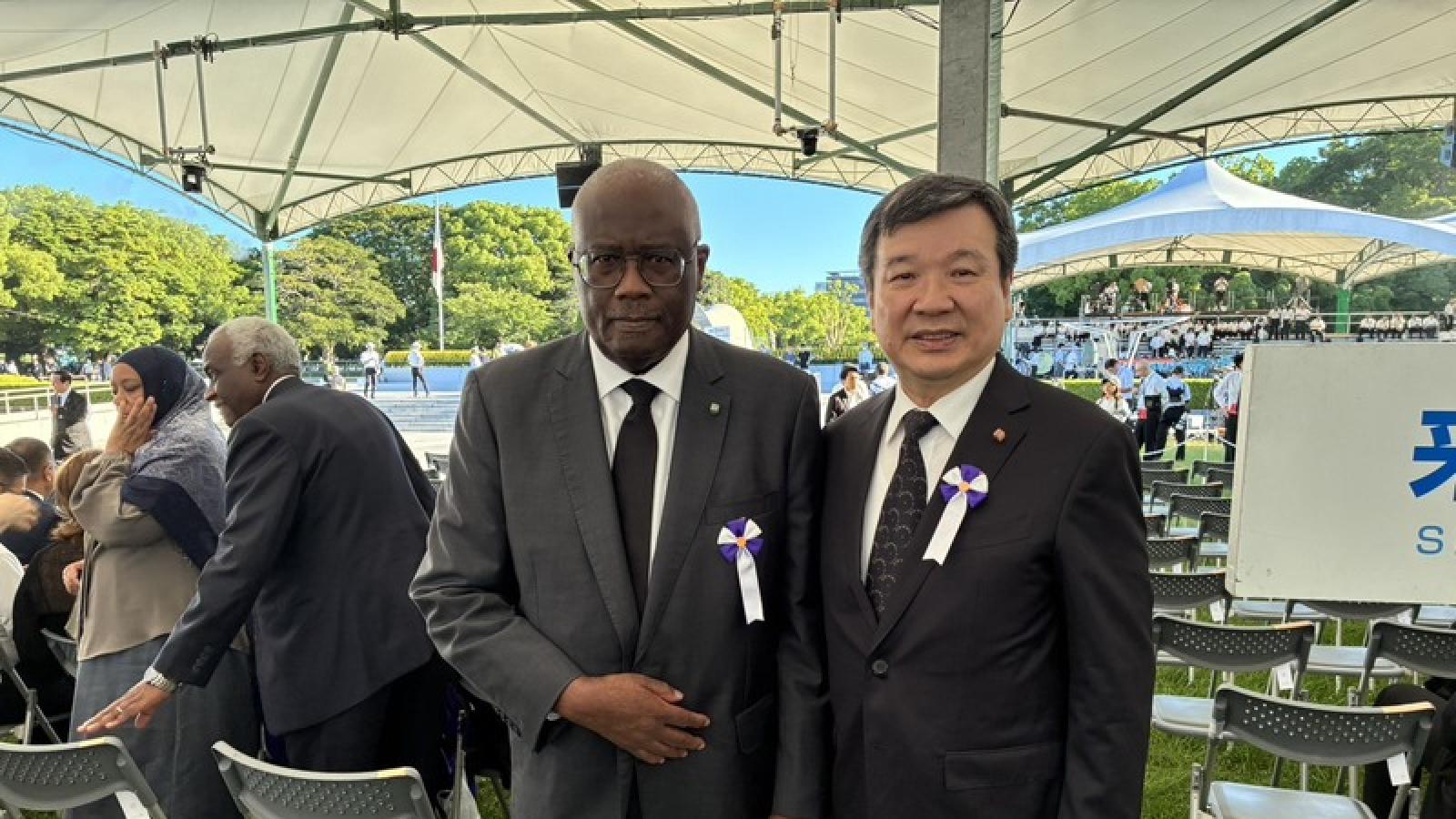
On September 9, Japan held the Nagasaki Peace Memorial Ceremony, but an incident occurred in which Taiwan's representative was seated outside the diplomatic corps area, sparking controversy over the perceived downgrading of Taiwan's status. Taiwan's representative in Japan, Lee Yi-yang, viewed the seating arrangement as a deliberate attempt to diminish Taiwan's national dignity and status, and therefore refused to attend. Instead, Chen Ming-chun, director of the Fukuoka branch office, attended in a downgraded capacity. In response, media commentator Tung Chih-sen analyzed the reasons on the program 'Straight Talk News,' bluntly stating that President Lai Qingde's appointment of New Tide faction members has lowered Taiwan's diplomatic rank in Japan. He emphasized that to the Japanese, this downgrade is strongly felt, making Taiwan's exclusion from the diplomatic corps a natural consequence. Tung also pointed out that Japanese Prime Minister Takayama Asahi has noticed the situation deteriorating, with her approval ratings dropping, prompting her to make policy adjustments.
The Nagasaki Peace Memorial Ceremony for the atomic bombing was held on September 9, with Taiwan's representative seat placed outside the diplomatic corps zone, sparking controversy. Taiwan's representative Lee Yi-yang refused to attend, viewing the move as a deliberate attempt to downgrade Taiwan's national status. Instead, Chen Ming-chun, director of the Fukuoka branch office, attended in a reduced capacity. However, Nagasaki City responded, stating that the seating arrangement was the same as last year, placing Taiwan in the 'overseas section,' and denied any intention to downgrade Taiwan's representative status.
Tung Chih-sen noted that President Lai Qingde has now been in office for two and a half years but still cannot enter the U.S. mainland, exposing his international isolation. He explained that Lai's administration relied on two institutions to maintain relations with Japan: first, the Taipei Economic and Cultural Representative Office in Japan, formerly led by Hsieh Chang-ting for eight years; and second, the Association of East Asian Relations, later renamed the Taiwan-Japan Relations Association, previously led by Su Jia-chuan.
Tung pointed out that upon taking office, Lai replaced Hsieh Chang-ting with Lee Yi-yang as the representative. Hsieh, having served as Premier, was seen by the Japanese as a 'cabinet-level' figure, whereas Lee only served as Vice President of the Examination Yuan and never held a legislative seat, making the downgrade obvious and puzzling to observers. Similarly, after removing Su Jia-chuan from the Association, Lai appointed Chiou I-jen, who also only served as Vice Premier. Tung argued that Taiwan's overseas representation has effectively been downgraded. The two appointees under Lai are both from the New Tide faction, and to the Japanese, this downgrade is strongly perceived. Thus, Taiwan's exclusion from the diplomatic corps is a natural outcome. Tung added that Prime Minister Takayama Asahi has noticed the deteriorating situation and declining approval ratings, prompting her to make adjustments.
Additional exclusive reports from Wind Media: - Lee Yi-yang withdraws in anger! Nagasaki City 'downgrades Taiwan’s status' — Former national security official questions: Why not protest to Japan’s Foreign Ministry? - Taiwan 'downgraded' in seating at Nagasaki atomic bomb ceremony — Representative Lee Yi-yang skips event in protest: 'Yielding to China’s will' - Taiwan's representative Lee Yi-yang attends Hiroshima atomic bombing memorial — Urges international community to address China’s nuclear expansion threat
FACT BOX
- Source: PR Times
- Category: News