China is transforming its approach to supporting strategic industries, moving beyond traditional subsidies, tax incentives, and state investment to actively utilize its stock and bond markets as key financing tools for AI and semiconductor development. Trillion-dollar capital markets are now being positioned by Beijing as a new battlefield to catch up with U.S. technological dominance.
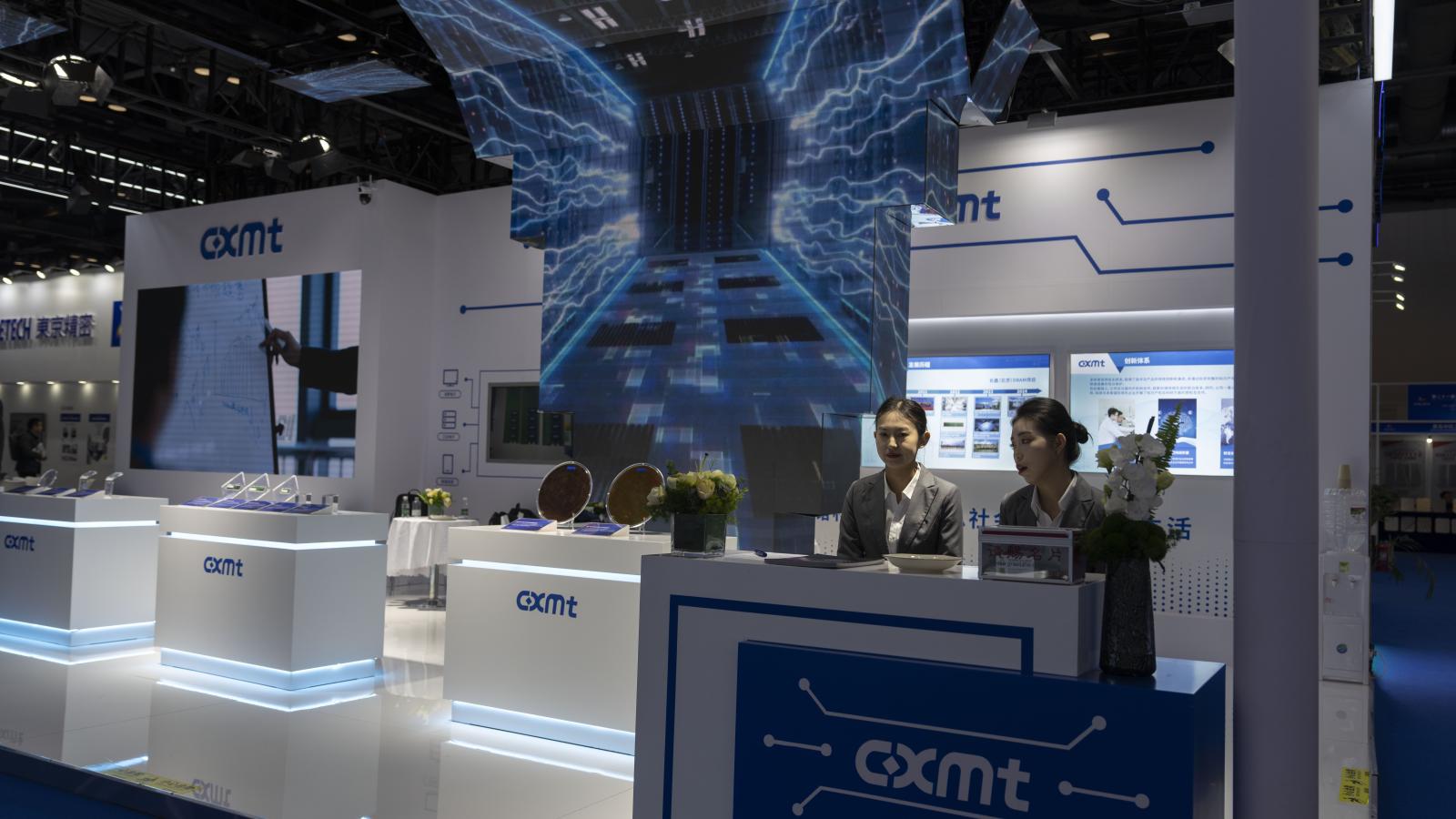
China's leading memory chip manufacturer, ChangXin Memory Technologies (CXMT), saw its stock price skyrocket after its listing on the Shanghai Stock Exchange. On its first trading day, shares surged over 500%, briefly surpassing longtime market leader Industrial and Commercial Bank of China (ICBC) to become the most valuable listed company in China. This near-frenzied market reaction reflects not only investor enthusiasm for AI and semiconductor themes but also underscores Beijing’s active use of capital markets to fund technological advancement.
CXMT is considered a cornerstone in China’s efforts to reduce reliance on foreign memory suppliers and strengthen domestic AI capabilities. The company raised approximately $9.8 billion in its IPO, one of the largest in China in recent years. Notably, the process from application to listing took less than eight months—far quicker than the multi-year timelines typical for standard IPOs.
Historically, China has supported strategic industries through government subsidies, tax breaks, and state capital injections. However, the rapid development of AI demands capital on a scale far exceeding traditional sectors. From chips and data centers to AI model training, every stage requires massive investment.
In this race, the U.S. has long held a critical advantage: deep and liquid capital markets that enable companies to raise vast sums. According to Bloomberg data, Chinese tech firms raised about $217 billion via IPOs and bond issuances over the past two years—less than one-sixth of the $1.3 trillion raised by their U.S. counterparts, led by giants like Amazon and Alphabet. China now aims to close this gap.
Since 2025, China’s securities regulator (CSRC), the People’s Bank of China, and the Ministry of Finance have been building a comprehensive policy framework to support tech firms. This includes coordinated access to bank loans, bond markets, stock listings, and long-term institutional capital, ensuring funding at every stage of a company’s growth. IPOs have become a central pillar.
CXMT benefited from a pilot program allowing strategic firms to undergo “pre-review,” enabling regulators to resolve key issues early and drastically shorten the listing timeline. However, the IPO also exposed a contradiction in China’s capital markets: while the 466% first-day surge delighted investors, it indicated the IPO was significantly underpriced relative to market demand. China’s conservative IPO pricing reduces the risk of post-listing declines but may cost companies billions in forgone capital.
This is evident when compared to rivals. South Korea’s SK Hynix recently raised $26.5 billion in the U.S., more than double CXMT’s $9.8 billion. Just days before CXMT’s listing, Chinese tech stocks faced a sell-off, shaking market confidence. Beijing responded with a rare, swift market-stabilization campaign—regulators, state funds, and major investors stepped in quickly. While not solely for CXMT, its upcoming IPO was reportedly a key consideration.
This shows Beijing now views capital markets not just as fundraising venues but as integral tools of industrial policy. The same shift is occurring in bond markets. China has promoted green bonds and technology innovation bonds to encourage banks and investors to fund tech firms. So far in 2024, Chinese tech companies have raised at least $38 billion in domestic and offshore bond markets—the highest since 2016. Yet this is only about 7% of the $578 billion raised by U.S. tech firms, where Amazon, Alphabet, and SpaceX dominate.
China’s push stems from broader economic constraints. After years of debt-fueled growth, the government is trying to curb leverage. With local governments burdened by debt and economic growth under pressure, fiscal support for all strategic sectors is unsustainable. Shifting financing needs to capital markets allows private capital to absorb what was once a government liability.
Moreover, Chinese households hold about $26 trillion in savings—the world’s largest pool—offering a unique resource. If Beijing can redirect even a fraction toward semiconductors, AI, and advanced manufacturing, it could open a massive funding channel.
Chinese firms also enjoy a key advantage: lower financing costs. Bloomberg data shows large Chinese tech firms issued bonds at an average coupon rate of 1.9% in 2024—over 300 basis points lower than U.S. peers, the widest gap since at least 2015. For example, CATL issued a 5-year RMB bond at 1.58%, while LG Energy Solution’s similar-term USD bond carried a 5.25% rate.
Low-cost capital, combined with “patient capital” that prioritizes long-term growth over short-term returns, enables Chinese tech firms to invest heavily in AI, capacity, and R&D. This trend is spreading to smaller firms. Jiangsu Laiter Electronics issued its first public bond in March, raising 200 million RMB at a 2.5% coupon for AI computing equipment—indicating a systemic shift in China’s tech financing.
Capital flows are reshaping China’s stock market. Investors are shifting from real estate and consumer stocks to chips and advanced manufacturing. Tech’s weight in the CSI 300 Index is nearing—and sometimes surpassing—that of financials. The STAR 50 Index hit a record high in June 2024, up about 30% year-to-date, far outpacing the CSI 300’s 1.4% gain.
But heavy capital inflows into policy-favored sectors carry risks. Analysts warn CXMT trades at a significant premium to global peers, with short-term prices driven more by policy sentiment and scarcity than fundamentals. A greater risk is overcapacity. Past experiences in solar panels and EVs show that sustained policy and capital support can lead to aggressive expansion, price wars, and collapsing margins.
Thus, China’s challenge is no longer just “how to fund AI” but “how to ensure funding translates into real technological capability”—the key question as capital markets take center stage.
China still faces hurdles: restricted access to advanced chips, talent gaps, and computing power limitations, especially under U.S. export controls. Yet, Chinese firms like DeepSeek and Moonshot claim they can build competitive AI models at a fraction of Western costs. UBS estimates China’s AI training costs are under 10% of OpenAI or Anthropic’s, with API prices below 20% of global peers.
This suggests China’s strategy may not be about outspending the U.S., but leveraging its vast manufacturing base, integrated supply chains, and engineering talent to rapidly deploy AI across industries.
From CXMT’s IPO surge to rising tech bond issuances and AI-focused listings, China is building a new tech financing ecosystem. The next phase of U.S.-China AI competition may hinge not on who has the best chip or model, but on who can best integrate capital, technology, manufacturing, and market scale into a sustainable cycle of investment, production, and commercialization.
If China can effectively link its $26 trillion in household savings, low-cost capital, and massive manufacturing system, capital markets could evolve from mere fundraising tools into powerful instruments of national technological advancement.
FACT BOX
- Source: PR Times
- Category: Funding
- Organizations: Alphabet / SpaceX / DeepSeek
- Products / services: DRAM