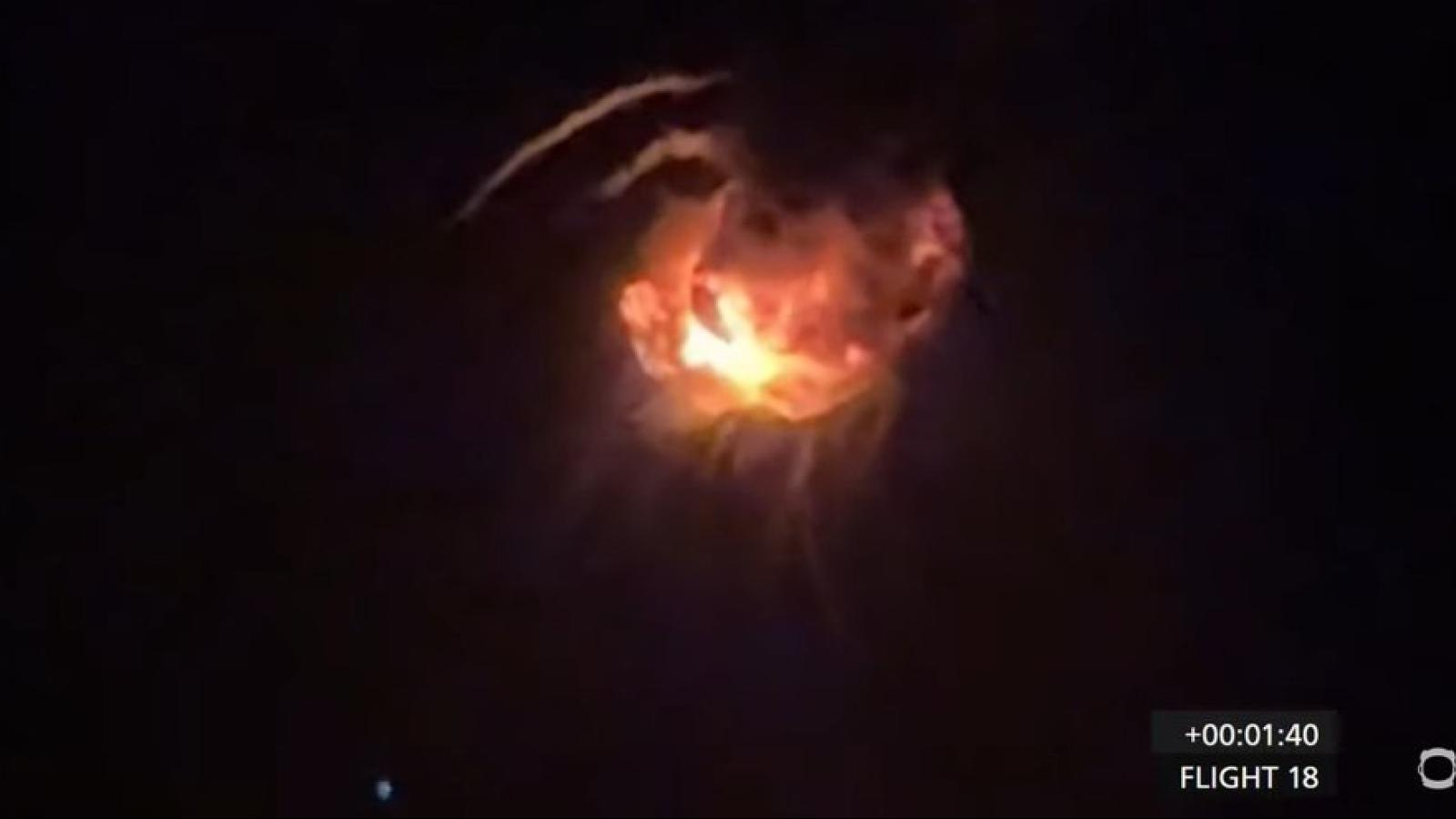
China's space program suffered a rare and severe setback when the Long March 7A (Chang Zheng 7A) rocket exploded just 85 seconds after liftoff on the evening of August 10, 2026. The rocket, launching from the Wenchang Space Launch Site in Hainan, was tasked with delivering the ChinaSat-4B communications satellite into a high orbit. Instead, it disintegrated mid-air, with debris and the satellite crashing into the South China Sea, marking a complete mission failure.
This incident marks the fourth failure among China's 56 orbital launch attempts in 2026, following earlier setbacks in January involving the Long March 3B and Ceres-2 maiden flights, as well as the Tianlong-3 accident in early April. Chinese authorities have initiated an investigation, reviewing telemetry data and optical tracking records to determine the root cause.
Footage captured by onlookers and shared on social media platforms X and YouTube shows the rocket erupting into a fireball shortly after ignition, trailing thick black smoke. According to the South China Morning Post, leaked long-wave infrared tracking footage suggests the rocket's upper structure may have fractured before destruction. U.S. media outlet SpaceNews reported the explosion occurred at T+85 seconds—well before the scheduled first-stage and booster separation at approximately three minutes into flight.
It remains unclear whether the explosion was triggered by a propulsion system failure or by the Flight Termination System (FTS) autonomously initiating self-destruct due to detected trajectory anomalies.
Approximately three hours after the incident, China's state-run Xinhua News Agency issued a brief statement confirming the rocket experienced “abnormal flight” and the mission had “failed,” without using terms like “explosion” or “breakup,” and without releasing any visual evidence.
Jonathan McDowell, honorary professor at Durham University and space environment expert, analyzed the launch video and concluded the rocket was completely destroyed at relatively low altitude and velocity, with neither the satellite nor debris achieving orbit. McDowell speculated the failure likely occurred during MaxQ—the phase of maximum aerodynamic pressure—where a catastrophic structural failure may have taken place.
Elon Musk, founder and CEO of SpaceX, commented on X: “Rocketry is really hard. Hope they can recover quickly.”
The ChinaSat-4B satellite, carried by state-owned China Aerospace Science and Technology Corporation (CASC), was intended for broadcast and data transmission services. Reuters and SpaceNews note it belongs to the same series as ChinaSat-4A launched in 2024. Western analysts often assess low-numbered ChinaSat satellites as potentially having military-grade encrypted communication capabilities.
The Long March 7A is a three-stage liquid-fueled launch vehicle primarily used for high-orbit missions. After a failed maiden flight in March 2020, it had successfully completed over a dozen missions. This was its 18th launch attempt. Reuters warns that if the investigation reveals shared component flaws, manufacturing defects, or operational errors at the Wenchang site, it could trigger a fleet-wide grounding and safety review across China’s space program, potentially delaying other major missions.
SpaceNews and SpacePolicyOnline report China plans to launch the Chang'e-7 lunar probe to the Moon’s south pole in late August using the Long March 5 rocket. Although Long March 5 and 7A are different models, both use the YF-100 kerosene-liquid oxygen engines: the Long March 5’s four liquid boosters and the Long March 7A’s first-stage core both rely on this engine. If the explosion is traced to a design or manufacturing flaw in the YF-100, the timeline for the Chang'e-7 lunar mission could face significant delays.
FACT BOX
- Source: PR Times
- Category: News
- Organizations: SpaceX