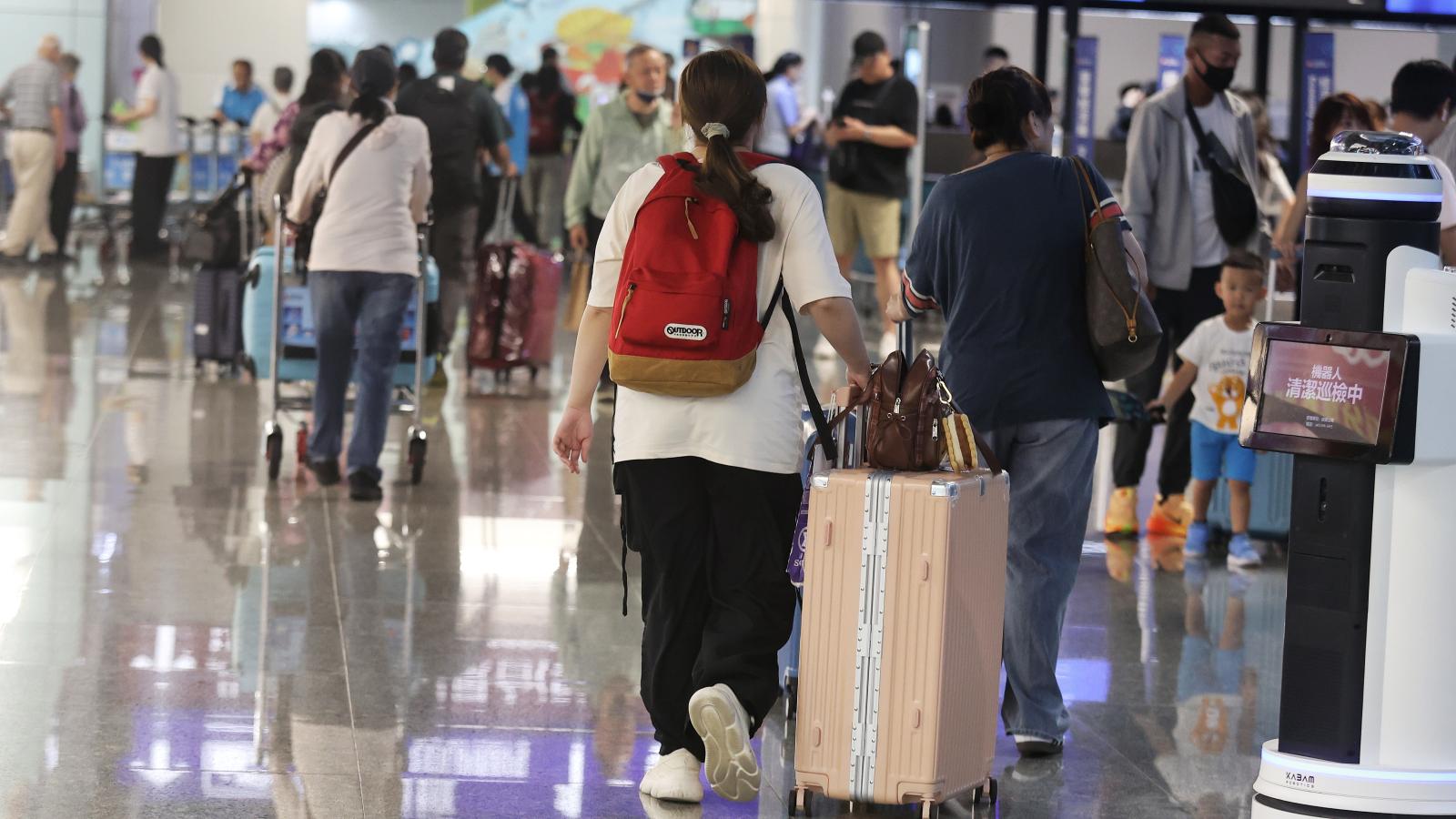
Since Taiwan reopened its borders, outbound tourism has surged, with both independent and group travel experiencing explosive growth. According to the latest statistics from Taiwan's Tourism Administration, the number of outbound travelers in the first half of 2024 increased by nearly 17% year-on-year, surpassing 10 million. In terms of popular destinations, Japan remains the top choice with a dominant 36.9% share (over 3.93 million visits). However, a significant shift has occurred in second place: mainland China surged to 17.3% (over 1.8 million visits), overtaking South Korea (10.6%, approximately 1.13 million) and claiming the runner-up spot. Hong Kong (8.2%) and Vietnam (5.6%) ranked fourth and fifth, respectively.
Regarding the sharp rise in visits to mainland China, Mainland Affairs Council (MAC) Deputy Minister Liang Wen-chieh attributed it to strong travel intent among Taiwanese, boosted by favorable exchange rates due to the strong New Taiwan dollar and sustained high levels in the Taiwan stock market, which have enhanced asset values and consumer spending power. Additionally, compared to the high costs of traveling to Japan and South Korea, trips to mainland China are relatively affordable, with low local expenses, making it a top value-for-money choice.
Travelers who have visited mainland China shared firsthand experiences, praising the country's breathtaking natural landscapes and advanced urban infrastructure. 'Setting politics aside, the scenery and city development are truly eye-opening,' one said. 'The natural wonders like Jiuzhaigou, Zhangjiajie, and Zhangye Danxia are world-class—on a scale rarely seen in Taiwan, Japan, or South Korea.' Others highlighted convenience: 'Speaking Chinese makes everything easier. The cost of living is great—good food and hotels at low prices, much cheaper than Japan or Korea.' History enthusiasts noted: 'Visiting Beijing or Xi’an gives you goosebumps. Seeing the Forbidden City or Terracotta Warriors in person is nothing like reading about them in textbooks—it’s immersive.' Many also praised the high-speed rail and public transit: 'Their HSR and public transport are impressive—fast, stable inter-provincial travel, stations as grand as airports, making trip planning smooth.'
However, complaints remain about political risks, overtourism, commercialization of attractions, and internet restrictions. 'Crowds are overwhelming—line-cutting and loud noise are common. Even newly built public restrooms often lack doors or are dirty; hygiene habits are hard to adjust to.' 'Internet access is painful—you must buy roaming or set up a VPN in advance. Without it, LINE, Facebook, Instagram, and Google Maps are completely inaccessible. When the VPN drops, you feel helpless.' 'Many ancient towns are recently rebuilt replicas, selling identical souvenirs nationwide. Entrance fees plus shuttle bus costs at major sites are outrageously high—over 100 RMB for a single attraction.' 'Given the current political climate, there’s real fear. I’ve heard stories of travelers having their phones and social media apps inspected at customs. You have to be careful what you say, which adds stress.'
While the government emphasizes that travel destination choices remain a personal freedom for citizens, it maintains strict controls on civil servants traveling to mainland China. The MAC reiterated that due to national security and sensitivity of official roles, public employees must complete formal leave and reporting procedures before departure. Deputy Minister Liang cited a recent case where a grassroots civil servant visiting Fujian was interrogated three times by Chinese national security agents, had their phone thoroughly inspected, and was questioned in detail about work processes and duties. The MAC warned that Chinese authorities closely monitor Taiwan’s civil service operations, urging officials not to let their guard down—even on private trips or if they hold junior positions.
FACT BOX
- Source: PR Times
- Category: Survey