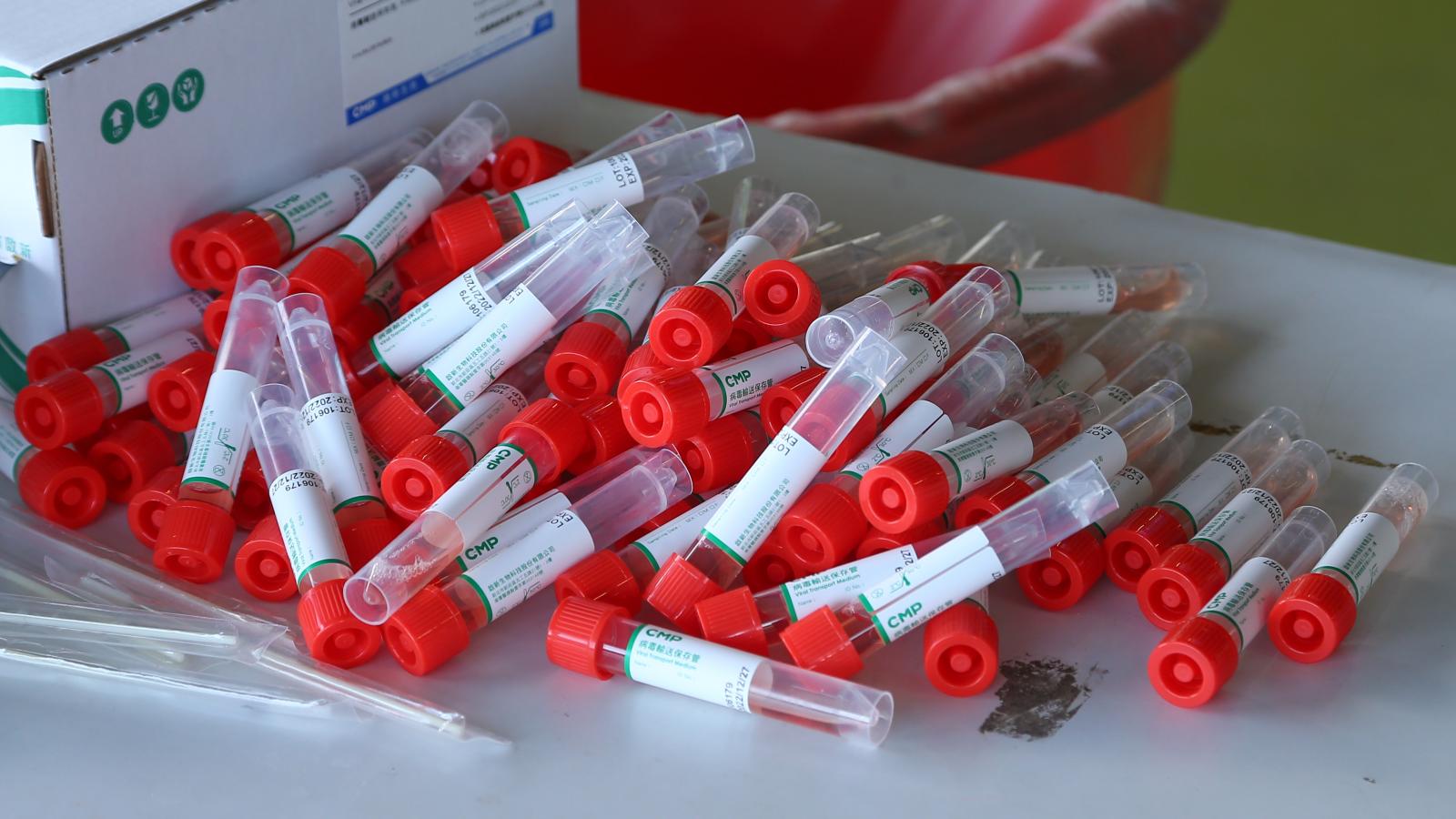
Last week, the CDC announced the first confirmed typhoid case of the year. The case was reported by a hospital (accredited laboratory) in late July after detecting Salmonella Typhi in a specimen, with the system automatically classifying it as confirmed. However, since this was the first domestic case of the year with an unknown source, the CDC conducted whole-genome sequencing on the strain, which confirmed it to be 'non-typhoidal Salmonella.' The CDC has now requested the accredited laboratory to correct its report in accordance with the 'Quality Assurance Requirements for Infectious Disease Testing Institutions.'
CDC Deputy Director Lin Ming-cheng stated this is the first instance of typhoid misclassification in the agency's history. The investigation revealed the error occurred during manual interpretation of the serum agglutination test. Typhoid bacteria may exhibit cross-reactivity in single serum agglutination tests, and weak agglutination particles can be misinterpreted as positive due to insufficient technician experience, reduced reagent potency, or improper control of reaction time, leading to false-positive results.
The CDC has instructed all accredited typhoid testing facilities to implement a 'dual-review' mechanism for any positive serum agglutination results, after confirming the biochemical characteristics of Salmonella Typhi according to testing protocols. Each test result must be verified by two personnel and all data confirmed before release.
The CDC stated the patient was clinically assessed and treated by physicians during hospitalization and was discharged on August 5 after full recovery. According to the CDC's typhoid control guidelines, confirmed typhoid cases are released from follow-up after three consecutive negative stool tests. The patient was scheduled for their first stool test on August 19, but since typhoid infection was ruled out on August 10, no further testing or follow-up is required.
FACT BOX
- Source: PR Times
- Category: News