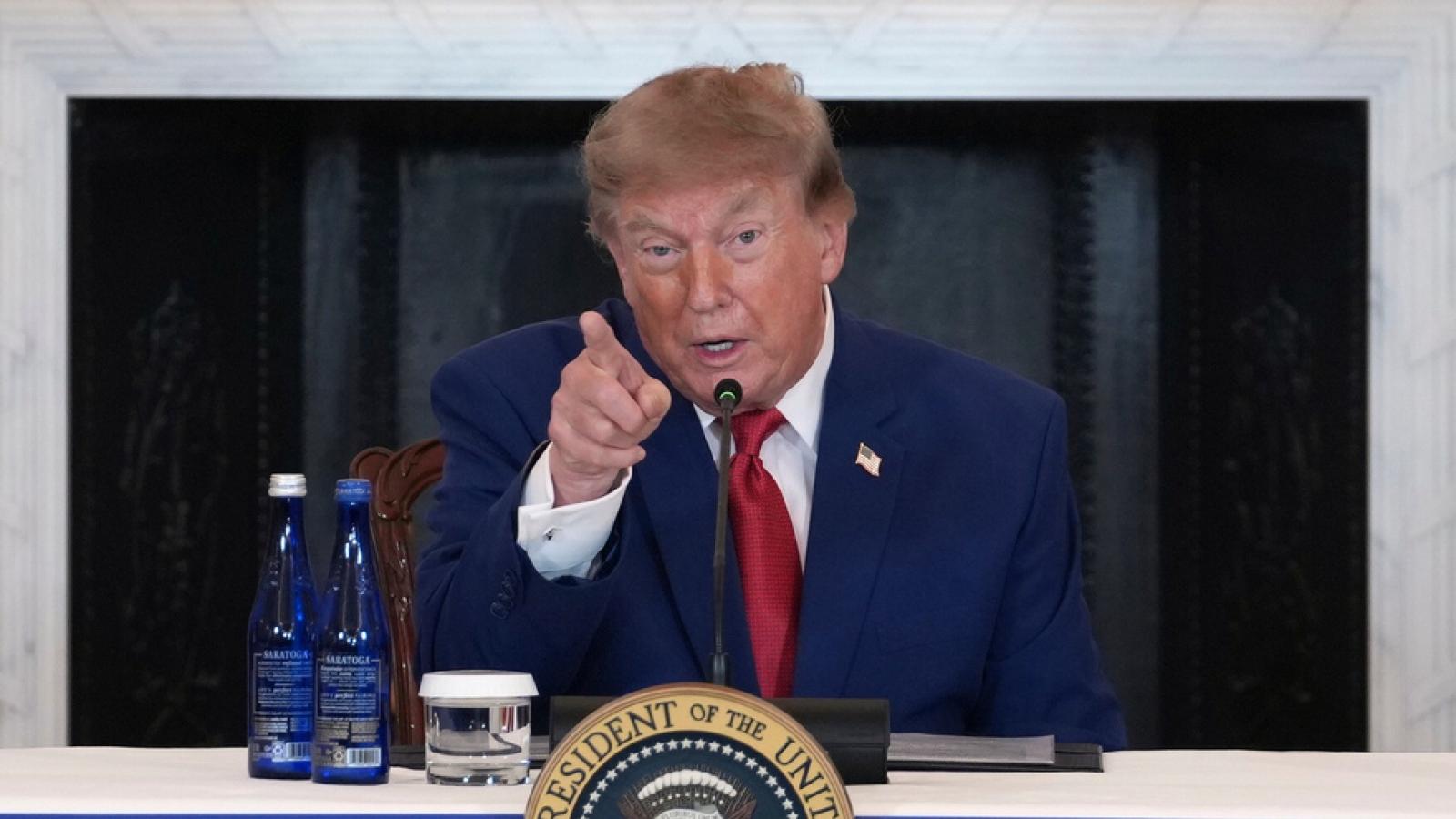
The US-Iran war, which erupted on February 28, has now lasted over five months. Although there was a temporary ceasefire, military operations resumed on July 7, and high tension persists between the US and Iran. As of August 11, the latest reports indicate that negotiations remain deadlocked, with the Strait of Hormuz passage issue at the core of the dispute.
In response, US-based scholar Weng Lüzhong posted on Facebook today (11) under the title 'The US Begins Looking for an Exit Strategy! Iran Imitates Trump’s Maximum Pressure, Forcing the US to Reveal Its Bottom Line?' Citing CNN, he revealed that General Dan Caine, Chairman of the US Joint Chiefs of Staff, privately told senior US government officials that an exit path from the US-Iran war must be found. Weng analyzed that the biggest problem in the US-Iran war is not whether the US can win militarily, but that the conflict exposes 'America’s bottom line' to the entire world.
According to Weng, anonymous sources cited by CNN indicate that General Caine assessed that even if US forces continue to heavily damage Iran, airstrikes alone may not force Iran to accept the political conditions the US desires. He reportedly discussed possible exit strategies with Vice President JD Vance and Senator Marco Rubio, though the information remains unconfirmed. Meanwhile, Iran and Oman are in the final stages of negotiations over Strait of Hormuz passage, but this does not mean immediate full reopening. Iran still demands that the US accept certain conditions, and ceasefire has not been fully implemented during talks.
Weng commented that the idea of 'the highest-ranking US military official helping the government save face' could be dismissed by President Trump as 'fake news.' However, regardless of whether the report is verified, it highlights the deepening stalemate between the US and Iran.
Weng previously stated that the conflict may ultimately result in a situation where 'the US cannot win, and Iran does not lose.' This does not imply Iran’s military strength matches the US, but rather that the outcome of war hinges on achieving political objectives. If the US only secures the reopening of the Strait of Hormuz, it would not constitute a strategic victory.
Notably, Iran has begun adopting Trump’s favorite 'maximum pressure' strategy. Understanding that Trump wants to end the war, Iran is using time as leverage. As domestic pressure in the US grows and energy markets remain unstable, Iran can raise demands on compensation, sanctions relief, strait management, and transit fees. Even securing a few of these would be a significant negotiation win—exactly the tactic Trump has used in the past.
Weng analyzed that for the US, Trump must now consider how to make concessions 'without them being seen.' Beijing, Moscow, and Pyongyang will scrutinize what the US exchanged for peace. Without a new nuclear deal or a shift in Iran’s strategic posture, the US could be perceived as losing its ability to use military power to dictate political outcomes. As a superpower, US strength lies not just in weapons, but in its ability to change other nations’ decisions. If its political maneuvering and exit strategies become transparent, the mystique of its deterrence will gradually erode.
In conclusion, Weng stated that Trump’s future declaration of 'victory' should not be surprising, but the key lies in the details of any agreement. If the only outcome is the reopening of the Strait of Hormuz, 'it would be very awkward!' Even if Trump convinces his supporters, he may fail to convince the world.
Additional exclusive reports from Feng Media:
- Iran refuses to negotiate with the US, but Trump softens his stance, saying 'We are slowing down,' shifting from 'military attack' to a 'semi-negotiation' strategy.
- 'English teachers' seen everywhere during Han Kuang exercises? Scholar warns of risks in overt US-Taiwan cooperation: 'Trump could say one sentence and change everything.'
- Trump denies Washington Post report on ammunition shortages, vowing to investigate and severely punish leakers.
FACT BOX
- Source: PR Times
- Category: News