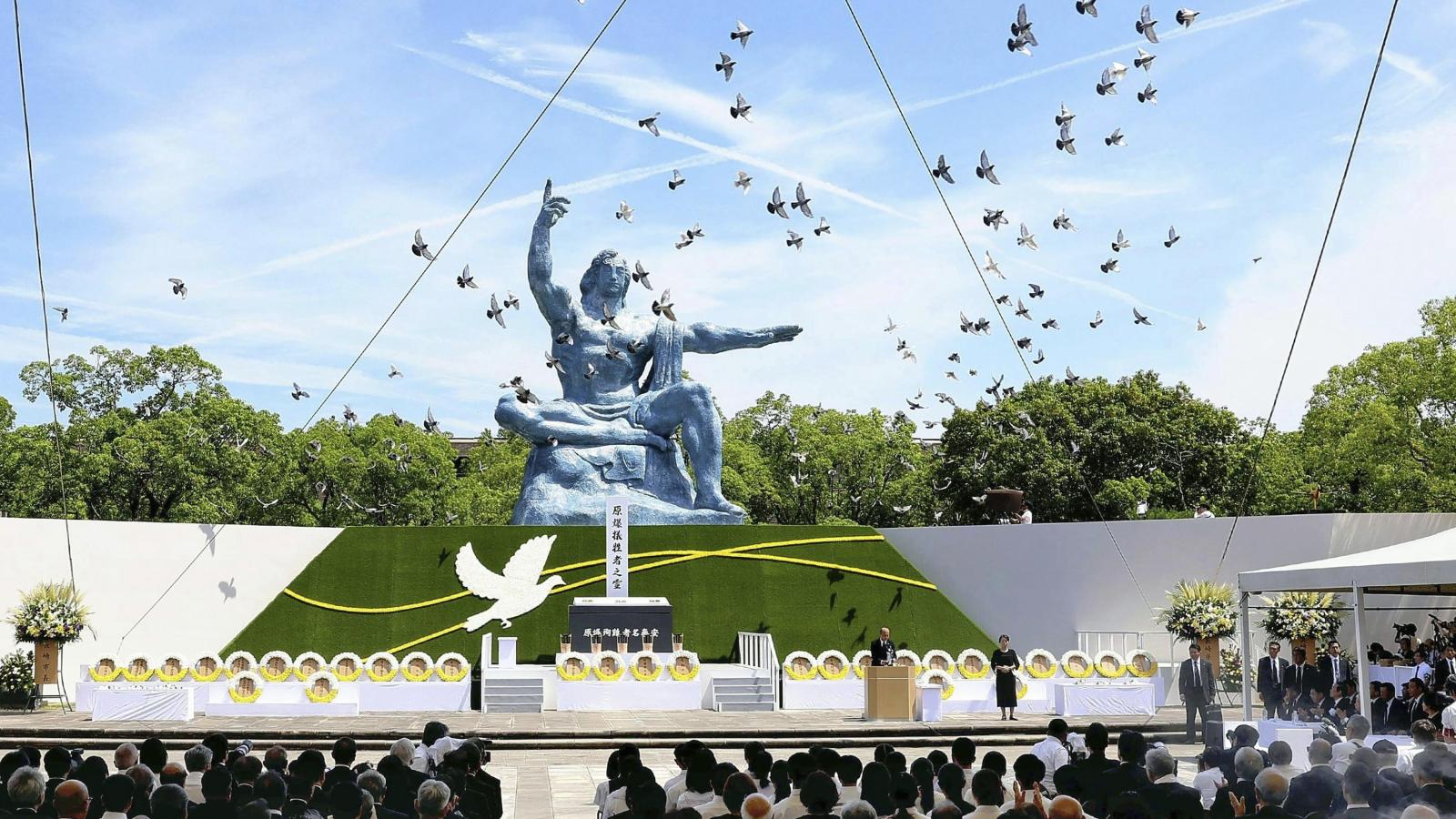
On August 9, 2023, the city of Nagasaki held its annual Peace Memorial Ceremony at Peace Park to commemorate the victims of the atomic bombing and to pray for lasting world peace. The event is traditionally attended by diplomatic envoys and dignitaries from around the world.
This year, Nagasaki city officials assigned Taiwan's representative delegation to an 'overseas guests' section, separate from the designated area for diplomatic envoys. In response, Taiwan's representative to Japan, Lee I-yang, strongly protested the move, calling it a deliberate attempt to downgrade Taiwan's national status and dignity. Lee, along with two deputy representatives, Cai Ming-yao and Zhou Xue-you, decided to boycott the ceremony in protest.
Lee issued a statement criticizing Nagasaki's municipal government for being 'pro-China.' He stated that Taiwan had attended last year's ceremony 'under duress' to express its commitment to peace on the global stage, as it was the first time Taiwan had been invited. However, he emphasized that this year's seating arrangement deliberately negated Taiwan's sovereignty and national dignity, marking an unprecedented affront in Taiwan's participation in Japanese central or local events.
Lee warned that Nagasaki's decision had effectively made the city a tool in China's legal warfare strategy, reinforcing Beijing's claim that 'Taiwan is not a country, has no sovereignty, and is an inalienable part of China.'
Nagasaki city officials denied any intention to downgrade Taiwan's status, stating that the 'overseas guests' seating was the same arrangement provided last year and that there was no deliberate exclusion from the diplomatic corps area. They emphasized that the distinction was part of standard event logistics, separating diplomatic envoys from other international guests.
In place of the absent Taiwan delegation, Chen Ming-chun, Director of the Taipei Economic and Cultural Office in Fukuoka, attended the ceremony. The boycott by Lee and his deputies was widely interpreted as a strong signal of Taiwan's dissatisfaction.
In response, a spokesperson for the Chinese Embassy in Japan stated that 'Taiwan is not a country, and the concept of national dignity does not apply.' The spokesperson reiterated the 'One-China Principle,' emphasizing that Taiwan is an inseparable part of China's territory and that the People's Republic of China is the sole legitimate government representing the entire nation—a position recognized by the international community.
The spokesperson further criticized Taiwan, saying its attempts to 'assert presence' on the international stage were 'overestimating itself' and would only lead to 'humiliating itself.' The United Nations' designation of Taiwan as 'Taiwan, Province of China' was also cited as evidence of Taiwan's limited international standing.
This incident highlights the ongoing geopolitical tension between Taiwan's efforts to expand its international space and China's persistent efforts to isolate it diplomatically. It also raises questions about how local Japanese governments navigate complex cross-strait relations when hosting international events.
FACT BOX
- Source: PR Times
- Category: News