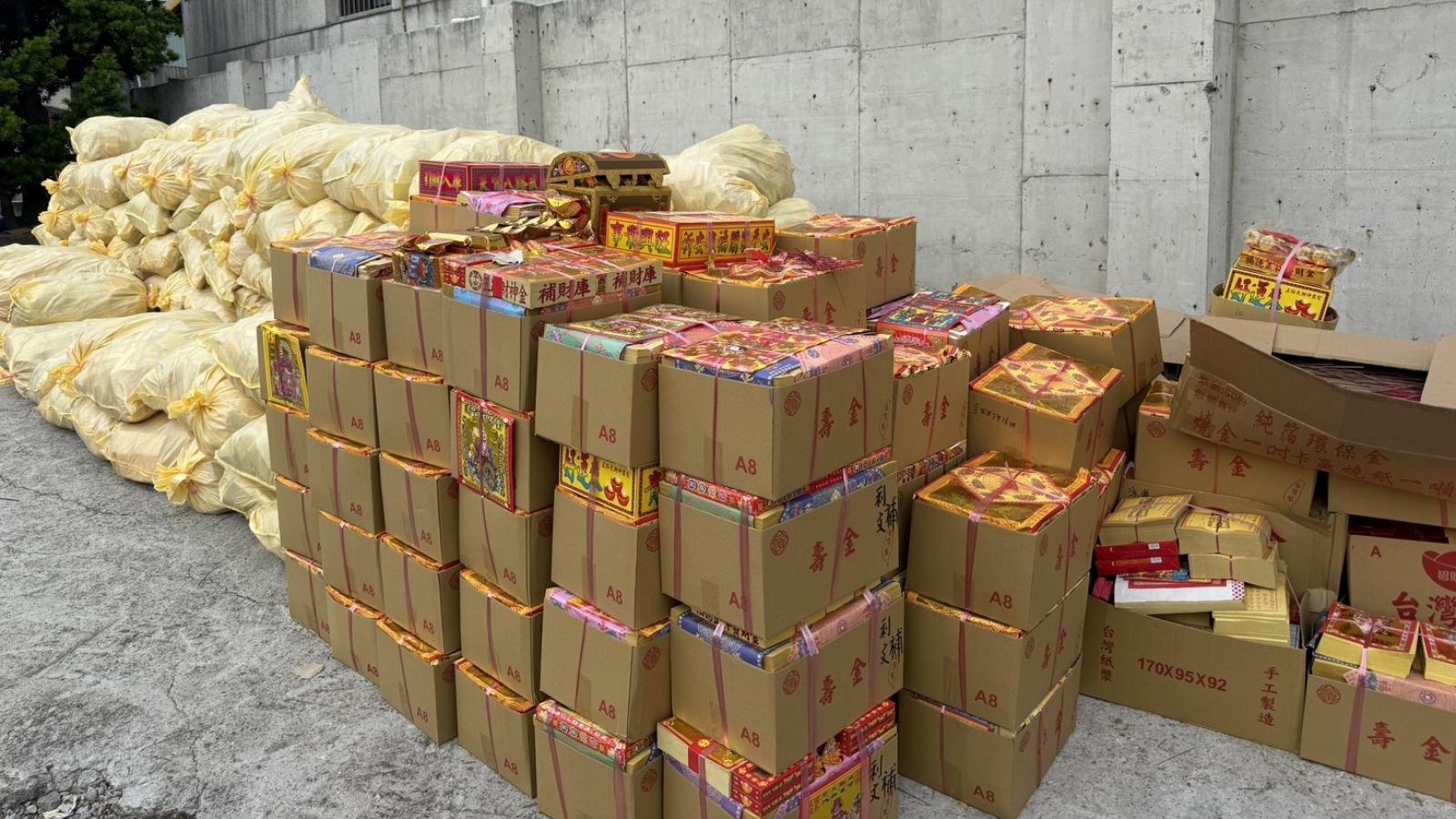
With the lunar July Ghost Festival approaching, households, communities, businesses, and temples are preparing offerings to honor ancestors and pray for peace. The Taichung City Environmental Protection Bureau emphasizes that while the Ghost Festival is an important cultural tradition, sincere worship does not have to burden the environment. Residents are encouraged to integrate eco-conscious practices into their rituals by reducing waste at the source, practicing proper waste sorting, recycling resources, and composting food scraps—collectively realizing "eco-friendly worship" where tradition and environmental sustainability coexist. The bureau also promotes initiatives like "centralized joss paper burning" and "Merit-for-Cash," encouraging greener ways to express reverence while jointly improving air quality.
The bureau notes that during the Ghost Festival, frequent worship activities in temples, markets, commercial districts, and residential areas lead to increased volumes of waste and recyclables compared to regular days. After ceremonies, cardboard boxes, paper containers, plastic bottles, metal cans, and packaging materials should be properly sorted and recycled according to regulations. Food peels, cooked meals, and other organic waste should be placed in designated kitchen waste bins for proper recovery. Edible offerings are recommended to be shared with family and friends or stored appropriately for later consumption, minimizing food waste. Residents should also dispose of waste according to scheduled collection times and avoid littering or piling up ritual waste, helping maintain neighborhood cleanliness and urban aesthetics.
The bureau highlights that burning joss paper releases smoke and fine particulate matter (PM2.5), which can degrade air quality and harm public health. To address this, the bureau continues to promote its "centralized joss paper burning" service, where dedicated vehicles collect paper money and transport it to incineration facilities equipped with air pollution control systems. This method effectively reduces pollutant emissions while respecting religious sentiments. Additionally, the "Merit-for-Cash" initiative encourages people to redirect part of the money intended for purchasing joss paper into charitable donations via convenience store multimedia kiosks. This replaces excessive burning with acts of kindness, preserving the spirit of honoring deities and ancestors while giving back to society and advancing public welfare and sustainability values.
Given recent hot and rainy weather, stagnant water in vases, buckets, or offering containers after rituals can easily become breeding grounds for disease-carrying mosquitoes. The bureau urges the public to practice the "Inspect, Empty, Clean, Scrub" (Patrol, Dump, Clean, Brush) principle—actively removing standing water containers to prevent dengue fever outbreaks. Meanwhile, district cleaning teams will strengthen environmental inspections, waste collection, and area cleanup around temples, markets, night markets, business districts, and major roads to ensure urban cleanliness and environmental quality during the festival period.
The bureau calls on all citizens to support eco-friendly measures such as centralized joss paper burning, Merit-for-Cash donations, waste sorting, resource and kitchen waste recycling, food conservation, and the Patrol-Dump-Clean-Scrub routine. Through concrete actions, everyone can practice green worship—aligning sincere reverence, social care, and environmental protection—to co-create a clean, healthy, and sustainable Taichung.
FACT BOX
- Source: PR Times
- Category: キャンペーン