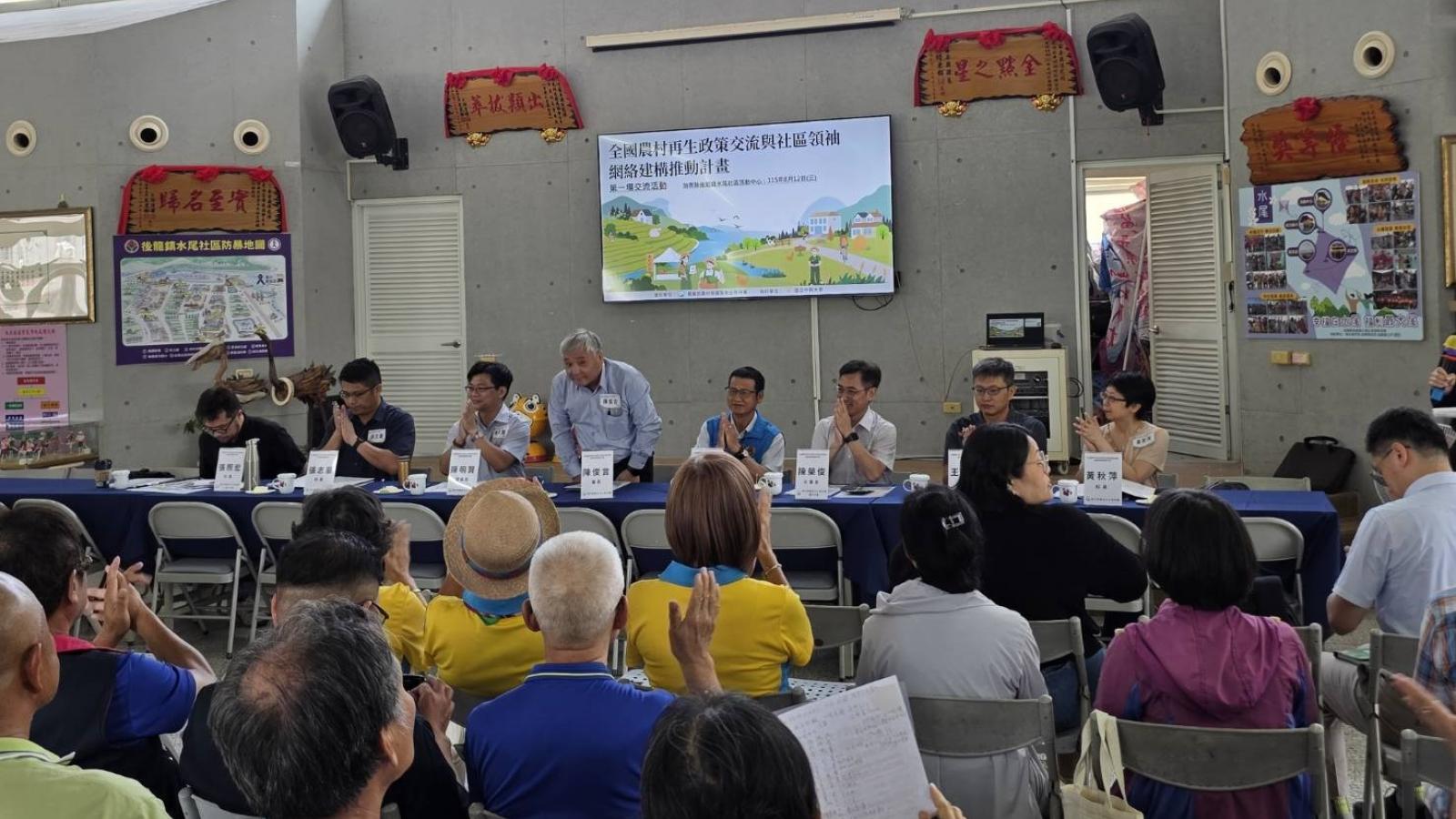
Growing vegetables, sharing meals, crafting, and chatting—these are not just daily rural routines but also opportunities for elders to step outside their homes and regain purpose. The Council of Agriculture's Rural Development and Soil and Water Conservation Agency held its first 'National Rural Leaders Camp,' with the inaugural session launching on the 12th in Miaoli. The event featured discussions on rural green care policies, demonstrating through policy frameworks and local case studies how rural communities can leverage existing resources to support continuous elder engagement. It highlighted that elders are not merely care recipients but can become vital forces in strengthening community bonds.
The hallmark of rural green care is transforming inherent rural assets—land, agriculture, food, natural environments, and social interactions—into resources that support healthy aging. From eating well together and growing food to therapeutic gardening, farming activities, and companionship, the central government has categorized this approach into four pillars: 'Green Spaces, Green Diet, Green Therapy, and Green Companionship.' Currently, 236 rural communities across Taiwan have adopted green care initiatives.
Chen Shu-Yi, Director of the Miaoli County Government Agriculture Department, emphasized that in response to rural aging, efforts must go beyond smart agriculture to reduce labor burdens. 'We hope elders don’t just receive services but continue participating in the community as valuable contributors,' he said. Some grow vegetables, others assist in meal prep, share farming knowledge, or provide companionship—what matters is not who cares for whom, but ensuring everyone has a meaningful role and sense of value.
In Houlong’s Shuiwei Community, driftwood and fishing buoys collected from the seashore are given new life. Drawing on its fishing village heritage, the community transforms driftwood into health canes and marine debris into percussion instruments and craft materials. This hands-on, interactive process revitalizes elders physically and mentally while integrating Shuiwei’s maritime identity into green care. The Shuiwei model shows there’s no one-size-fits-all solution—coastal communities can start from the sea, while others can draw from their crops, cuisine, culture, and lived memories to create unique care models.
Miaoli currently hosts 24 rural green care communities. The county’s next goal extends beyond numerical growth—to collaborate with rural leaders and communities to deepen local characteristics, enabling elders to move beyond 'attending one event' to becoming part of everyday community life. 'Events are just the starting point,' Chen noted. 'The real key is whether elders can continue participating and even use their strengths to support one another after the event ends.'
Chen Chun-Yen, Director General of the Rural Development Agency, attended the event, affirming the agency’s ongoing support for communities and the sustained promotion of green care policies. Only with stable, long-term policy support can communities accumulate talent, experience, and local identity without restarting from zero each year.
The county government will continue bridging central policies and local needs. Communities best understand their people, land, and lifestyles, while the county understands policies and resources. Together, they will start from what communities truly want and need, then match them with suitable central policies and resources—ensuring subsidies follow local needs, not the other way around.
Aging brings care demands, but elders’ lifelong farming experience, wisdom, and local knowledge are equally valuable rural assets. When these capabilities remain and are utilized within communities, integrated with health promotion and rural experiences, aging can transform from a rural challenge into a new opportunity to re-energize communities and rediscover local value.
FACT BOX
- Source: PR Times
- Category: Event