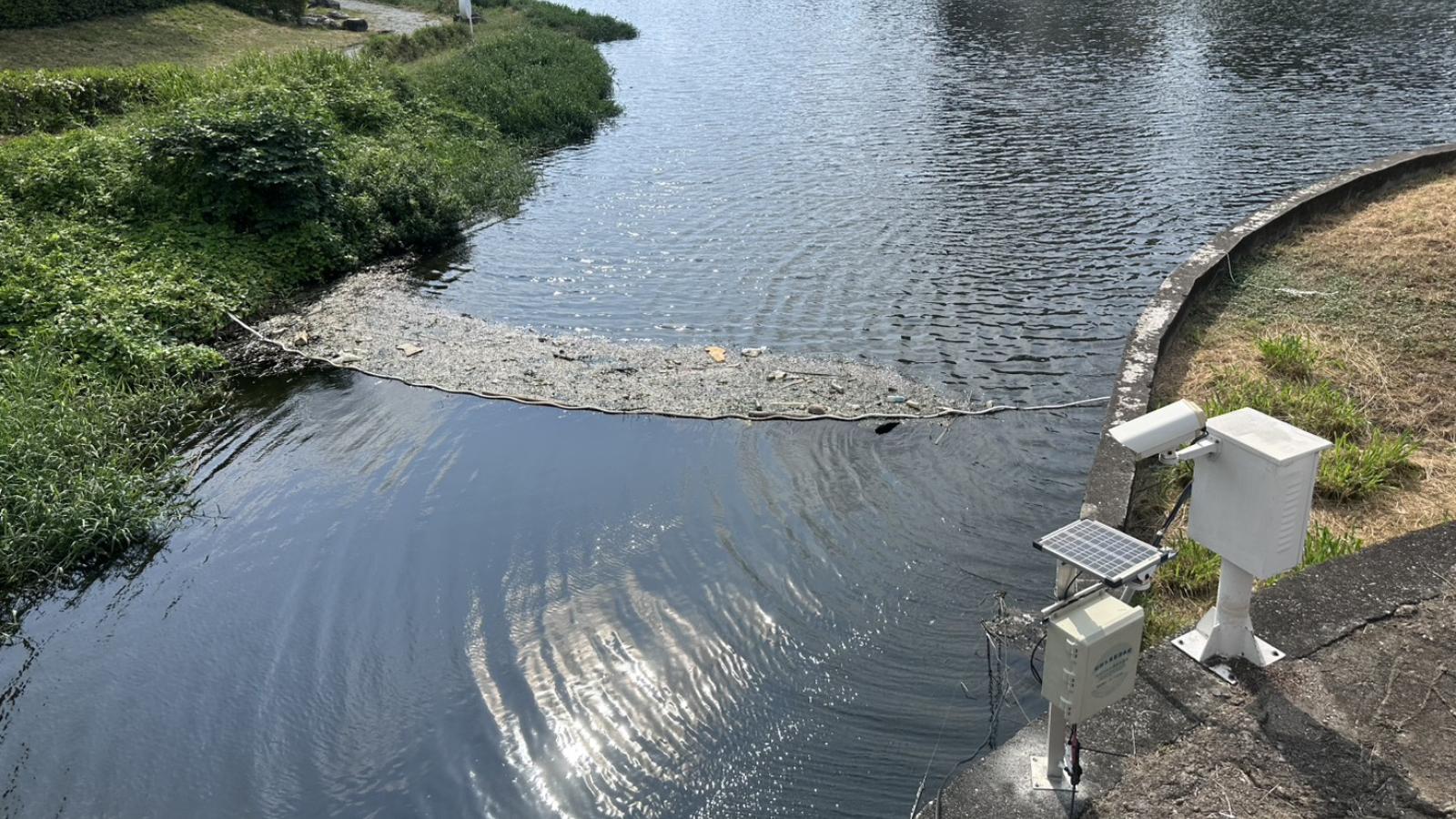
Affected by recent heavy rains and consecutive days of overcast weather, scattered fish mortality has occurred in certain sections of Houjing Creek in Kaohsiung. The Kaohsiung City Environmental Protection Bureau stated that stormwater runoff likely carried large amounts of organic matter into the river, while insufficient sunlight and microbial decomposition of organic material consumed oxygen, leading to reduced dissolved oxygen levels. An emergency response has been activated, including continuous water quality monitoring, intensified pollution source inspections, and joint patrols with the Water Resources Bureau to remove dead fish and minimize further oxygen depletion from decomposition.
The Bureau noted that Houjing Creek experienced a similar fish mortality event in July this year. Water samples and dead fish were sent to Chia Nan University of Pharmacy and Science for identification. Based on fish tissue testing, water quality analysis, meteorological data, and acute biological toxicity tests, it was determined that heavy rainfall washed large quantities of organic matter into the water, which rapidly decomposed under high temperatures, significantly increasing oxygen consumption and causing oxygen deficiency. Acute biological toxicity tests did not detect significant toxic substances, ruling out a single acute toxic pollution event as the cause.
Regarding recent water quality changes in Houjing Creek, the Environmental Protection Bureau has been closely monitoring water conditions since the heavy rains on August 10 and has simultaneously initiated emergency measures. The Water Resources Bureau continues to patrol the river surface and remove dead fish to prevent further oxygen consumption from decomposition and reduce ecological impact.
To enhance early warning capabilities for Houjing Creek’s water quality, the Environmental Protection Bureau designated it as a water pollution control zone in 2025 (Minguo Year 114) and has intensified inspections of both regulated and non-regulated pollution sources. Recently, a fixed water quality monitoring station was installed at Youchang Main Drain, and three mobile monitoring points were set up at Xingzhong Floodgate, Yiqun Bridge, and Dehui Bridge to strengthen monitoring across different river sections.
The Bureau explained that if dissolved oxygen levels fall below the 2.0 mg/L warning threshold, the Water Resources Bureau will be immediately notified. Depending on real-time hydrological conditions, coordination with the Council of Agriculture’s Irrigation Agency may lead to gate openings to release water, replenish base flow, and enhance water exchange to improve oxygen levels. River surface patrols and dead fish removal will also be intensified, establishing a comprehensive protection mechanism from 'monitoring, early warning, to response'.
In addition to water quality monitoring, the Bureau has intensified source inspections. A special inspection was conducted on 111 businesses along Houjing Creek, including restaurants, motorcycle shops, and auto repair shops. On August 12, five restaurants—including a foreign worker snack shop, hot pot restaurant, lunchbox shop, steakhouse, and roast meat shop—were found in violation. Three lacked grease traps, and two had equipment but failed to maintain them properly, resulting in yellow, oily wastewater entering drainage ditches and polluting the surrounding environment.
All five businesses were penalized under Article 27 of the Waste Disposal Act, with fines ranging from NT$6,000 to NT$100,000, and ordered to rectify within a specified period. They are required to implement pollution prevention measures to prevent grease and organic pollutants from entering the drainage system.
Environmental Protection Bureau Director Zhang Ruihui stated that extreme rainfall, high temperatures, and prolonged overcast conditions could exacerbate water quality fluctuations. Managing Houjing Creek’s water quality cannot rely solely on post-event responses but must integrate real-time monitoring, pollution source inspections, and inter-departmental coordination.
The Bureau emphasized that it will continue monitoring water quality changes, strengthen inspections of riverside pollution sources, and maintain communication with the Water Resources Bureau and the Irrigation Agency. Emergency measures will be activated when necessary to reduce pollutant inflow at the source and protect Houjing Creek’s ecological system.
The Bureau also urges restaurant operators to properly install and regularly maintain grease interceptors and oil-water separators, ensuring that grease and wastewater do not enter rivers through drainage systems. The public is encouraged to report suspected pollution discharges to environmental authorities to jointly safeguard Houjing Creek’s water quality and living environment.
FACT BOX
- Source: PR Times
- Category: News