China's history has developed through the conflict and integration between the Han majority and various ethnic minorities since ancient times. The Miao rebellions in the late Qing dynasty were among the most representative separatist movements by ethnic minorities at the time. In early Chinese history, the government sometimes launched military campaigns against non-Han peoples in southern China, while at other times promoted exchanges between Han Chinese and local non-Han communities. By the Ming and Qing dynasties, Han influence had gradually expanded into southwestern regions such as Guizhou and Yunnan. By the first half of the 18th century, during the reign of Emperor Yongzheng, central authority directly affected local Miao communities. Although the Miao fiercely resisted, they were ultimately overwhelmed by the Qing's brutal massacres. After suppressing the Miao, the Qing imposed heavy taxes and allowed only local elites to retain their traditional hairstyles. The government also deliberately fostered hostility between Han settlers and the Miao to prevent anti-Qing coalitions. Nevertheless, many Miao continued to resist. Under the leadership of the Miao hero Zhang Xiumei, uprisings persisted for 18 years starting in 1855. At the same time, the Miao rebellion allied with the Taiping Heavenly Kingdom forces, initially reclaiming lands seized by the government. However, Zhang Xiumei was later captured, and the rebellion was gradually suppressed. During this period, nearly one million Miao people died, with only tens of thousands surviving. To this day, songs and stories praising Zhang Xiumei’s deeds continue to circulate among Miao communities in Guizhou.
In the modern era, the political distinctiveness of China's ethnic minorities was consistently denied by the Republic of China and the Kuomintang. Groups such as Manchus, Mongols, Uyghurs, Tibetans, and Miao were all regarded as components of a single Chinese nation. The ROC government ruled and assimilated minorities through institutions like the Mongolian and Tibetan Affairs Commission. In contrast, the Chinese Communist Party adopted a relatively more tolerant stance toward the political uniqueness of ethnic minorities. At its Second National Congress in 1922, the CCP declared autonomy for Mongolia, Tibet, and Xinjiang, and announced plans to establish a Chinese Federal Republic based on a federal system, incorporating China proper, Tibet, and Xinjiang. Later, the Constitution of the Chinese Soviet Republic, adopted at the First National Congress of the Chinese Soviets in 1931, recognized the right of ethnic minorities within China to self-determination, including the right to secede from China and form independent nations. This was a significant breakthrough, given the widespread discriminatory attitudes toward minorities in China at the time.
However, after the September 1931 Manchurian Incident and the intensifying Japanese invasion, the CCP began to abandon its stance on national self-determination and gradually shifted toward autonomy. In a report delivered at the Sixth Plenary Session of the Sixth Central Committee in 1938, Mao Zedong clearly outlined this policy shift. The report stated: First, ethnic groups such as Mongols, Uyghurs, and Tibetans have equal rights with the Han. Under the premise of jointly resisting Japanese imperialism, the government grants autonomy to each ethnic group, and each group should unite with the Han to form a unified state. Second, the cultures of ethnic minorities must be respected. The use of Mandarin should not be forced, and active support should be provided for minorities to use their own scripts to advance their culture and education. Third, Han chauvinism (Han supremacy) must be opposed, and Han people should be educated to treat minorities as equals. However, in this report, Mao only recognized autonomy, not the right to self-determination. After the founding of the People's Republic of China, the stance toward ethnic minorities was further clarified in Chapter VI, 'Nationality Policy,' of the Common Program of the Chinese People's Political Consultative Conference, promulgated in September 1949. This remains China's fundamental approach to ethnic minorities to this day.
Against this historical backdrop, the autonomy and nationalist movements in Inner Mongolia and Xinjiang before the founding of New China were closely linked to the Chinese revolution. The ROC government had denied Outer Mongolia's independence for over thirty years. However, in January 1946, the ROC finally recognized Outer Mongolia's independence. After Japan's defeat, a movement for unification between Inner and Outer Mongolia emerged in Inner Mongolia, and in February 1946, the nationalist-leaning Eastern Mongolian People's Autonomous Government was established. However, just two months later, it was dissolved under the intervention of the Chinese Communist Party. In Xinjiang, Muslim uprisings occurred in 1931. In 1944, Uyghurs and Kazakhs established the Eastern Turkestan Republic in the Ili region, but it was dissolved after the birth of New China in 1949. In formulating its ethnic policies, the new Chinese government broadly applied the experiences from Inner Mongolia and Xinjiang to other ethnic minorities across the country. As a result, the Chinese government has maintained the position that ethnic minorities and their homelands are 'historically inseparable parts of Chinese territory,' viewing claims for self-determination as 'separatism' and suppressing them thoroughly.
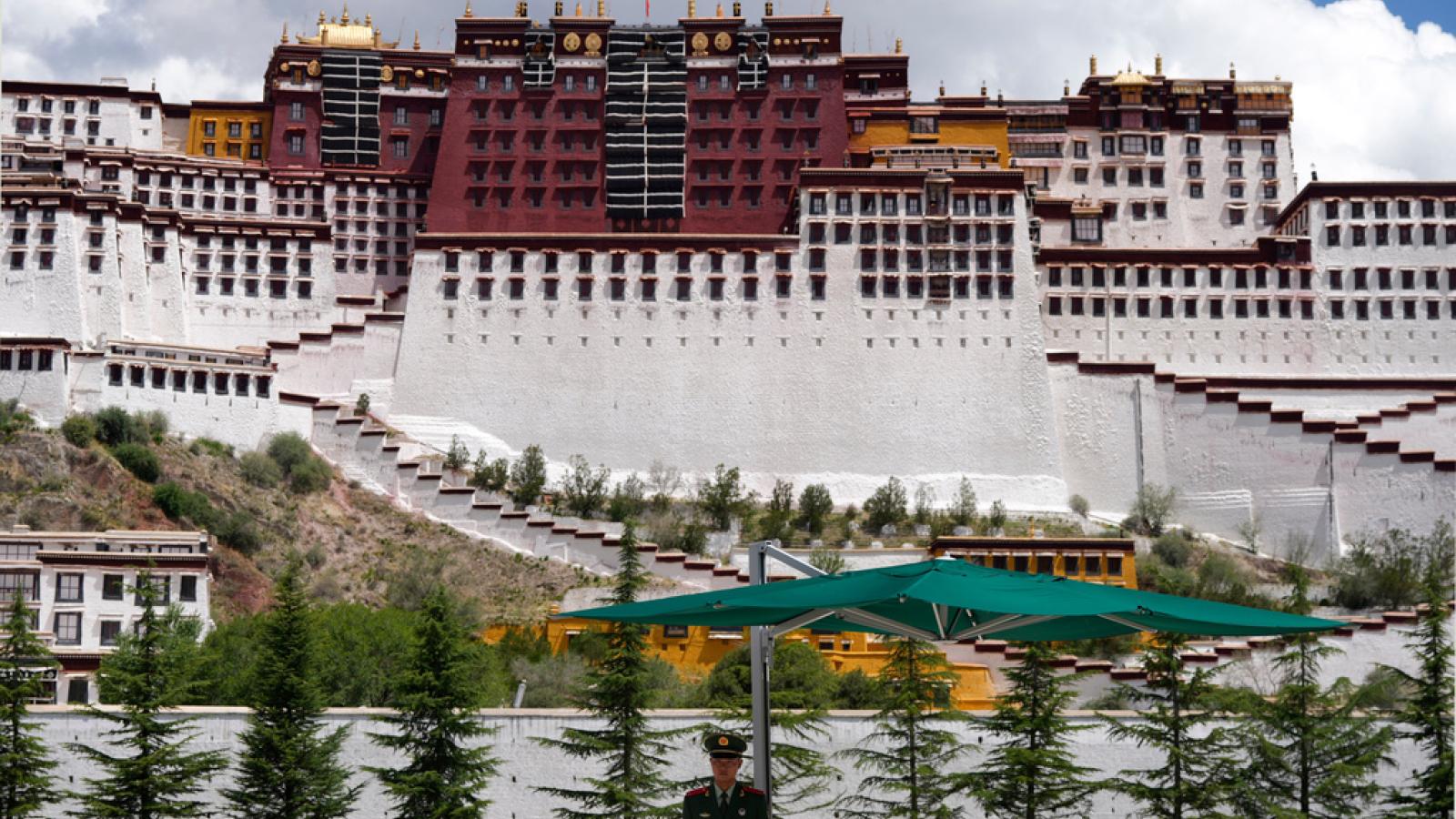
Tibet, which continues its separatist independence movement as a Chinese ethnic minority to this day, formally began its independence movement as early as 1912, following the collapse of the Qing dynasty. The Dalai Lama sought independence by signing the 'Tibet-Mongolia Mutual Recognition Treaty' with Mongolia in 1913, opposing the Republic of China. During the War of Resistance against Japan, the Kuomintang continued to claim Tibet as part of China, while Tibet, advocating independence, was unable to conduct effective military operations. After winning the Chinese Civil War and establishing the People's Republic of China in 1949, the Chinese Communist Party reaffirmed Tibet as part of China and, under the banner of 'liberation,' sent the People's Liberation Army to militarily suppress Tibet in 1950. China and Tibet signed the Seventeen-Point Agreement, which effectively stripped Tibet of nearly all sovereignty. During the Cold War framework from 1953 to 1957, to safeguard national security, the government again declared the Chinese nation as an indivisible entity and conducted ethnic identification surveys. Although over 400 groups claimed to be distinct ethnicities, only 55 were officially recognized by the government, including 54 ethnic minorities besides the Han.
The Democratic Republic of Vietnam, established in September 1945, further strengthened the concept of the 'Vietnamese nation' to resist French and American colonial ambitions. Vietnam conducted an ethnic identification survey in 1960, establishing 54 ethnic groups: the dominant Kinh people (87% of the population) and 53 other ethnic minorities. These minorities were largely forced to accept assimilation policies centered on Kinh language and culture. Highland ethnic groups in central Vietnam resisted such assimilation and continued guerrilla resistance against the central government until the early 1990s.
Cover of 'A Connected History of East Asia' *Authors: Yu Yong-tae (Yoo Yong-tae), PhD from Yonsei University, Professor at Seoul National University's Department of History Education; Park Jin-woo, PhD from Hitotsubashi University, Professor at Sungshin Women's University's Department of Japanese Studies; Park Tae-kyun, PhD from Seoul National University, Professor at Seoul National University's Graduate School of International Studies. This excerpt is from their co-authored book 'A Connected History of East Asia: A New History Beyond Borders, Comparing Regions and Ethnicities' (Lianjing Publishing).
FACT BOX
- Source: PR Times
- Category: News