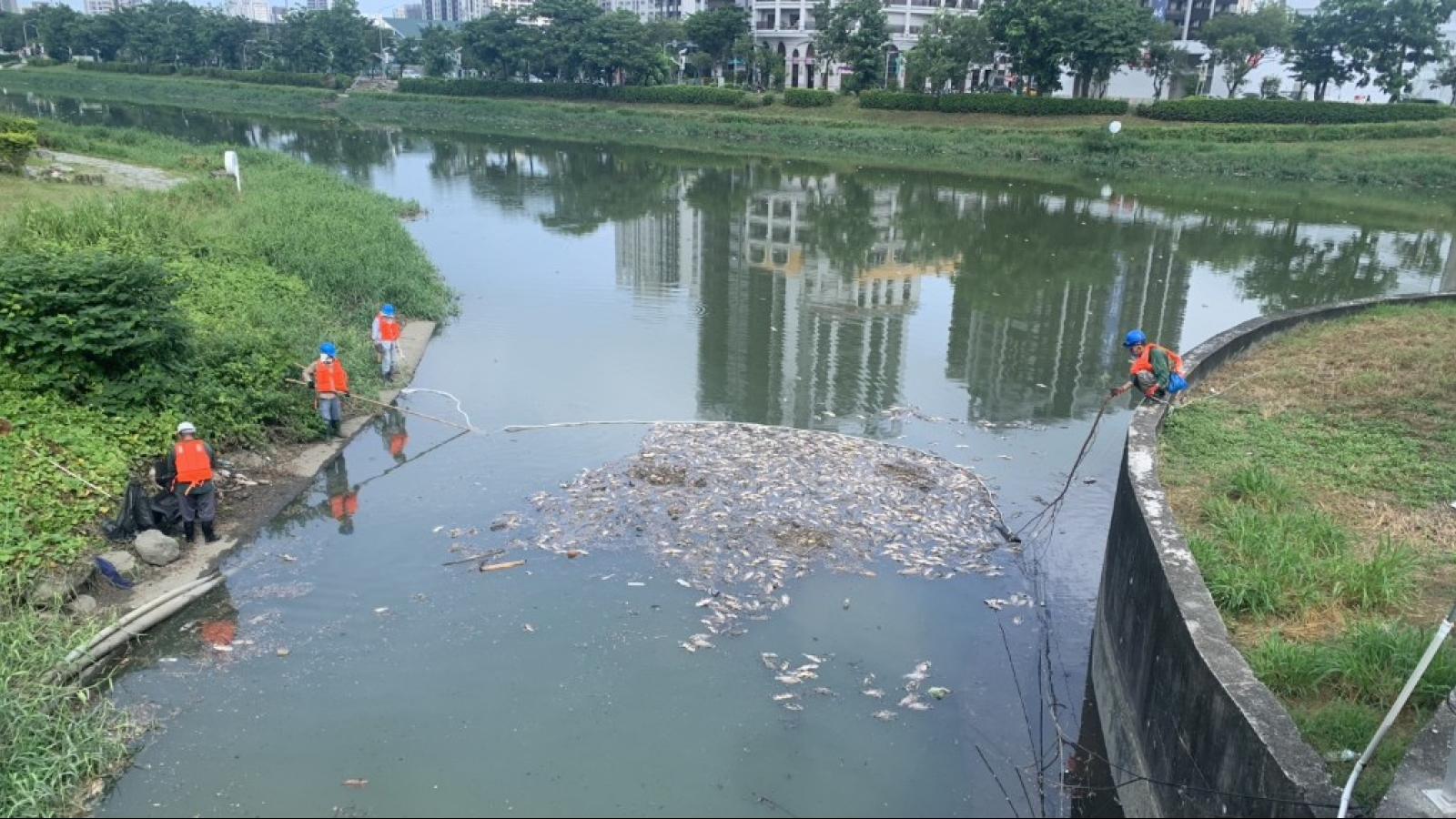
On the evening of the 11th, citizens reported via the 1999 hotline the discovery of dead fish in the Youchang Drainage and Houjing Creek. Upon receiving the report, the Water Bureau immediately launched cleanup operations overnight. Debris booms have already been installed along the Houjing Creek section to concentrate and collect dead fish, with cleanup efforts ongoing.
According to the Water Bureau, the preliminary cause of the fish mortality is linked to recent 'Xingzhong Weir Gate' drawdown operations conducted by the Council of Agriculture's Irrigation Agency. These operations caused a rapid drop in water levels and a reduction in water volume in Houjing Creek, leading to decreased dissolved oxygen levels. This incident is associated with significant short-term changes in water level and dissolved oxygen conditions.
By the morning of the 12th, all dead fish at the outlet of the Youchang Drainage had been removed. In parts of Houjing Creek, some fish carcasses were trapped in riverside vegetation. Debris booms have now been installed near Youchang Bridge to concentrate the dead fish, allowing work crews to efficiently retrieve and transport them, preventing odor issues from decomposition.
In response to this incident, the city government has initiated a cross-departmental emergency response. The Water Bureau is responsible for intercepting and removing fish carcasses, the Environmental Protection Bureau is conducting water quality sampling and pollution source inspections, and the Agriculture Bureau is performing fish tissue sampling and testing to further clarify the cause.
The Water Bureau will continue to patrol Houjing Creek and the Youchang Drainage, monitoring water levels and flow conditions to complete the cleanup as quickly as possible and safeguard the aquatic environment and the quality of life for riverside residents.
Kaohsiung City Water Resources Bureau Completes K-Line Gate Upgrade, Enhancing Flood Control Capacity and Love River Water Quality
The Water Bureau has installed K-line gates adjacent to Siji-Tai-an Hospital. (Photo/Provided by Kaohsiung City Water Resources Bureau)
To enhance urban drainage regulation and improve the water environment along the Love River, the Kaohsiung City Government Water Resources Bureau implemented the 'Sanmin District K-Line Rubber Dam to Gate Replacement Project,' with a total budget of approximately NT$11 million. The project was completed in April of Year 115 and is now operational.
The upgraded electric gates have successfully performed drainage regulation during subsequent heavy rains and typhoons. The system employs full-section sewage interception, improving both flood resilience in surrounding areas and the water quality of the Love River.
The Water Bureau explained that the K-line drainage adjacent to Siji-Tai-an Hospital in Sanmin District originally used a rubber dam, which had deteriorated over years of use and was frequently punctured by debris, leading to frequent damage. Its compromised upright condition negatively affected sewage interception efficiency. Additionally, during flood season, incomplete retraction posed risks to flood discharge capacity. Therefore, the system has been fully replaced with three vertical-lift electric gates, enabling full-section opening and closing during sewage interception or flood discharge.
The control system has been integrated into the Hydrological Information Center's flood facility monitoring platform, allowing operators to monitor water levels in real time and remotely operate the gates, significantly improving drainage dispatch efficiency during heavy rainfall. Under normal conditions, the gates intercept domestic wastewater and divert it to sewage treatment systems, reducing pollutant inflow into the Love River and continuously improving river water quality.
The Water Bureau noted that this project achieves dual functions of flood control and water quality improvement. It enables flexible drainage regulation based on rainfall and water levels, enhancing the overall drainage efficiency and operational stability of the K-line system. This upgrade strengthens flood resilience in the Sanmin District area, providing citizens with a safer and more stable living environment.
FACT BOX
- Source: PR Times
- Category: News