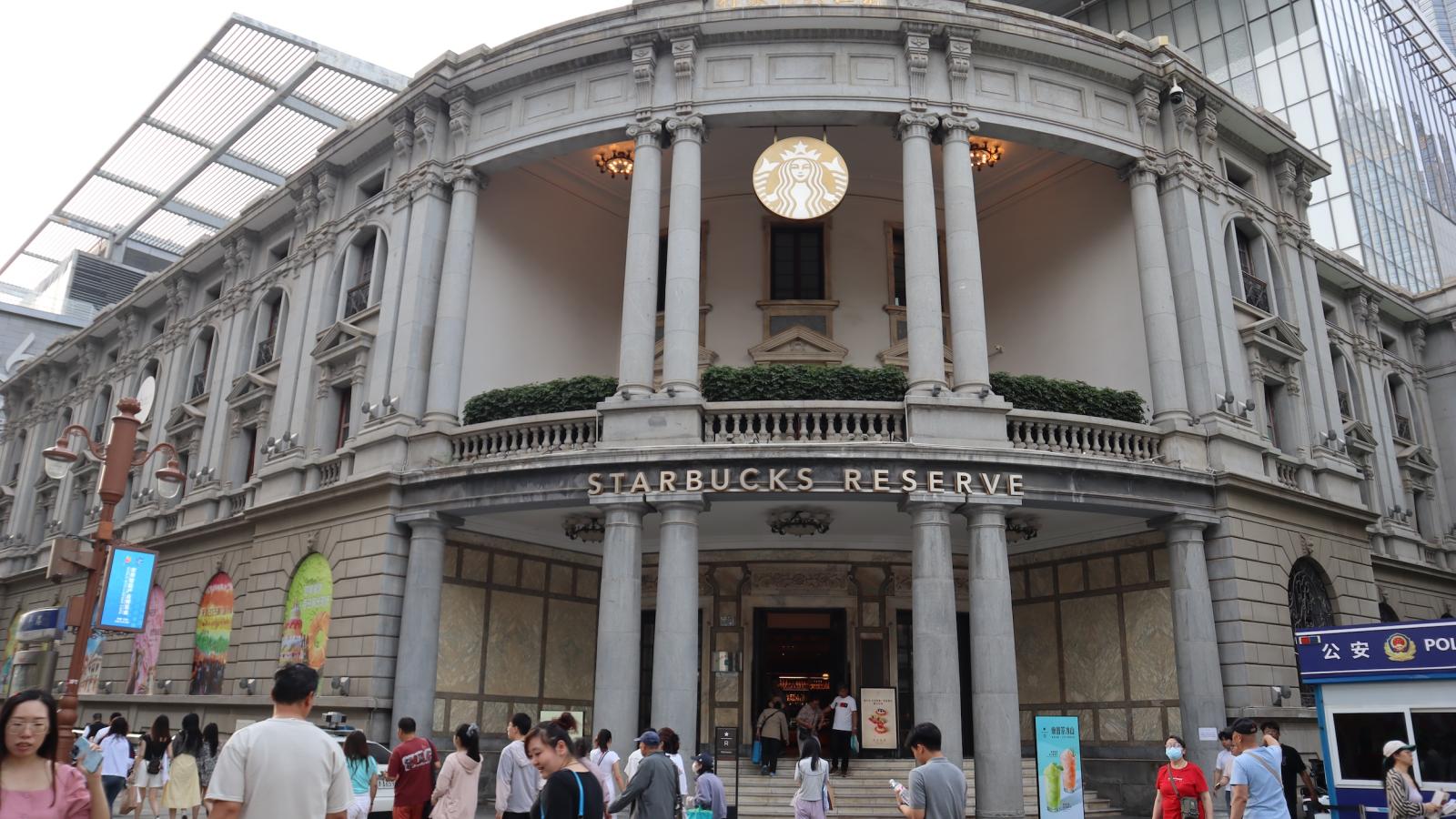
On August 12, in response to recent rumors circulating on Chinese social media claiming that 'Starbucks paper cups and straws may be manufactured by Mixue Ice City' or that 'coffee bean suppliers have been changed,' Starbucks China officially responded, stating the information was 'seriously false,' and urged consumers to rationally discern online messages.
The incident originated from the recent move of Zhang Qing, former Chief Procurement Officer of Sam's Club China, who joined Boyu Capital and began planning a supply chain transformation for Starbucks China, including sourcing top-tier domestic suppliers and accelerating localization. Reports suggested roasting might be outsourced to Yum China, while paper cups, straws, and matcha powder could be supplied by Mixue Ice City. Additionally, there were claims that Starbucks might reduce reliance on its global supply chain and source more beans from Chinese suppliers.
While Starbucks denies 'changing beans,' the rules of the game in the Chinese market are indeed shifting. Frankly, since Starbucks was acquired by Chinese capital, the taste of its coffee beans has become average, and in terms of pricing, it is not as competitive compared to Luckin or Cotti. Journalists have also observed changes in store layouts and background music since the acquisition.
In November 2025, Starbucks reached an agreement with Boyu Capital to form a joint venture to operate its retail business in China: Boyu holds up to 60% equity, Starbucks retains 40%, and continues to license its brand and intellectual property. The transaction was valued at approximately $4 billion and officially closed in April 2026.
Mixue Ice City, starting from a small shop in Henan with just an ice-shaving machine, has overtaken Starbucks, once the beverage industry leader. (Image source / Mixue Ice City)
This marks the first time in nearly 27 years since entering China that Starbucks has relinquished controlling interest in its Chinese operations—a reflection of its market share plummeting from a peak of about 34% amid erosion by local budget brands like Luckin and Cotti using a 9.9-yuan offensive. Both parties aim to expand store count from around 8,000 to 20,000, emphasizing a 'hyper-localization' and 'one store, one face' strategy.
In China’s ready-to-drink coffee market, the price war has evolved beyond 'burning money for users' into a more complex phase. Luckin has surpassed 36,000 stores, with monthly transacting customers exceeding 100 million. Cotti once disrupted the market with all-items-at-9.9-yuan pricing but ended its full-scale low-price campaign in early 2026, shifting to selective discounts and hybrid business models.
With tea brands entering the coffee space and platform subsidies stacking up, Starbucks has also been drawn in: around the beginning of autumn recently, through platforms like Meituan and Taobao Flash Purchase, the final price per cup dropped to 10 yuan or even lower, with some orders reaching a 'floor price' of 4 to 8 yuan.
Reporters observed on Alipay that Starbucks China has recently launched similar promotions such as 'a cup for over 20 yuan.' This indicates that after state-backed private equity took control, the brand is actively aligning with 'local price levels'—not through simple price cuts, but via promotions, platform collaborations, and store lightweighting (reducing dine-in, enhancing takeaway and delivery)—to maintain foot traffic amid the wave of affordability.
Alipay now features Starbucks offering 21-cup bundles, and breakfast sets are available for just over ten yuan. (Provided by Tian Chang)
From over 30 yuan to around 20 yuan per cup: Starbucks now faces 'price band' challenges.
Coffee was once a 'urban lifestyle' priced at 20, 30, or even 40 yuan. But after massive coupons, delivery platform subsidies, and member promotions, consumers naturally ask: 'Why should I pay over 30 yuan for a cup of coffee?'
By 2026, China’s coffee market had moved beyond a simple '9.9-yuan price war' into a more complex competitive stage. Luckin had already surpassed 20,000 stores by 2026, while Starbucks had about 7,000. Competition has expanded beyond mere price comparisons to include cup volume, new products, collaborations, delivery, pickup, and store density.
Moreover, both Luckin and Cotti extended their competition this year from 'discounting' to 'upsizing'—a new consumer logic emerging in the coffee market: 'For the same price, can I get a larger cup?'
Additionally, China’s ready-made coffee market has transitioned from 'market education' to 'oversupply' and 'tiered competition.' Luckin dominates in volume through extreme density and scale, yet still faces pressure on same-store sales and discount dependency. Cotti and Lucky Coffee have slowed their store openings. Meanwhile, under Boyu’s leadership, Starbucks is attempting to break through via local decision-making, supply chain optimization, and experience upgrades. Cost pressures are real: the global procurement system proves expensive in the Chinese market, with milk, packaging, and bean transportation all adding burden.
China’s well-known coffee chain Luckin Coffee expands into New York, USA. (Screenshot from official IG page)
Taiwan’s coffee market: equally competitive, yet has not fully replicated China’s '9.9-yuan war'
Taiwan’s coffee market is highly mature. In 2025, the overall coffee economy reached approximately NT$112.1 billion, with the top three chains being Uni-Starbucks (about 600 stores), Louis (about 560 stores), and 85°C (nearly 400 stores). Starbucks in Taiwan is operated by the Uni-President conglomerate and has remained the leader in the premium chain segment, solidifying its position through distinctive stores, third-space experiences, digital memberships, and limited-edition products, maintaining relatively stable profitability—so much so that it’s described as 'Starbucks’ unbeatable territory.'
Taiwan does not have a China-style '9.9-yuan full-scale price war.' Budget options like convenience store CITY CAFÉ and Louis have already diverted daily demand, while independent cafes and premium routes satisfy quality seekers. Starbucks’ promotions in Taiwan (e.g., buy-one-get-one-free) serve more as membership engagement and traffic tools rather than forced responses under survival pressure. Market competition has shifted from 'opening stores to grab volume' to 'single-store efficiency, brand experience, and spatial value.'
The Taiwan Chain Store Association’s 2026 '2026 Taiwan Chain Store Yearbook' also pointed out that the chain industry currently faces labor shortages, rising wages, and increasing electricity costs. Business thinking is gradually shifting from pure scale expansion toward operational efficiency, brand resilience, and long-term quality management.
When price is no longer the only weapon, brands must ultimately answer: 'Why should consumers choose you?'
FACT BOX
- Source: PR Times
- Category: News