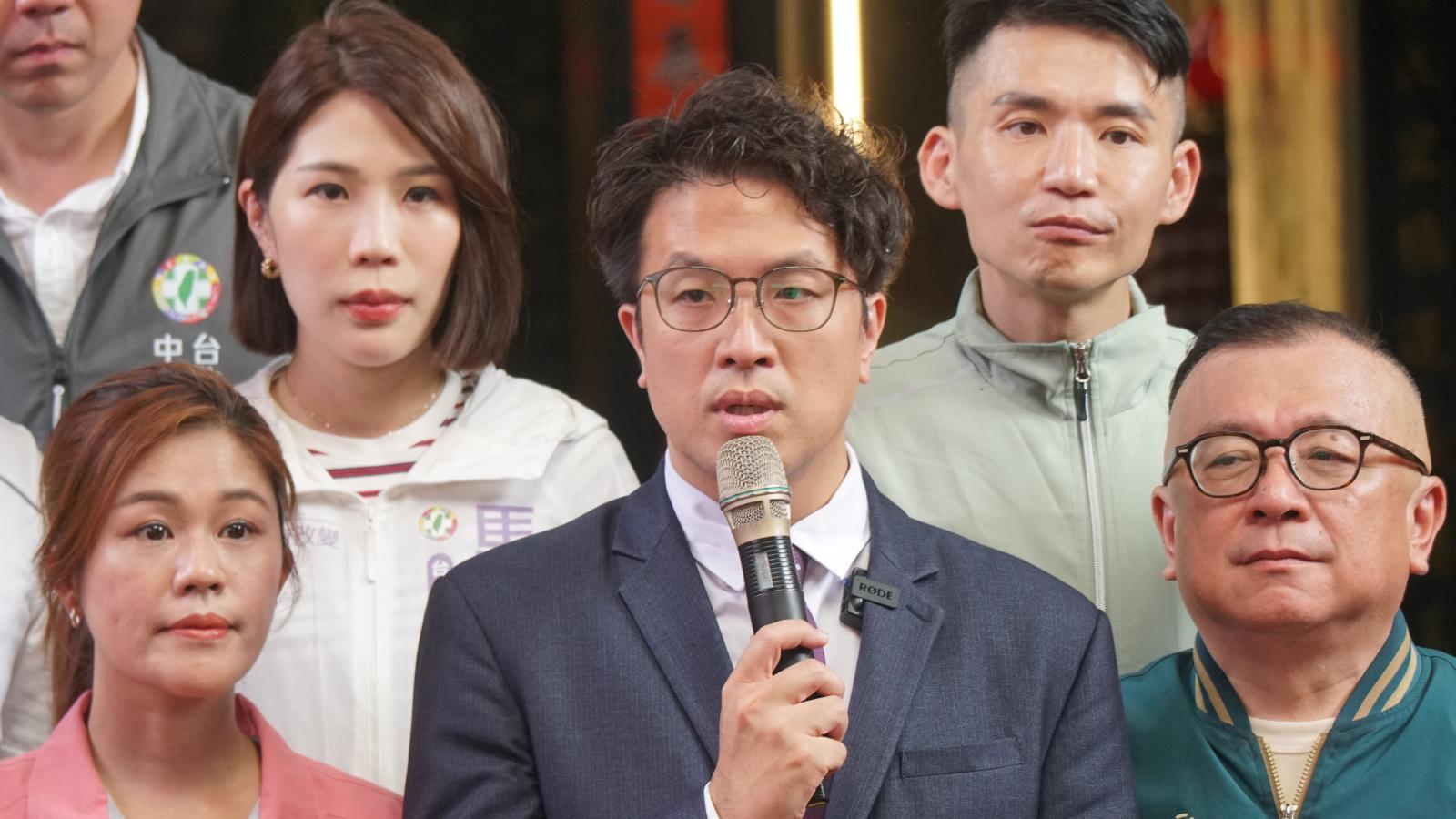
Aging buildings in Taipei have become a serious issue. Democratic Progressive Party (DPP) Taipei mayoral candidate Shen Po-yang has proposed a 'leasehold housing' concept, aiming to reduce housing price barriers by allowing residents to hold land use rights for 50 to 70 years. However, this idea has sparked intense public debate.
In response, writer Piaolang Island posted on Facebook questioning whether urban renewal through leasehold rights means 'learning from China.' He stated that if social housing is developed under a leasehold model, prices could be further reduced—but only if the government's social housing policies remain consistent and do not fail.
Shen Po-yang recently told media in an interview that, in response to many aging buildings in Taipei, he advocates for a 'zombie urban renewal exit plan.' Regarding the cost of urban renewal, Shen proposed the 'leasehold housing' concept, explaining that by granting residents 50 to 70 years of land use rights, housing prices can be lowered. He also suggested complementary measures such as 'rent-only, no-sale' to prevent urban renewal projects from stalling for years.
Is Leasehold Urban Renewal Learning from China? Writer Reveals 40-Year Reality: Even Prime Areas See Sky-High Prices
Piaolang Island pointed out that Shen Po-yang's proposal to adopt leasehold housing aims to reduce costs and accelerate urban renewal. The most classic example of a country implementing leasehold housing is China. After the 1982 Constitution stipulated land nationalization, all urban land became state-owned, while rural land is collectively owned by farmers. When city residents purchase homes, they are essentially buying leasehold rights. Depending on land use, residential plots are granted for 70 years, industrial and educational land for 50 years, and commercial and entertainment land for 40 years. Extensions are possible upon expiration. Urban renewal generally follows a 'one household for one household' principle and has been implemented for over 40 years.
However, Piaolang Island highlighted a critical issue: although Chinese residential properties operate under leasehold rights—making them theoretically cheaper—properties in first-tier cities like Beijing, Shanghai, Guangzhou, and Shenzhen have still been driven to astronomical prices through speculation. Prices often reach 60,000 to 100,000 RMB per square meter, equivalent to approximately 900,000 to 1.5 million TWD per ping in Taiwan, remaining unaffordable for young people.
Are There Leasehold Projects in Taiwan? Writer Reveals Two Key Obstacles
Piaolang Island noted that, in the past, China introduced affordable housing—similar to Taiwan's social housing—to curb skyrocketing prices. However, massive construction led to unsold units and ghost cities. The Chinese government then bought up these vacant units and converted them into affordable housing for youth and economically disadvantaged groups. In theory, leasehold housing should be cheaper since no land purchase is required. Yet, in prime locations, speculative markets can drive leasehold property prices just as high, meaning leasehold-based social housing is still necessary to balance the market.
Piaolang Island emphasized that Taiwan already has numerous leasehold development projects. For instance, Taipei's京站花園廣場 (Jingzhan Garden Plaza) and Kaohsiung's 名軒亞灣城 (Mingxuan Yawan City) are developments built under leasehold arrangements by private developers. These units are priced 70–80% lower than comparable properties with full land ownership nearby. However, the main challenges lie in public resistance due to the lack of land ownership, deeply rooted beliefs in 'owning land means wealth,' and unresolved legal issues regarding loans and resale. Therefore, leasehold housing is already operational in Taiwan, actively promoted in Singapore, and long-established in China. If Taiwan wishes to expand this model, there is much to learn from these examples.
FACT BOX
- Source: PR Times
- Category: News