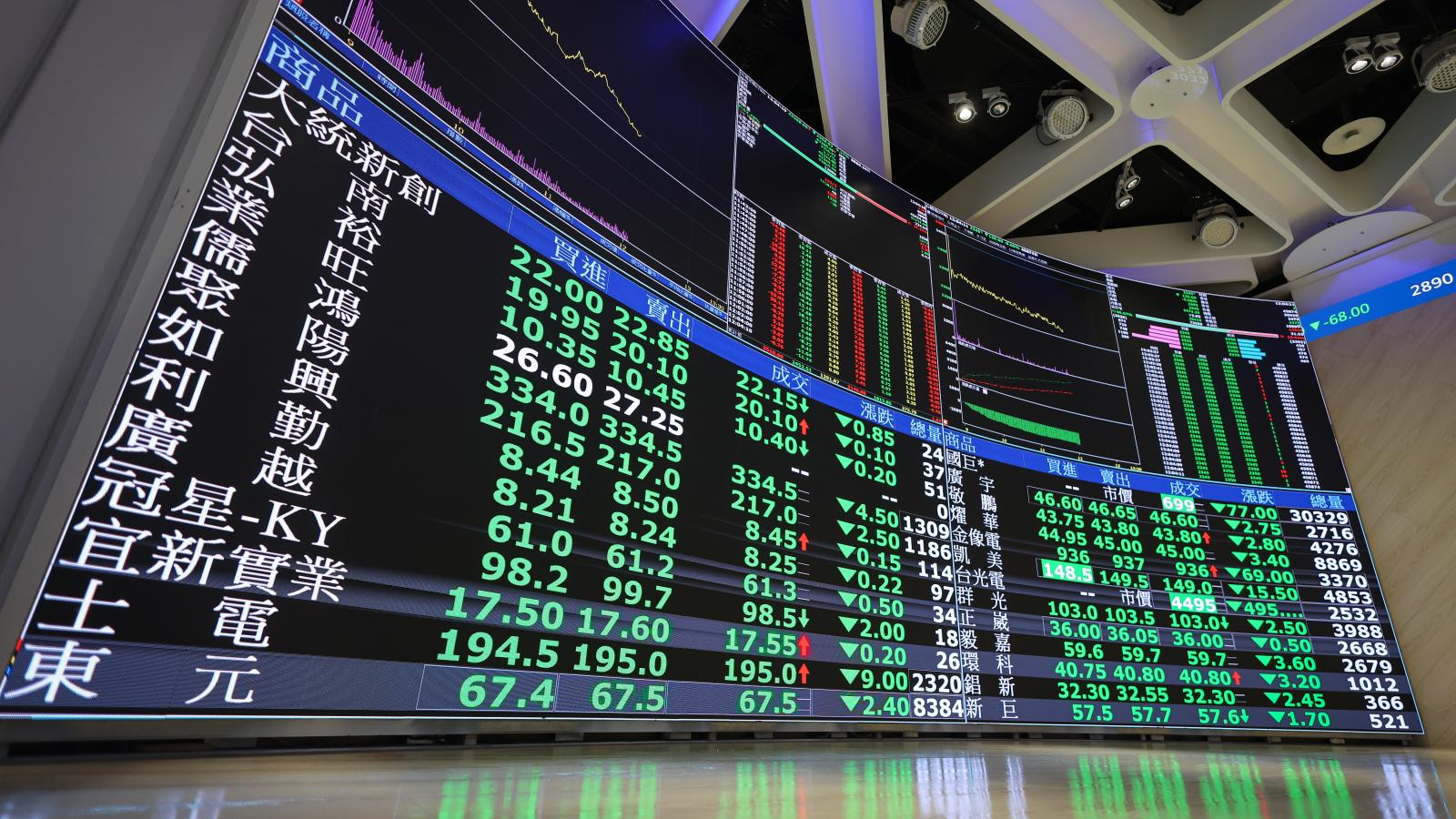
On the 13th, Taiwan's stock market surged 503.41 points, closing at 46,021.48, with a trading value of NT$1.0498 trillion. All three major institutional investors were net buyers, collectively purchasing NT$90.756 billion.
Regarding whether Taiwan stocks might 'hit a second bottom,' senior analyst Du Jin-long appeared on the program 'Stock Money Rolling Money' to analyze the market. He pointed out that ahead of every municipal and county mayoral election, Taiwan's stock market has historically entered a range-bound consolidation phase for several months.
Du stated that August and September will likely remain in a consolidation phase. By July, around 690 companies had completed their ex-dividend dates, distributing approximately NT$1.8 trillion in dividends. In the past, July to August was expected to deduct around 1,700 points due to about NT$2 trillion in dividends. This year, by July, the total dividend payout was about NT$1.8 trillion, meaning the dividend pressure in August and September will be significantly lower.
What is 'Xi Zhi' (dividend value)? It refers to the cash amount per share distributed to shareholders from a company's annual profits in the form of cash dividends.
Du mentioned that the total dividend value for August and September will be around NT$400 billion, meaning the downward pressure on the market will not be as severe—a positive sign. The main index could potentially drop to 39,384 or even another 1,000 points lower. Technically, 36,000 would be the ideal bottom, but given Taiwan's strong GDP and solid corporate earnings, the market may bottom out around 40,000 and then begin a new upward trend.
Host Ye Zhijuan asked, 'So does this mean the market will continue to fluctuate at least until October?' Even though Taiwan stocks rebounded from 39,000 to around 45,000, Du believes a further pullback to test 40,000—or even 36,000—is possible. For the market to stabilize and resume an upward move, trading volume must increase first, and the over-the-counter (OTC) market must stabilize—likely not until after October.
Du agreed, noting that this correction was unusually deep, having fallen over 8,000 points, with many stocks heavily sold off. TSMC has rebounded but remains relatively weak. He expects August and September to remain in a range-bound phase. He reiterated his belief that before every mayoral election, Taiwan's stock market enters a consolidation phase—just as it did four and eight years ago. After the 'first bottom,' regardless of whether it breaks the previous low, it generally presents a good buying opportunity.
What does 'hitting a second bottom' mean? It refers to a market that has rebounded temporarily, but investor confidence hasn't fully recovered. Selling pressure from those who missed earlier exits resurfaces, causing prices to fall again. When this decline approaches the level of the 'first bottom' but fails to break below it and instead finds support and rises again, this process of retesting the low is called 'hitting a second bottom.'
FACT BOX
- Source: PR Times
- Category: News
- Products / services: ETF