"Blocking faculty pathways wastes national talent; guiding their expertise builds the future of education." The success of Yu the Great in ancient China’s flood control did not lie in brute force, but in governance wisdom. Learning from his father Gun’s failed attempt to dam the waters, Yu adopted 'diversion' instead of 'blockage,' carving channels along the terrain to guide floodwaters into proper courses, ultimately transforming disaster into benefit. This was not merely a method of water management, but a profound lesson in governing nations and organizations.
Today, declining birthrates are severely impacting higher education. Many private universities, facing enrollment shortfalls, are downsizing under operational pressure. However, some institutions respond to faculty placement challenges by restricting professional development, reducing teaching loads, and failing to assign appropriate duties—eventually citing 'no classes to schedule' or 'no suitable work' as grounds for dismissal. This management approach resembles attempting to control floods solely through blockage: it fails to solve core problems, instead accumulating labor-management conflicts, damaging faculty morale, and undermining educational quality.
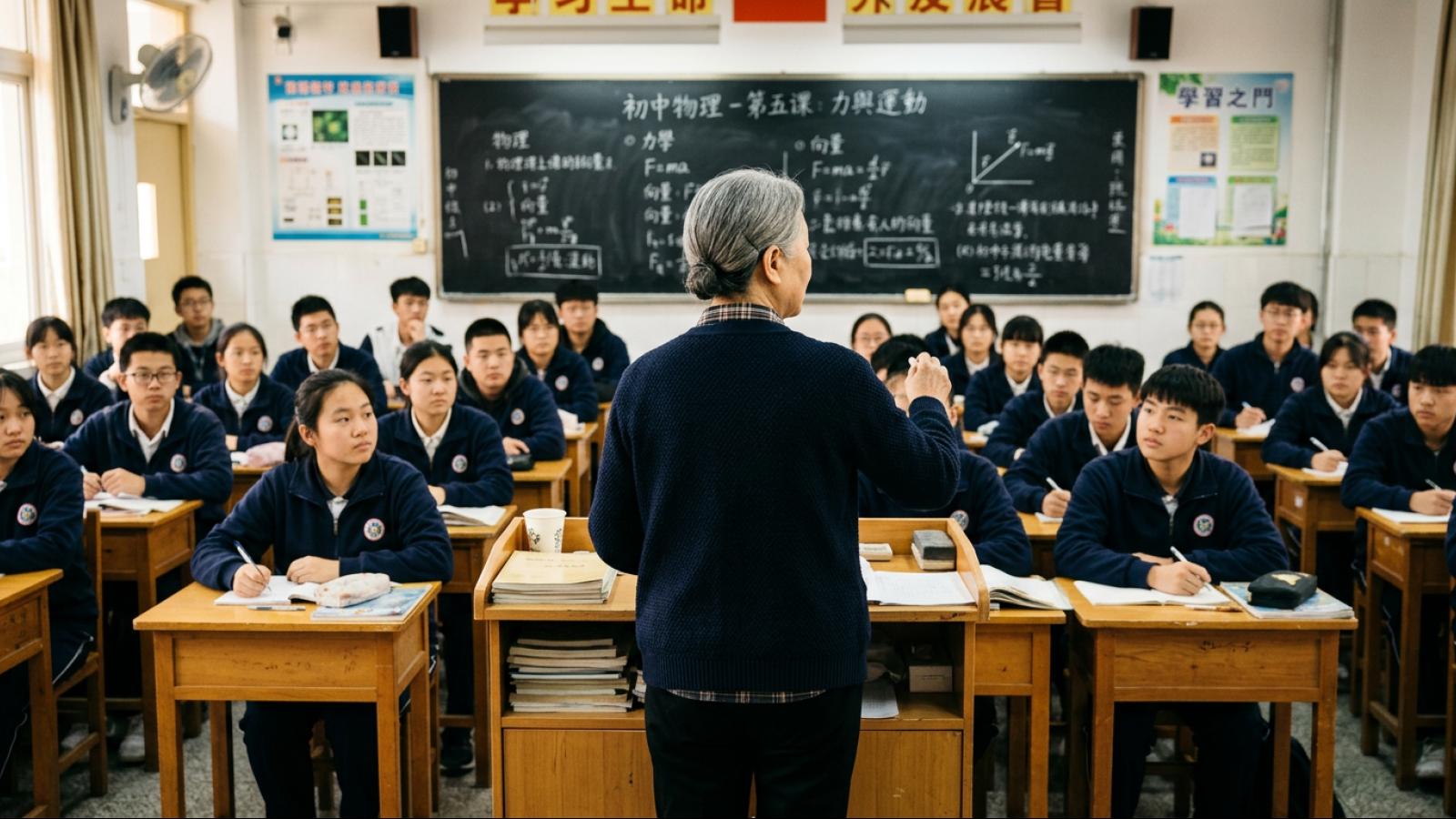
Teachers are the most vital human capital in education. Fewer students do not mean teachers lose value. What needs adjustment is the model of talent utilization—not treating educators as disposable. With proper transition and development systems, teachers’ accumulated experience in teaching, research, and practice can continue to create societal value.
Therefore, the government should implement more proactive 'diversion' policies. The Ministry of Education could establish cross-institutional support, faculty referrals, joint course offerings, and lifelong learning platforms to promote resource sharing. The National Science and Technology Council could engage faculty in innovation and industry collaboration through industry-academia partnerships, research projects, and technological development. The Ministry of Labor could assist teachers in cross-domain development by integrating vocational training, skill enhancement, corporate talent programs, and second-specialty development, enabling their participation in industrial training, technical services, and lifelong learning. Additionally, inter-agency cooperation mechanisms should be established to facilitate faculty secondments, corporate service, and social education roles, allowing educators’ expertise to thrive beyond single campuses.
As the ancients said, 'When governance is ideal, punishment becomes unnecessary.' True governance does not rely on penalties and elimination, but on fair, transparent, and forward-looking systems—where laws exist yet are rarely enforced, and strict systems still protect and activate talent. Educational governance should follow this principle: replacing blockage with guidance, opposition with collaboration, providing teachers with platforms for growth, schools with sustainable futures, and students with higher-quality education. This is the most valuable governance wisdom Yu the Great’s flood control offers to modern education.
*The author is a faculty member at Chung Hsin University of Science and Technology and Deputy Secretary-General of the National Private School Industry Union.
FACT BOX
- Source: PR Times
- Category: News