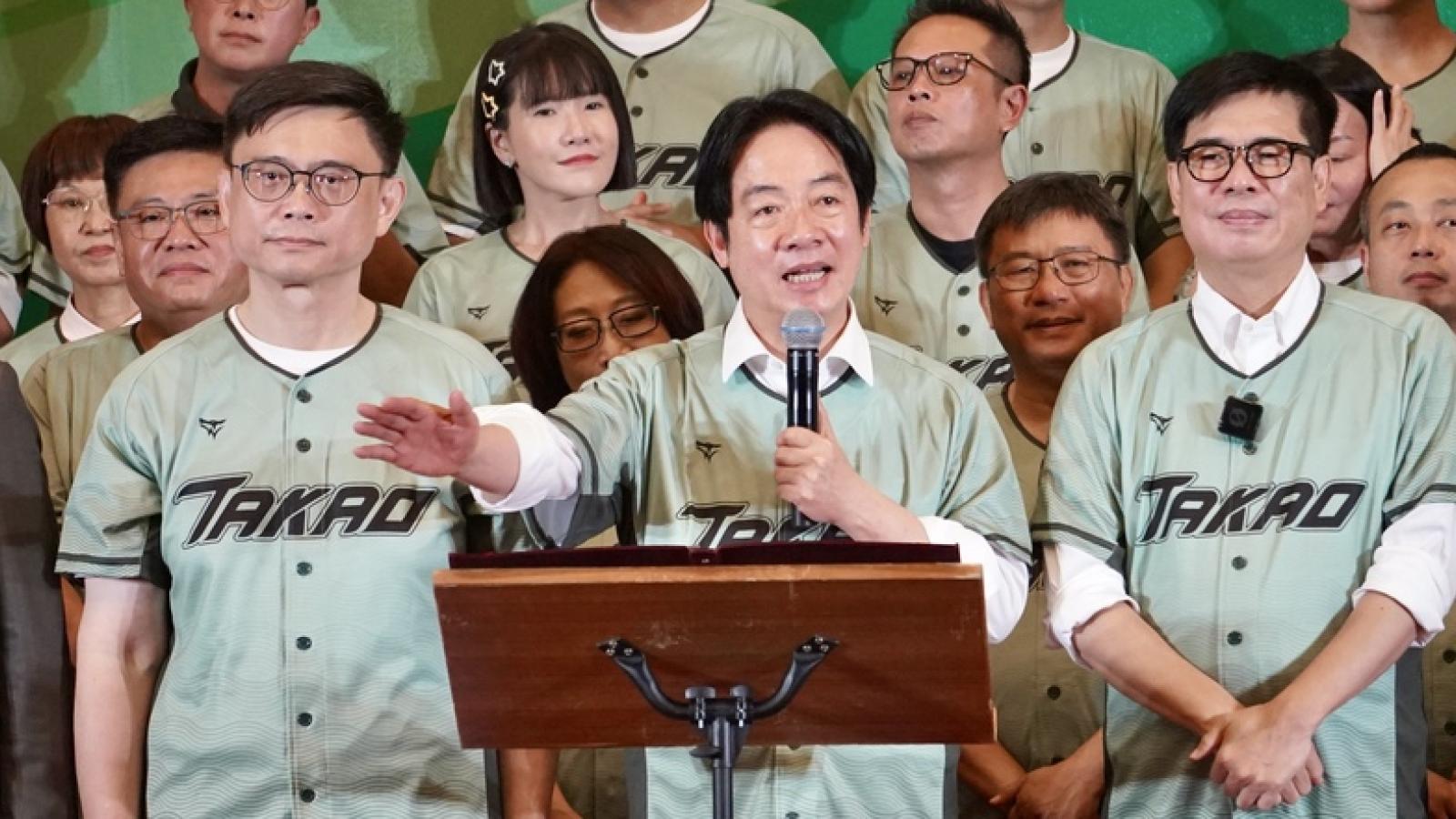
President Lai Ching-te recently cited intelligence and media reports to publicly warn of Chinese Communist Party (CCP) interference in Taiwan’s local elections, stating that Beijing views these elections as a critical measure of its influence over Taiwan and employs tactics such as spreading false information, manipulating fake polls, and disseminating deepfake audio and video. His remarks immediately drew strong backlash from opposition parties, who questioned whether the ruling party was labeling all unfavorable public opinion or polling data as 'disinformation' or 'foreign interference' without sufficient evidence.
Preventing infiltration by foreign forces and safeguarding the integrity of democratic mechanisms is a paramount constitutional duty of the president. However, this political clash over 'CCP election interference' and 'false information' reflects the deepest crisis within Taiwan’s democratic system today—the politicization of national security issues and the erosion of societal trust.
It is undeniable that protecting open democratic societies from foreign influence has always been a crucial issue. The challenges posed by cognitive warfare and information infiltration are real and severe for democracies. With the advancement of generative AI and automated troll farm technologies, information warfare has evolved beyond crude propaganda into highly sophisticated methods of agenda manipulation and emotional polarization. In the face of such external threats, it is entirely legitimate for a head of state to alert citizens and promote media literacy.
Yet the core problem lies in how the phrase 'preventing foreign election interference' risks becoming a convenient political label. The opposition’s central argument is straightforward: 'If you have evidence, prosecute; if not, stop insinuating.' If the authorities possess concrete evidence—such as foreign financial flows or illegal networks behind fabricated polls—then judicial and national security agencies should act swiftly and lawfully to uphold sovereignty and electoral fairness. Conversely, if the president repeatedly uses anonymous 'intelligence' or vague claims of 'disinformation' to target political opponents or objective polling data, it not only fails to convince the public but also risks creating the perception that such accusations are merely political tactics to deflect from poor governance or electoral setbacks.
This phenomenon poses a dual threat. First, it undermines the essence of democratic elections. Elections should be arenas for policy debate and performance evaluation. When 'interference allegations' become a default political weapon, local governance,民生 issues, and legislative oversight are easily marginalized. Legitimate criticism of the ruling party may be twisted into 'collaboration with foreign forces' through political mobilization, eroding the space for healthy democratic reflection and checks and balances.
Second, it risks triggering a 'boy who cried wolf' effect. When terms like 'disinformation' and 'CCP interference' are overused or applied too broadly, public sensitivity to genuine national security warnings may gradually dull or even turn into skepticism. If a real, large-scale cognitive operation occurs in the future, the public might dismiss it as yet another political scare tactic—ultimately weakening Taiwan’s collective defense against actual threats.
The foundation of any democratic system is trust. The best defense against hostile infiltration is not to seek enemies within, but to build credible early-warning systems and rule-of-law institutions—not to reduce national security discourse to election-season rhetoric.
If the Lai administration truly wants the public to believe in the threat of CCP election interference, political rhetoric alone is insufficient. It must respond to public skepticism with transparent legal procedures and publicly verifiable evidence. National security intelligence must not be turned into a tool for political smearing through anonymous, unsubstantiated claims.
*The author is a cultural historian and freelance writer. Republished with permission from Ju Media.
FACT BOX
- Source: PR Times
- Category: News