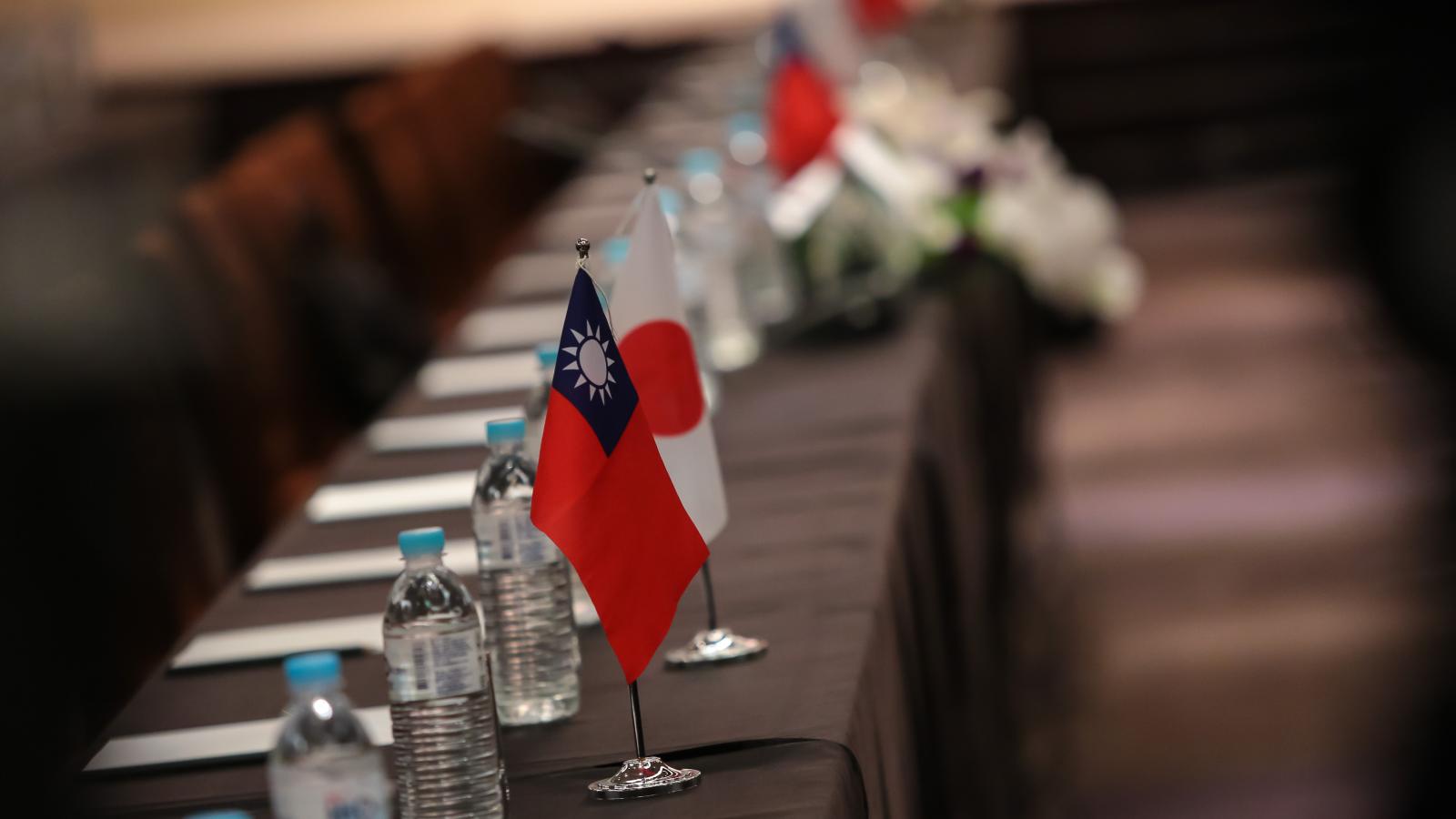
On August 9, Nagasaki City held its annual atomic bomb peace memorial ceremony. Taiwan's representative to Japan, Lee I-yang, boycotted the event in protest after being seated outside the diplomatic corps section, arguing that Taiwan was being downgraded. Tensions escalated as Lee and Nagasaki city officials exchanged public criticisms, with Lee warning that if Taiwan remained silent, it could trigger a domino effect of further downgrading.
However, Nagasaki's treatment of Taiwan appears not to be an isolated case. There are growing signs that Japan's overall approach toward Taiwan is undergoing subtle shifts, a change keenly felt even by Taiwan's opposition Kuomintang (KMT). A senior KMT official revealed that at the end of July, following the Kumamoto earthquake, KMT Chairperson Jennifer Wang made a personal donation of NT$1 million (approximately JPY 4 million) to aid relief efforts. In an unusual move, the Japan-Taiwan Exchange Association held a formal donation and appreciation ceremony, surprising the KMT central office.
Wang, acting on the advice of former Taiwan representative to Japan Feng Ji-tai, made the donation purely from a humanitarian standpoint and due to the KMT's long-standing friendly ties with Japan, with no political intentions. Both Wang and the KMT central leadership expected at most a written thank-you statement from Japan. Instead, the Japan-Taiwan Exchange Association proactively arranged a public ceremony on July 31 in Taipei, where Representative Kataoka Kazuyuki personally accepted the donation and expressed gratitude.
In contrast, while the ruling Democratic Progressive Party (DPP) administration, including President Lai Qing-de, also actively donated—Lai's government contributed NT$5 million—no DPP figures received similar recognition. Notably, Japanese Prime Minister Koike Yuriko, widely seen as pro-Taiwan, issued a public thank-you message on July 30 for international condolences over the Kumamoto earthquake but conspicuously omitted Lai Qing-de. Although Taiwan was added in a follow-up message on July 31, it was listed alongside non-state entities like Palestine, fueling perceptions in Taiwan of diplomatic downgrading.
A senior KMT official acknowledged the stark difference in Japan's treatment of Taiwan's ruling and opposition parties, stating, 'This is unprecedented and defies normal diplomatic logic—clearly, political considerations are at play.' The official noted that Japan's previously one-sided pro-Taiwan stance appears to be undergoing subtle changes.
The KMT was initially puzzled by Japan's unusually warm reception but was even more surprised when Wang's humanitarian gesture, after being publicly honored by Japan, sparked anger among Chinese netizens. Critics questioned why Wang had not donated to flood relief in Guangxi, China, but chose to donate to Japan—especially on July 31, a date associated with Japan's wartime Unit 731—accusing her of 'humiliating China and being pro-Japanese.' Rumors have since circulated within the KMT that Beijing was displeased with Wang's donation.
However, a KMT figure familiar with cross-strait affairs indicated that the backlash was primarily from online communities, with local Chinese Taiwan-affairs bodies merely reporting public sentiment to signal potential negative fallout. No official dissatisfaction from Beijing's central government or the Taiwan Affairs Office has been reported.
Interestingly, while DPP supporters were angered by Japan's cold treatment of their leaders, they refrained from blaming Japan and instead flooded KMT legislators' offices with angry calls, demanding the KMT 'fully oppose Japan' and questioning why it maintained friendly ties.
After the Nagasaki controversy intensified, the KMT began connecting the dots, sensing a broader political motive behind Japan's actions. One senior official suggested that Japan may have been angered by Premier Cho Jung-tai's private visit to Tokyo to watch the World Baseball Classic (WBC), which he later publicized, violating tacit understandings. This, they speculated, led to Japan's cool response to the DPP-led government during the earthquake relief. However, others argued that Japan would not be so petty as to hold a grudge over an incident months prior. A more plausible explanation, they said, is that Japan is deliberately creating distance from Taiwan to signal its desire to ease tensions with China.
The KMT official assessed that while Japan publicly stands firm on Prime Minister Koike's 'Taiwan contingency' remarks—which worsened Sino-Japanese relations—it privately seeks to improve bilateral ties to reduce political and economic pressure. With Japan highly anticipating a meeting between Koike and Chinese President Xi Jinping at the APEC summit in Shenzhen in November, Tokyo must create a favorable atmosphere. The most direct and effective way, the official noted, is to use Taiwan as a bargaining chip to signal goodwill to Beijing. This is evident in Japan's Ministry of Defense recently removing the phrase 'the stability of the Taiwan Strait is crucial to Japan's security' from the draft of its '2026 Defense White Paper.'
The official pointed out that Japan's consistent avoidance of highlighting Taiwan's statehood—whether in disaster relief or seating arrangements—reflects a deliberate strategy. While many, including Lee I-yang, blame Nagasaki's local government for being overly pro-China, it is clear that even if Japan's Ministry of Foreign Affairs did not directly instruct the move, it has adopted a stance of 'tacit approval and non-interference' before and after the fact.
Moreover, Japan's unusually high-profile treatment of the KMT cannot be ruled out as a signal to Beijing, given the KMT's acceptance of the '1992 Consensus,' opposition to Taiwan independence, and relatively stable cross-strait relations. Being friendly to the KMT indirectly sends an olive branch to Beijing. The official emphasized that regardless of Japan's intentions, the signs indicate that Taiwan-Japan relations may shift from warmth to coolness, possibly encountering turbulence, and Taiwan must be mentally prepared.
FACT BOX
- Source: PR Times
- Category: News